
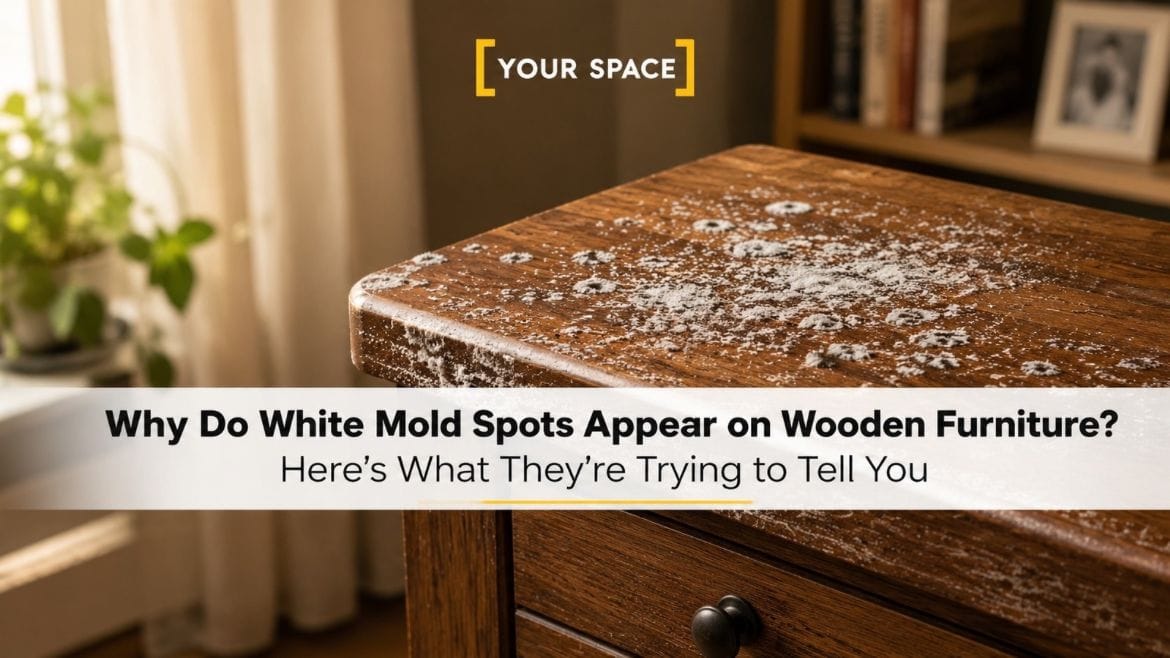
It Starts with Just One Tiny White Spot…
Most people don’t notice it the first time.
You’re dusting the bookshelf.
Cleaning the dining table.
Or wiping down the wardrobe before guests arrive.
Then you see it.
A tiny white patch.
You rub it with a cloth.
It disappears.
A few days later…
It’s back.
This time it’s slightly bigger.
Weeks pass.
Now there are several.
And suddenly you’re asking yourself:
“Is this mold?”
Unfortunately…
It often is.
The surprising part isn’t that mold appeared.
The surprising part is how quietly it arrived.
White mold doesn’t usually show up overnight.
It builds slowly while your furniture sits exactly where it has always been.
And by the time you notice it, your furniture has been trying to tell you something for weeks.
Understanding wooden furniture care isn’t just about keeping furniture looking beautiful.
It’s about protecting it before small warning signs turn into permanent damage.
What Exactly Are Those White Spots?
Let’s clear up the biggest misconception first.
Not every white mark on wood is paint.
Not every dusty patch is harmless.
In many homes, those powdery white patches are early mold growth caused by excess moisture in the surrounding environment.
Mold isn’t interested in expensive furniture.
It doesn’t care whether your cabinet cost ₹10,000 or ₹1,00,000.
It simply looks for the right conditions.
And wood gives it exactly what it wants.
Why Wooden Furniture Is More Vulnerable Than You Think
Wood is a natural material.
That’s one of the reasons we love it.
It feels warm.
It ages beautifully.
It lasts for decades when cared for properly.
But natural materials also respond to their surroundings.
When humidity rises, wood absorbs moisture from the air.
As that moisture stays trapped, the surface becomes more welcoming for mold growth.
This is one of the biggest reasons humidity damages becomes visible during long rainy seasons or in poorly ventilated homes.
The Four Conditions Mold Loves Most
Mold doesn’t appear by accident.
It usually needs four things.
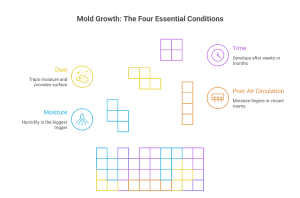
Moisture
Humidity is the biggest trigger.
Even if furniture never gets wet, moisture in the air is often enough.
Poor Air Circulation
Furniture placed tightly against walls or inside closed rooms receives very little airflow.
This creates small pockets where moisture lingers.
Dust
Dust doesn’t just make furniture look dirty.
It can also trap moisture and provide a surface where Mold begins to grow.
Time
Perhaps the most overlooked factor.
Mold rarely appears after one rainy day.
It develops after weeks or months of favorable conditions.
The Places Most People Never Check
When cleaning furniture, people naturally focus on visible areas.
But mold usually begins somewhere else.
Look behind:
- wardrobes
- bookshelves
- TV units
- storage cabinets
Also inspect:
- drawer interiors
- furniture bases
- corners touching walls
- the underside of tables
These hidden spaces often reveal problems first.
Five Signs Your Furniture Is Asking for Help
White spots are only one warning.
Watch for these signs too.
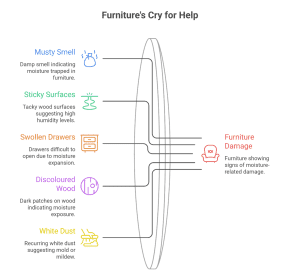
A Musty Smell
If your room smells damp even after cleaning, furniture could be holding moisture.
Sticky Wooden Surfaces
Wood shouldn’t feel tacky.
Sticky surfaces often indicate excess humidity.
Swollen Drawers
Drawers becoming difficult to open is another common sign.
Discolored Wood
Dark patches or uneven coloring may suggest prolonged moisture exposure.
Tiny White Dust That Keeps Returning
If the same white residue comes back repeatedly after wiping, don’t ignore it.
Investigate further.
Why Cleaning Alone Doesn’t Solve the Problem
This is where many homeowners get frustrated.
They clean the surface.
The furniture looks perfect.
A week later…
The mold returns.
That’s because cleaning removes the symptom.
Not the cause.
If humidity remains high, mold simply finds another opportunity to grow.
That’s why good wooden furniture protection focuses on controlling the environment, not just the furniture.
Furniture Storage Mistakes That Encourage Mold
Sometimes the problem isn’t the furniture.
It’s where it’s stored.
Common mistakes include:
- placing furniture directly against damp walls
- storing wooden furniture in closed garages
- covering furniture with non-breathable plastic for months
- keeping furniture in poorly ventilated rooms
- ignoring seasonal humidity changes
These conditions increase the chances of mold and long-term damage.
How Proper Furniture Storage Makes a Difference
Whether you’re renovating, relocating, or simply creating extra space, storage conditions matter.
Good furniture storage isn’t just about finding room.
It’s about protecting what you own.
A suitable storage environment helps reduce exposure to:
- excess humidity
- dust accumulation
- poor airflow
- temperature fluctuations
For valuable wooden furniture, this can make a significant difference over time.
When Climate Matters More Than Cleaning
Imagine leaving a wooden dining table in two different places.
One stays in a dry, well-ventilated environment.
The other sits in a damp room for three months.
Same table.
Different outcome.
That’s why climate-controlled storage is often recommended for valuable wooden furniture, antiques, and long-term storage needs.
Stable conditions help reduce the environmental changes that encourage mold and moisture damage.
The Five-Minute Wooden Furniture Check
Walk through your home today.
Touch your wooden furniture.
Look closely.
Ask yourself:
- Does anything smell damp?
- Are there white patches anywhere?
- Is wood sticking or swelling?
- Are hidden corners clean?
- Is there enough airflow around the furniture?
Sometimes five minutes is enough to catch a problem early.
The Best Wooden Furniture Care Happens Before Damage Appears
Furniture rarely asks for attention.
It simply reacts to its surroundings.
Those white spots aren’t there to annoy you.
They’re warning you.
Ignoring them doesn’t make them disappear.
Understanding what they’re trying to tell you gives your furniture a much better chance of lasting for decades.
Because great wooden furniture care isn’t about polishing wood once a month.
It’s about creating an environment where beautiful furniture can continue being part of your family’s story.
Frequently Asked Questions About Wooden Furniture Care
Why do white mold spots appear on wooden furniture?
White mold usually develops because of excess humidity, poor airflow, and prolonged moisture exposure.
Can humidity permanently damage wooden furniture?
Yes. Long-term humidity can cause swelling, warping, mold growth, and surface deterioration.
Is mold on furniture dangerous?
Mold can damage furniture over time and may affect indoor air quality if left untreated.
How can I protect wooden furniture during monsoon?
Improve ventilation, inspect furniture regularly, keep it away from damp walls, and maintain a dry environment.
Does climate-controlled storage help protect wooden furniture?
Yes. Climate-controlled storage helps reduce humidity fluctuations, creating a more stable environment for valuable wooden furniture.
Don’t Wait Until a Small White Spot Becomes Permanent Damage
Wooden furniture often lasts for generations—but only when it’s protected from the conditions that slowly wear it down.
If you’re storing valuable wooden furniture during renovation, relocation, or long periods of non-use, choosing the right environment makes all the difference.
Speak with our storage specialists: +91 8433925040
