
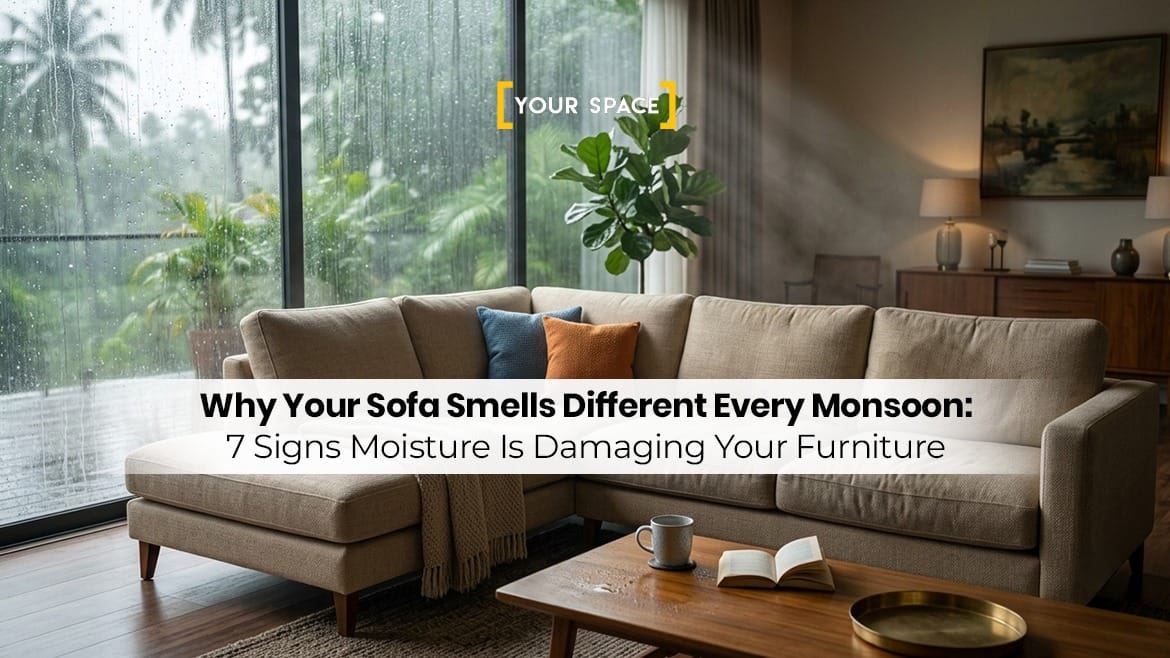
It’s Not Just a Smell. Your Sofa Is Trying to Tell You Something.
Every monsoon, it starts the same way.
You walk into your living room.
Everything looks normal.
The cushions are where they belong.
The fabric looks clean.
Nothing appears damaged.
Then you sit down.
And there it is.
That strange smell.
Not exactly dirty.
Not exactly unpleasant.
Just… different.
Most people ignore it.
They spray a room freshener.
Open a window.
Light a scented candle.
Problem solved.
Or so they think.
But that smell is often the first warning sign that moisture is beginning to affect your furniture.
And during monsoon, moisture has a way of turning small problems into expensive ones.
That’s why understanding monsoon furniture care, furniture storage, and monsoon humidity damage is more important than most homeowners realize.
Why Furniture Behaves Differently During Monsoon
Furniture doesn’t exist in isolation.
It reacts to its environment.
And during monsoon, that environment changes dramatically.
Humidity levels rise.
Airflow decreases.
Rooms stay closed longer.
Sunlight becomes limited.
All of this affects:
- fabric
- wood
- foam
- leather
- upholstery
Your sofa may still look perfectly fine.
But internally, changes may already be happening.
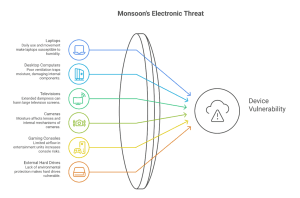
The Real Villain Isn’t Rain. It’s Humidity.
Most people blame rain.
Rain is visible.
Humidity isn’t.
That’s why humidity is often ignored.
But humidity is what causes:
- musty odors
- mold growth
- fabric deterioration
- wood swelling
- furniture damage
This is one of the biggest challenges of monsoon furniture protection.
Because you can’t always see the problem.
At least not immediately.
Sign #1: Your Sofa Smells Musty Even After Cleaning
This is usually the first warning sign.
You clean the sofa.
You vacuum it.
You wipe it down.
Yet the smell returns.
Why?
Because the issue isn’t dirt.
It’s trapped moisture.
And moisture trapped inside fabric can create odors long before visible damage appears.
Sign #2: The Cushions Feel Slightly Damp
Not wet.
Not soaked.
Just slightly different.
Many homeowners notice their sofa feels:
- cooler
- heavier
- less breathable
This often indicates excess moisture absorption.
A common symptom of monsoon humidity damage.
Sign #3: Fabric Takes Longer to Dry
Spilled a little water?
Cleaned a stain?
Notice it takes much longer to dry during monsoon?
That’s because the surrounding air is already saturated with moisture.
And your furniture absorbs part of that environment.
Sign #4: Wooden Furniture Feels Sticky
This doesn’t just affect sofas.
Coffee tables.
TV units.
Bookshelves.
Side tables.
Wood reacts strongly to humidity.
When moisture levels rise, wood may:
- expand
- swell
- feel sticky
- become harder to open or close
One of the most common issues in monsoon furniture care.
Sign #5: Strange Spots Start Appearing
Small dark marks.
Light discoloration.
Tiny patches that weren’t there before.
Many people dismiss these signs.
But they’re often early indicators that moisture is lingering longer than it should.
Sign #6: The Living Room Smells Different
Here’s something interesting.
Sometimes it’s not the sofa that smells.
It’s the room.
Soft furnishings act like giant sponges.
They absorb moisture from the surrounding air.
Over time these changes how an entire room smells.
Which is why monsoon problems often feel bigger than one piece of furniture.
Sign #7: You Keep Opening Windows but Nothing Changes
This is the final clue.
You ventilate the room.
You clean regularly.
You try all the usual solutions.
Yet the problem keeps returning.
At that point, the issue isn’t surface level.
It’s environmental.
And that’s where proper furniture storage and humidity management become important.
Why Some Furniture Suffers More Than Others
Not all furniture reacts the same way.
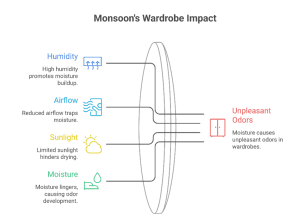
The most vulnerable pieces include:
Fabric Sofas
They absorb moisture easily.
Wooden Furniture
Highly sensitive to humidity changes.
Leather Furniture
Can develop Odors, stiffness, or surface issues.
Antique Furniture
Often more vulnerable due to age and materials.
The Biggest Mistake Most Households Make During Monsoon
People focus on cleaning.
They forget about storage.
But storage conditions matter.
A beautiful sofa placed in a poorly ventilated room may suffer more damage than an older sofa kept in better conditions.
That’s why household storage and furniture protection strategies are becoming increasingly important during monsoon months.
Monsoon Furniture Care Tips That Actually Help
Let’s keep it practical.
Create Better Airflow
Allow rooms to breathe whenever possible.
Avoid Pushing Furniture Directly Against Walls
Walls often retain moisture.
A small gap helps.
Rotate Cushions Regularly
This improves air circulation.
Inspect Furniture Frequently
Small problems are easier to solve than large ones.
Consider Climate-Controlled Storage For Valuable Furniture
Especially during renovations, relocation, or long-term storage situations.
The Hidden Cost of Ignoring Moisture Damage
Furniture damage rarely appears overnight.
That’s what makes it dangerous.
One monsoon may not seem significant.
But year after year…
Humidity slowly leaves its mark.
The result?
- faded fabric
- weakened foam
- damaged wood
- unpleasant Odors
And eventually, replacement becomes necessary.
The Monsoon Furniture Audit
Take five minutes today.
Walk through your home.
Ask yourself:
Does my sofa smell different?
Are cushions feeling heavier?
Is wood behaving differently?
Have I noticed unusual Odors recently?
Is there enough airflow around my furniture?
If any answer makes you pause…
It’s worth paying attention now.
Not after the monsoon ends.
What Your Sofa Is Really Trying to Tell You
That smell isn’t random.
It’s information.
It’s your furniture responding to its environment.
And often it’s the earliest warning sign you’ll get.
The good news?
Most moisture-related issues can be managed when identified early.
That’s why awareness is the first step toward effective monsoon furniture protection.
Before Monsoon Damages Your Furniture, Read This
Why does my sofa smell different during monsoon?
Increased humidity causes fabrics and cushioning materials to absorb moisture, leading to musty odors.
Can humidity damage furniture permanently?
Yes. Long-term exposure can affect wood, fabric, foam, and upholstery.
What furniture is most vulnerable during monsoon?
Fabric sofas, wooden furniture, leather furniture, and antique pieces.
How can I protect furniture during rainy season?
Improve airflow, inspect regularly, avoid moisture buildup, and use proper furniture storage solutions when needed.
Does climate-controlled storage help protect furniture?
Yes. Stable environmental conditions reduce the risk of humidity-related damage.
Your Sofa Should Smell Like Home, Not Humidity
Monsoon is hard on furniture.
But damage doesn’t have to be part of the season.
Protect the furniture you’ve invested in before moisture becomes a bigger problem.
Call us: +91 8433925040
