
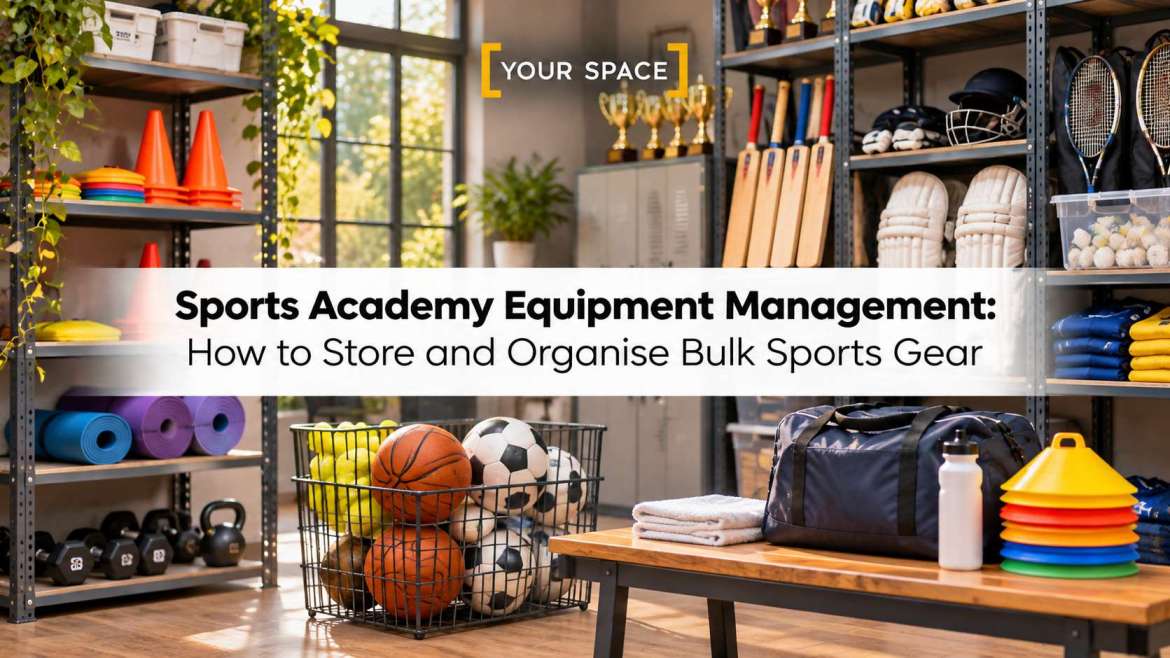
Running a sports academy means managing much more than practice schedules, coaching sessions and tournaments.
There’s the equipment to look after, too.
Cricket bats, footballs, basketballs, badminton rackets, training cones, gym accessories, uniforms, safety gear and boxes of spare supplies. And that’s just one part of the inventory.
As an academy grows, so does its equipment collection. What starts as a few neatly arranged shelves can turn into a crowded storeroom, with gear stacked in corners and staff spending valuable time searching for the right items.
Sound familiar?
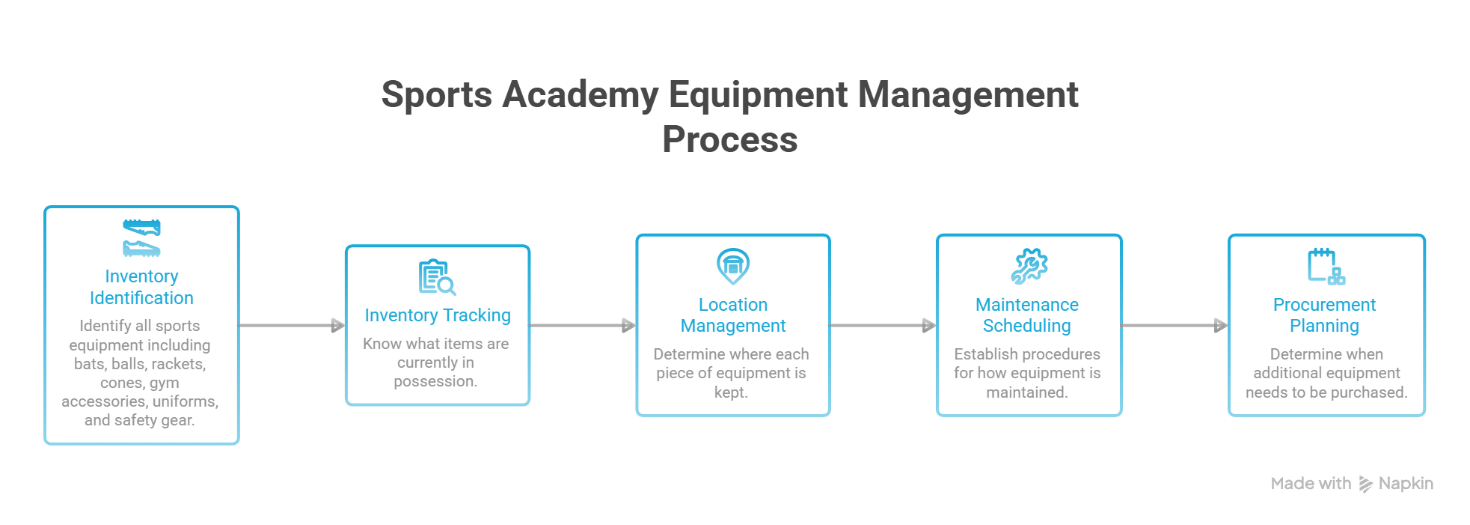
For sports academies, schools, clubs and training centres, equipment management is an important part of running smooth operations. The challenge isn’t simply buying the right equipment. It’s knowing what you have, where it’s kept, how it’s maintained and when you need more.
Let’s explore how sports organisations can manage and store bulk sports equipment more efficiently
1. Create a Proper Inventory of All Sports Equipment
Before reorganising your storage room, find out exactly what you’re storing.
Many sports academies use multiple types of equipment across different training programmes. Without an updated inventory, it becomes difficult to track quantities, identify missing items or plan future purchases.
Start by preparing an equipment list that covers the name and category of each item, the quantity available, its current condition, the sport or training programme it is assigned to, its storage location, and any purchase or replacement details where available. For example, a cricket academy may maintain separate records for bats, balls, helmets, batting pads, gloves, stumps and practice nets. A football academy may track footballs, cones, goalkeeping gloves, jerseys, training bibs and other practice accessories.
You don’t necessarily need complicated software to begin. A well-maintained spreadsheet can be a useful starting point for smaller organisations.
The goal is simple: know what you own before you buy more.
2. Separate Equipment According to Sports and Activities
Imagine a coach looking for badminton rackets and finding them behind a pile of footballs and cricket pads. Not ideal, especially when a training session is about to begin.
One practical way to improve sports equipment management is to divide storage areas according to sports, activities or training programmes. Cricket equipment such as bats, balls, stumps, pads, helmets and gloves can have its own section, while football gear like footballs, cones, jerseys, bibs and goalkeeping equipment can be kept together in another. Basketballs, training markers and practice accessories can share a basketball area, and badminton rackets, shuttlecocks, nets and court accessories can be grouped as one set. Fitness training items such as dumbbells, resistance bands, mats and cones also work well in a separate zone, and general sports supplies like first-aid supplies, spare accessories and uniforms can be stored in their own dedicated space.
Use clear labels on shelves, racks and storage containers. This helps coaches and staff locate equipment quickly and makes it easier to return items to their designated places after training.
3. Choose the Right Storage Method for Different Equipment
Not every piece of sports equipment can be stored in the same way.
A cricket bat, a football, a badminton racket and a set of dumbbells all have different storage requirements. Stacking everything together may save space temporarily, but it can make equipment difficult to access and increase the risk of damage.
Consider a different approach for each type of equipment. Bats and rackets are best kept on suitable racks or in designated spaces to prevent unnecessary pressure and damage, while balls do well in baskets, bins or dedicated ball racks. Smaller training accessories such as cones and markers should be kept in labelled containers. Uniforms and jerseys need clean, dry shelving or suitable garment storage, and fitness equipment should be arranged according to the size and handling requirements of weights and accessories. Protective gear, including helmets, pads and gloves, should be kept in accessible, ventilated areas after it has been cleaned and dried.
The right arrangement depends on the type, quantity and condition of your equipment. A well-planned storage area makes it easier to locate items without constantly shifting other inventory.
4. Keep an Eye on Equipment Condition and Maintenance
Sports equipment goes through regular wear and tear. Balls are used repeatedly, rackets need string checks, cricket bats can develop damage, and protective gear needs regular inspection.
If equipment is simply returned to storage after every session without being checked, small problems can go unnoticed.
A simple inspection routine can help. Start by checking equipment after use, then separate damaged items from usable stock. Clean each item according to its material and care instructions and allow wet or sweaty equipment to dry appropriately. Record any items that need repair or replacement and finally return usable equipment to its designated storage area.
Pay particular attention to protective equipment such as helmets, pads and safety gear. Follow the manufacturer’s maintenance and replacement guidance. This helps academies maintain better visibility of their inventory and plan replacements more responsibly.
Storage isn’t just about keeping equipment out of sight. It’s about keeping track of what condition it’s in.
5. Manage Seasonal and Tournament Equipment Separately
Not every piece of sports equipment is required every day. Some items are used only during specific tournaments, seasonal programmes, summer camps or special training sessions.
Keeping all equipment together can make everyday access more difficult, particularly when the academy has limited storage space.
Instead, divide inventory into three broad groups. Daily-use equipment covers items required for regular training sessions. Occasional-use equipment includes gear used for tournaments, events and special programmes. Reserve inventory is the spare equipment kept for replacements or future requirements.
Label cartons and storage areas according to their contents and intended use. For example, tournament banners, spare jerseys, additional cones and event-specific supplies can be stored separately from everyday training equipment. This arrangement helps staff access frequently used gear without disturbing the rest of the inventory.
6. Don’t Let Sports Equipment Take Over Your Training Space
A sports academy needs room for what matters most: training. But when equipment starts occupying corridors, classrooms, office areas or unused corners, the available working space can quickly shrink.
This can create practical challenges. Coaches have less room to prepare training sessions, staff spend time moving equipment around, and walkways and common areas become cluttered. Equipment also becomes harder to locate, and administrative and training areas lose their intended purpose.
Start by identifying which equipment needs to remain close to the training area and which items can be stored elsewhere.
Daily-use gear should be easy to access. Spare inventory, seasonal supplies, event materials and equipment that isn’t required regularly may be better suited to a separate storage arrangement.
The objective is to keep your academy functional without allowing equipment inventory to take over every available corner.
7. Use Labels and Inventory Tracking to Avoid Missing Equipment
A storeroom with hundreds of items can quickly become difficult to manage if nobody knows where anything belongs. A simple labelling and tracking system can make a big difference.
There are a few practical ways to improve equipment tracking. Assign identification labels to storage boxes and group similar equipment together. Maintain a record of quantities, and track equipment issued to coaches or training groups. Make sure damaged, missing or replaced items are recorded, and conduct periodic inventory checks.
For larger academies, a digital inventory management system may be useful. It can help staff maintain centralised records and track equipment movement. For smaller clubs, a spreadsheet combined with clear physical labels may be sufficient.
The important thing is to make inventory information easy to update and accessible to the people responsible for managing equipment.
8. Consider External Storage for Bulk Sports Equipment
Sometimes, the problem isn’t poor organisation. It’s simply a lack of available space.
As sports academies expand, they may need additional equipment for new batches, sports programmes, tournaments and training facilities. The existing storeroom may no longer be enough. This is when external storage can be worth considering.
Depending on the academy’s requirements, additional storage space may be useful for spare sports equipment, bulk purchases of balls and training accessories, and tournament and event materials. It can also hold extra uniforms and jerseys, seasonal sports supplies, non-daily-use fitness equipment and other academy inventory.
Before selecting a storage arrangement, consider the volume of equipment, storage duration, access frequency and handling requirements. It is also important to check that the storage conditions are suitable for the equipment being kept there. Items that require specific ventilation, temperature or handling conditions should be stored accordingly.
For academies, schools and clubs managing large inventories, separating reserve stock from daily-use equipment can help make the main training facility easier to manage.
9. Build a Sports Equipment Storage Checklist
Good equipment management becomes easier when everyone follows the same process. Whether you manage a small coaching centre or a large sports academy, a checklist can help staff maintain consistency.
A practical checklist begins with preparing an updated inventory of all sports equipment, separating it according to sport and activity, and assigning designated storage areas. From there, label shelves, racks and cartons, inspect equipment regularly for damage, and clean and dry items before storing them. Keep daily-use and occasional-use inventory separate, track equipment issued to coaches and training groups, and review reserve stock and replacement requirements. Finally, assess whether additional storage space is needed.
Review this checklist periodically, especially before tournaments, new training batches and seasonal programmes. A consistent system can help reduce confusion and make equipment management less dependent on individual staff members.
Frequently Asked Questions About Sports Equipment Storage
- How should a sports academy manage bulk sports equipment?
Start with a detailed inventory, categorise equipment by sport, assign dedicated storage locations and maintain regular condition checks. Use labels and tracking records to monitor equipment movement and quantities.
- What is the best way to store sports equipment in a school?
Schools can divide equipment by sport and activity, use suitable racks and labelled containers, and keep frequently used items easily accessible. Reserve and seasonal equipment can be organised separately.
- How can sports academies prevent equipment from getting damaged?
Clean and dry equipment according to its care instructions, use appropriate storage methods, avoid excessive stacking and inspect items regularly. Delicate and protective equipment may require specific handling.
- Why is inventory management important for sports clubs?
Inventory management helps sports clubs track available equipment, identify missing or damaged items, plan purchases and organise supplies for regular training and tournaments.
- When should a sports academy consider external storage?
An academy may consider external storage when its existing premises cannot comfortably accommodate reserve inventory, seasonal equipment, tournament supplies or bulk purchases. Access needs and equipment-specific storage conditions should be considered before choosing a solution.
- What sports equipment can be kept in additional storage?
Depending on storage conditions and requirements, academies may need space for spare balls, rackets, bats, training accessories, uniforms, event materials, fitness equipment and other reserve inventory.
10. Final CTA – Give Your Sports Equipment the Space It Needs
A growing sports academy needs more than talented coaches and dedicated players. It needs an organised system behind the scenes, too.
From cricket kits and football equipment to training accessories, uniforms and tournament supplies, managing bulk inventory becomes increasingly challenging as your academy expands. And when your storeroom starts running out of room, it may be time to explore additional storage options.
Your Space Doctor offers storage solutions across Mumbai, Pune and Bengaluru for businesses and organisations looking to manage their space more efficiently. Whether you’re running a sports academy, managing a school facility or operating a sports club, make room for better organisation and smoother operations.
Need additional space for your sports equipment?
Get in touch with Your Space Call: +91 8433925040
