

Most Homes Don’t Get Damaged Overnight.
They Get Ignored One Rainy Day at a Time.
The first heavy rain is always exciting.
Children rush to the balcony.
The smell of wet earth fills the air.
Tea tastes a little better.
Everything feels fresh.
Until a week later.
Your wardrobe smells damp.
The sofa feels heavier than usual.
The windows begin collecting moisture.
A forgotten cardboard box turns soft.
That’s when most homeowners realise something important.
Monsoon doesn’t just test your roof.
It tests your entire home.
Every rainy season quietly exposes the weak spots we forget about during summer.
The good news?
Most of those problems are preventable.
A simple monsoon home maintenance routine can protect your belongings, reduce expensive repairs, and make your home healthier throughout the rainy season.
So before the next spell of rain arrives, let’s walk through the 20 things every homeowner should inspect.
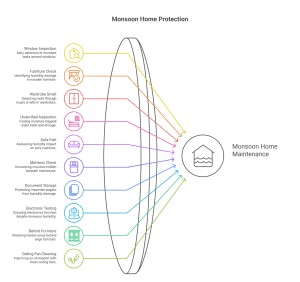
1. Check Every Window for Hidden Moisture
Even tiny gaps around windows can allow moisture to creep inside.
Look for:
- water stains
- peeling paint
- damp corners
Early detection prevents bigger problems later.
2. Inspect Wooden Furniture
Wood absorbs moisture surprisingly fast.
Look closely at:
- wardrobes
- dining tables
- TV units
- bookshelves
Swelling, stickiness, or tiny cracks are early warning signs of monsoon humidity damage.
3. Open Every Wardrobe
Don’t just open it.
Smell it.
A musty smell usually appears before visible mold.
This is why wardrobe organization becomes part of effective monsoon home maintenance.
4. Look Under the Bed
This forgotten space often traps moisture.
Inspect:
- storage boxes
- luggage
- blankets
- shoes
If something hasn’t been checked in months, now is the time.
5. Check Your Sofa Carefully
Sit down.
Does it smell different?
Do the cushions feel heavier?
Fabric furniture absorbs humidity throughout the season.
6. Inspect Mattresses
Lift the mattress.
Check underneath.
Moisture trapped below often goes unnoticed for weeks.
7. Examine Important Documents
Humidity affects paper quickly.
Look at:
- passports
- property papers
- certificates
- insurance documents
Proper storage today prevents permanent damage tomorrow.
8. Test Every Electronic Device
Don’t wait until you actually need it.
Switch on:
- laptops
- cameras
- speakers
- backup hard drives
Humidity sometimes affects stored electronics before anyone notices.
9. Look Behind Large Furniture
Large furniture blocks airflow.
Check behind:
- wardrobes
- beds
- cupboards
- cabinets
These hidden spaces often collect moisture first.
10. Clean Ceiling Fans
Dust mixed with monsoon moisture becomes surprisingly stubborn.
A clean fan also improves air circulation throughout the room.
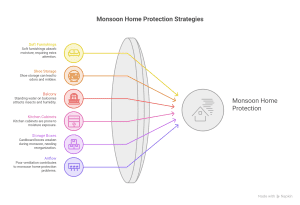
11. Inspect Curtains and Upholstery
Soft furnishings absorb moisture quickly.
If they already smell different…
They may need extra attention before mold develops.
12. Check Shoe Storage
Shoes stored in dark corners often develop:
- unpleasant odors
- moisture
- mildew
One of the most overlooked parts of household storage.
13. Look at Your Balcony
Standing water creates more than inconvenience.
It attracts insects and increases humidity around nearby rooms.
14. Inspect Kitchen Cabinets
Open every cabinet.
Pay attention to:
- corners
- lower shelves
- sink storage
These areas experience constant moisture exposure.
15. Review Storage Boxes
Cardboard boxes struggle during monsoon.
If they’re soft, damp, or weakening, it’s time to reorganize.
16. Check Airflow Throughout the House
Walk through each room.
Ask yourself:
Does fresh air move easily here?
Poor ventilation is one of the biggest contributors to monsoon home protection problems.
17. Inspect Your Utility Area
Laundry spaces remain damp longer during monsoon.
Watch for:
- mold
- odors
- water buildup
18. Review Seasonal Items
Blankets.
Winter clothes.
Festival decorations.
If you’re not using them now, make sure they’re stored safely and away from moisture.
19. Don’t Ignore Sentimental Belongings
Old photographs.
Family albums.
Letters.
Children’s artwork.
These items cannot be replaced.
Give them the same attention as expensive furniture.
20. Ask Yourself One Final Question
Walk through your home slowly.
Pause in every room.
Ask yourself:
“If heavy rain continues for another month… what in this room worries me the most?”
That answer usually tells you exactly what needs protection first.
Why Most Monsoon Problems Start Small
Nobody wakes up to find their furniture ruined overnight.
Problems usually begin quietly.
A little moisture.
A slightly strange smell.
A drawer that sticks.
A corner that feels damp.
They’re easy to ignore.
Until they aren’t.
That’s why consistent monsoon home maintenance is far more effective than emergency repairs after the season ends.
The Best Monsoon Home Isn’t the Most Expensive One
It’s the one that’s prepared.
You don’t need expensive equipment.
You don’t need a complete renovation.
You simply need awareness.
Small inspections today can prevent large repairs tomorrow.
Whether it’s your furniture, electronics, documents, or everyday household items, paying attention before the damage appears is always the smarter choice.
Before the Next Rain Arrives, Read This
Why is monsoon home maintenance important?
Regular inspections help identify moisture, humidity, and ventilation issues before they cause expensive damage.
What should I inspect first during monsoon?
Start with furniture, wardrobes, electronics, documents, mattresses, and areas where moisture tends to collect.
How does humidity damage household items?
Humidity can cause swelling, mold, unpleasant odors, fabric deterioration, and damage to wooden furniture and electronics.
Does household storage help during monsoon?
Yes. Proper household storage keeps seasonal and valuable items protected from moisture and improves space organization.
How often should I inspect my home during the rainy season?
A quick inspection every two to three weeks can help catch problems before they become serious.
Your Home Protects You Every Day. This Monsoon, Return the Favour.
Before the next spell of rain arrives, spend just a few minutes checking the places you usually overlook.
The smallest inspection today could save you from the biggest repair tomorrow.
Speak with our team: +91 8433925040
