
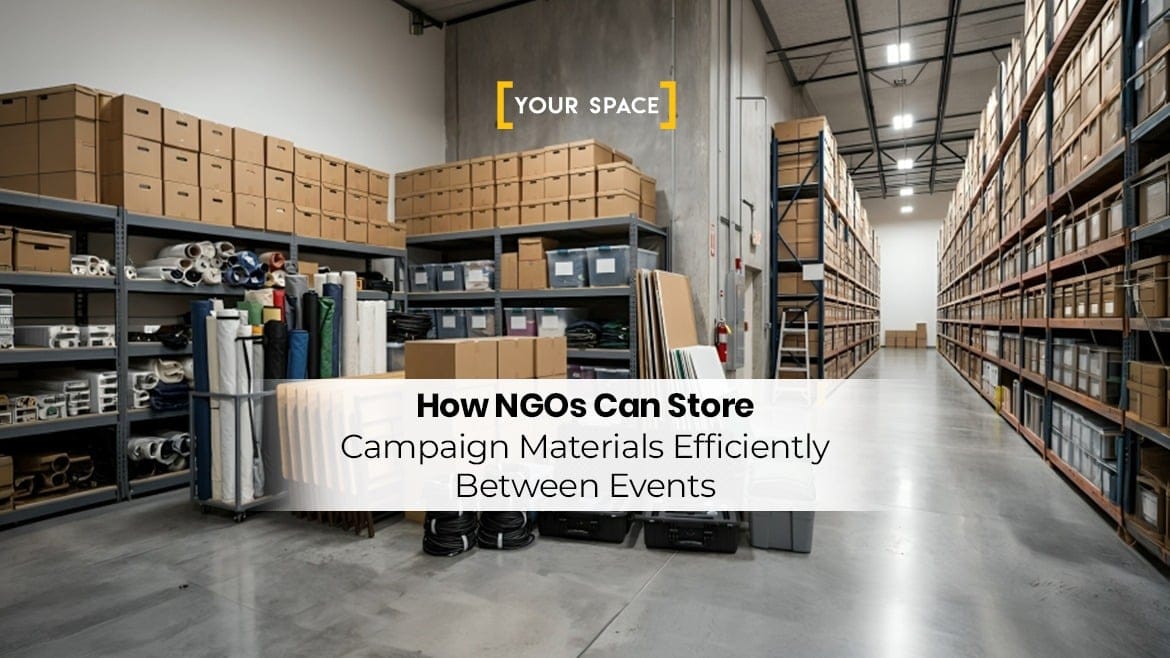
The Event Lasted One Day. The Materials Stay With You All Year.
An awareness campaign ends.
The volunteers head home.
The stage comes down.
The audience leaves.
The photographs are uploaded.
Everyone celebrates another successful event.
Then someone asks a question that rarely appears in the planning meeting.
“Where do we keep everything now?”
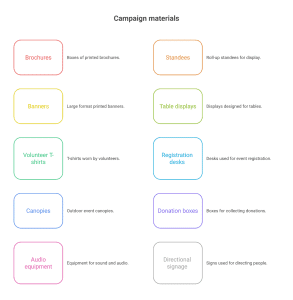
Suddenly, dozens of campaign materials need a home.
Boxes of brochures.
Roll-up standees.
Banners.
Table displays.
Volunteer T-shirts.
Registration desks.
Canopies.
Donation boxes.
Audio equipment.
Directional signage.
Most organizations spend weeks planning an event.
Very few spend even an hour planning what happens after it.
And that’s where clutter, damage, and unnecessary expenses quietly begin.
Campaign Materials Are Investments, Not One-Time Expenses
Every awareness campaign requires resources.
Designing banners.
Printing educational material.
Purchasing display stands.
Creating branded merchandise.
Producing event signage.
Buying reusable equipment.
These items are valuable because they can often be used again.
Yet many organizations unknowingly reduce their lifespan by storing them wherever space happens to be available.
A classroom.
An office corner.
A volunteer’s garage.
A storeroom already filled with unrelated items.
The result?
Materials become harder to find, easier to damage, and more expensive to replace.
That’s why campaign material storage deserves as much attention as the event itself.
The Hidden Costs of Poor Storage
Replacing campaign materials isn’t always expensive because the items are costly.
It’s expensive because organizations don’t realize how much they already own.
Here’s what often happens:
A banner can’t be found.
So a new one is printed.
The extension cords disappear.
New ones are purchased.
Volunteer badges are misplaced.
Fresh badges are ordered.
Display stands are damaged.
New frames are manufactured.
One missing box may seem insignificant.
But across multiple campaigns, these small replacements quietly consume budgets that could have funded outreach instead.
What Needs to Be Stored Between Events?
Campaign inventory is usually much larger than people imagine.
It often includes:
- Event banners
- Roll-up standees
- Backdrops
- Promotional merchandise
- Educational brochures
- Registration kits
- Exhibition panels
- Audio systems
- Microphones
- Portable projectors
- Lighting equipment
- Folding tables
- Chairs
- Direction signs
- Volunteer uniforms
- Donation boxes
- Branded canopies
- Photography props
Each category has different storage needs.
Keeping everything together without organization creates confusion before every event.
The Search for Missing Materials Costs More Than You Think
Have you ever watched volunteers spend hours searching for one missing banner?
Or someone asking,
“Didn’t we already buy another extension cable?”
Time spent searching isn’t just frustrating.
It’s expensive.
Volunteers lose productive hours.
Staff postpone planning.
Deadlines become stressful.
Events start with unnecessary last-minute purchases.
Good inventory management isn’t only about saving money.
It’s about saving time.
Storage Is Part of Event Planning
Many organizations think about storage only after an event.
Successful organizations think about it before the first banner is printed.
A simple inventory checklist can answer questions like:
- How many banners do we have?
- Which materials are reusable?
- What needs repair?
- Which items should be replaced?
- Where is every box located?
When these questions already have answers, preparing for the next campaign becomes significantly easier.
Different Campaign Materials Need Different Protection
Not everything can simply be stacked inside a carton.
Printed Banners
Improper folding can leave permanent creases.
Rolling them correctly helps extend their life.
Exhibition Panels
Large display panels should be stored upright and protected from scratches.
Audio Equipment
Microphones, speakers, and cables should remain clean, dry, and organized to prevent damage.
Printed Literature
Brochures and educational booklets can absorb moisture if left in damp environments.
Branded Merchandise
Volunteer T-shirts, caps, and giveaway items should be stored by category for quicker distribution at future events.
One Storage Plan Can Support an Entire Year’s Campaigns
Most NGOs don’t organize just one event.
There are:
Health awareness drives.
Environmental campaigns.
Educational workshops.
Fundraising events.
Community outreach programs.
Volunteer initiatives.
Each event adds more materials to the inventory.
Without a storage system, every campaign starts from scratch.
With organized event storage, the next campaign starts with everything already prepared.
Storage Also Supports Sustainability
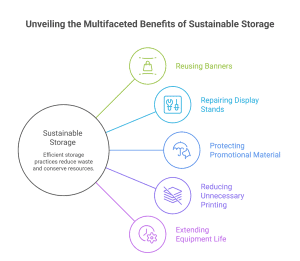
Reusing banners.
Repairing display stands.
Protecting promotional material.
Reducing unnecessary printing.
Extending equipment life.
These aren’t just operational benefits.
They’re sustainable practices.
Every reusable campaign material means less waste and fewer resources spent on replacements.
For organizations working toward social impact, efficient storage can also support environmental responsibility.
More Organized Materials. More Impactful Campaigns.
The public remembers the message.
Volunteers remember the experience.
Organizers remember the logistics.
Behind every successful campaign is a system that keeps materials organized long after the event is over.
Good campaign material storage isn’t about hiding boxes.
It’s about protecting investments, reducing costs, and making every future campaign easier to organize.
Because when your materials are ready…
Your team can focus on what truly matters.
Creating impact.
Frequently Asked Questions
Why is campaign material storage important for NGOs?
Proper storage helps organizations protect reusable materials, reduce replacement costs, and prepare more efficiently for future campaigns.
What items should be stored after an event?
Banners, standees, brochures, exhibition panels, promotional merchandise, audio equipment, volunteer kits, signage, and reusable event furniture are commonly stored.
Can proper storage reduce event costs?
Yes. Reusing well-maintained materials often lowers printing, purchasing, and equipment replacement expenses.
Who can benefit from event storage solutions?
NGOs, educational institutions, CSR teams, exhibition organizers, community groups, charities, and event management companies all benefit from organized storage.
How does inventory management improve campaign planning?
Knowing exactly what materials are available saves time, prevents duplicate purchases, and makes event preparation more efficient.
Can storage support sustainability goals?
Absolutely. Protecting reusable materials reduces waste, extends product life, and helps organizations make better use of their resources.
Make Every Campaign Easier Than the Last
Every banner, standee, volunteer kit, and display panel represents time, effort, and funding invested in your mission. Protecting those resources between events helps your organization stay prepared while reducing unnecessary costs.
Whether you’re managing awareness drives, educational workshops, CSR initiatives, exhibitions, or community outreach programs, Your Space Doctor offers secure campaign material storage, business storage, and event storage solutions designed to keep your inventory organized and ready for the next event.
📞 Talk to our storage experts: +91 8433925040
