
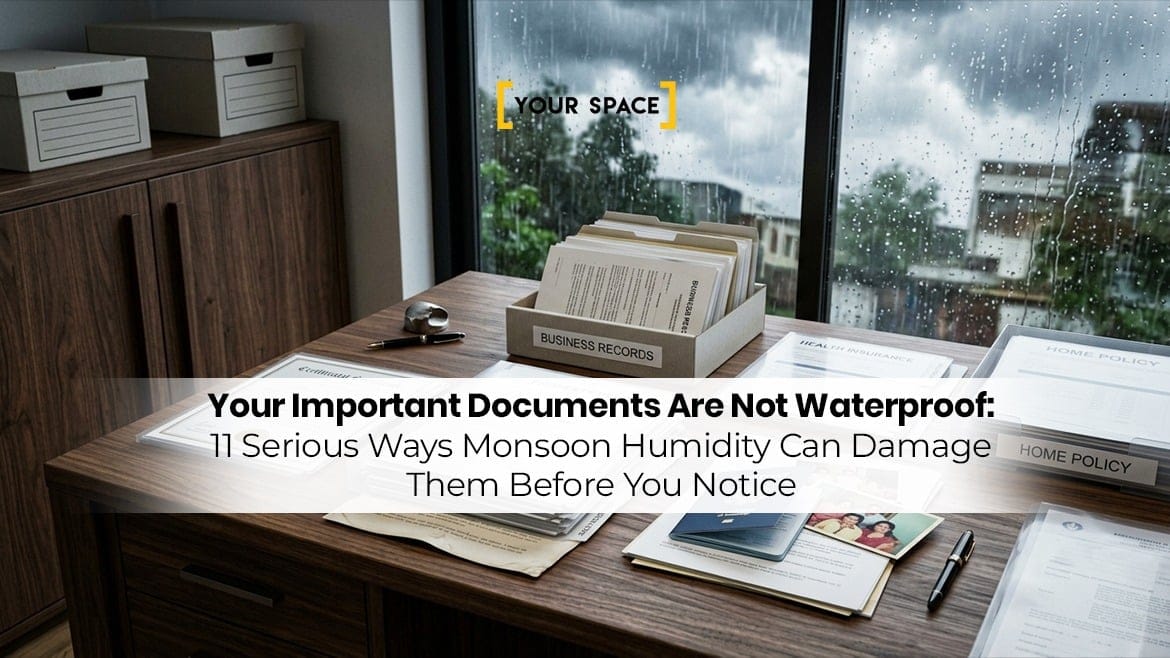
There’s a quiet assumption most of us make about our important papers: if they’re sitting inside a cupboard, they’re safe. The property documents are filed away. The certificates are tucked inside a folder. The business records sit stacked neatly in a cabinet, and the passport waits in a drawer. Everything is indoors, out of the rain, so there’s nothing to worry about, or so it seems.
Then the monsoon rolls in. Windows stay shut for days at a stretch. Clothes take forever to dry. A faint damp smell starts creeping into certain corners of the house. Walls feel a little colder to the touch. And a cupboard that looked completely normal a few weeks ago suddenly feels different the moment you open it.
Somewhere inside one of those cupboards are papers you probably haven’t looked at in months.
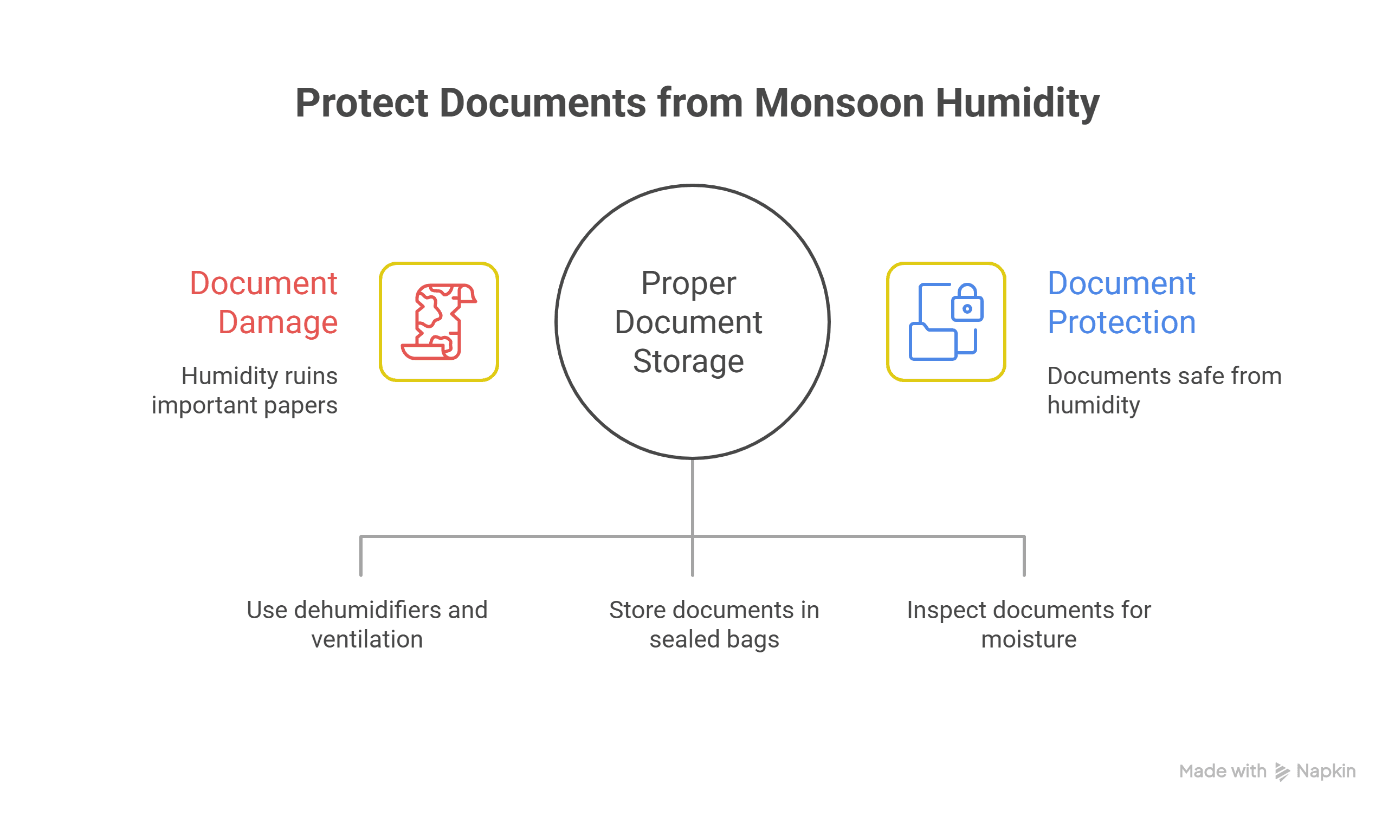
This is exactly where document storage becomes about more than just finding a drawer to stuff files into. Rain doesn’t need to fall directly on a document to ruin it. Over the course of the rainy season, humidity, damp air, wall seepage and hidden moisture can quietly chip away at paper. By the time you spot curled pages, a musty smell, a soft cover or visible spots, the damage has usually already begun.
For property papers, educational certificates, legal records, tax files, business documents, insurance papers and family records, monsoon document storage deserves a lot more attention than it typically gets. The good news is that most moisture-related damage can be avoided with a bit of preparation, the right storage conditions and regular checks. You don’t need a leaking roof or a soaked cupboard before you start thinking seriously about document protection during monsoon.
The Monsoon Damage You May Not See Until It Is Too Late
One of the most frustrating things about monsoon humidity damage is that it tends to work quietly. A burst pipe announces itself immediately. A major roof leak is impossible to miss. But humidity rarely gives you such an obvious warning.
You open a cupboard and everything looks fine at first glance. The files are exactly where you left them. The papers look normal from the outside. The cabinet door still closes the way it always has. Yet the air trapped inside may already be far more humid than you’d guess just by looking.
A Cupboard Can Look Dry While Humidity Builds Inside
Closed storage spaces trap air, and during the monsoon this can quietly become a problem as moisture levels in the surrounding environment climb. A cupboard doesn’t need standing water inside it for the documents in it to be exposed to damp conditions, the humidity in the trapped air is often enough.
This matters most for papers that sit untouched for long stretches. A file pushed to the back of a cabinet might not be opened for months, sometimes years, and during all that time, changing conditions around it can quietly affect the materials inside. This is why safe document storage is about more than whether a file is physically covered, it’s also about the environment surrounding it.
Why Paper Reacts to Moisture
Paper is made from materials that naturally absorb and release moisture from the air around them. When humidity climbs, paper soaks it up, and that can trigger changes you notice right away or ones that build up slowly over time.
Pages can turn wavy or distorted. Papers stacked tightly together can start sticking to one another. Covers can soften. Left unchecked, unsuitable conditions can eventually encourage Mold growth too.
Not every document reacts the exact same way, the type of paper, how long it’s exposed and the storage environment all play a part. But the underlying lesson stays the same: important papers aren’t automatically safe just because the rain is outside and they’re indoors.
What Monsoon Humidity Can Do to Important Documents
Moisture damage to paper can range anywhere from a mild change in texture to serious, hard-to-reverse deterioration.
Pages Can Become Damp, Wavy and Stuck Together
One of the first things people usually notice is that the paper no longer lies completely flat. Pages develop a wavy or rippled look after exposure to moisture, and documents kept in close contact can start sticking to each other.
This becomes especially worrying with original certificates, signed agreements, property papers or old family records. Trying to force damp pages apart is a common instinct, but it often tears the paper or makes the damage worse.
Musty Smells Can Be an Early Warning Sign
That familiar smell of a damp cupboard shouldn’t be brushed off. A musty odour around old files, books or paper records is often a sign that the storage environment needs a closer look. It won’t tell you the exact cause on its own, but it’s a good enough reason to inspect the area and whatever’s stored there.
During the monsoon, this smell is often one of the very first clues that your document storage during monsoon needs to be reviewed.
Mold Can Become a Serious Problem
Mold grows wherever suitable moisture and environmental conditions line up, and paper, cardboard and other organic materials are especially vulnerable in damp storage.
Visible spots or unusual growth should always be taken seriously. Mold can affect both the appearance and the condition of your documents, and handling heavily affected material can create health concerns too. For valuable or irreplaceable documents, it’s worth reaching out to a professional for conservation or restoration advice rather than attempting aggressive cleaning at home.
Ink, Stamps and Printed Information May Be Affected
Not every ink and printing method responds to moisture the same way. Some documents are more prone to bleeding, smudging or other changes when exposed to water or excess dampness.
This is one big reason original documents deserve careful important document protection, replacing them often means legal procedures, government offices, institutions and considerable expense.
The Documents Most People Cannot Afford to Damage
A home can hold dozens of papers that would simply be inconvenient to replace, alongside a handful that would be extremely difficult to recover at all. These often include:
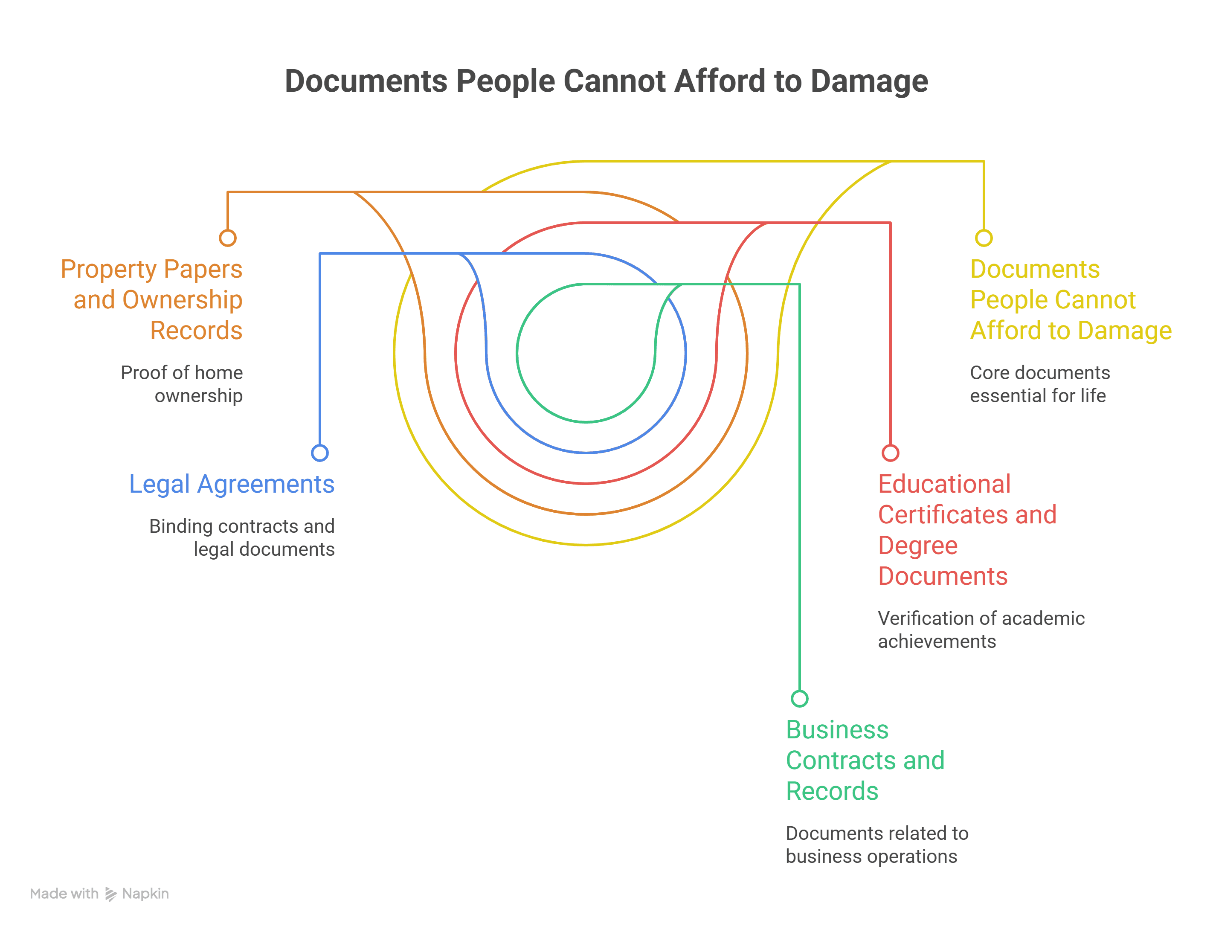
- Property papers and ownership records
- Educational certificates and degree documents
- Legal agreements
- Business contracts and records
- Tax and financial documents
- Insurance papers
- Medical records
- Original identification documents
- Family records
- Old photographs and letters
- Vehicle-related documents
The value of these papers isn’t always tied to how they look. A single thin sheet can carry more weight than an entire room full of furniture, which is exactly why storage for important documents calls for a different mindset than ordinary household storage.
The Hidden Places Where Monsoon Moisture Reaches Your Papers
Many document storage problems start in spots people assume are perfectly safe.
Damp Cupboards and Closed Cabinets
A cupboard set against an exterior wall can be more vulnerable if that wall experiences dampness or seepage. Cabinets that stay closed for long stretches also tend to get overlooked until a smell or a visible problem finally shows up.
If your important papers sit at the back of a cupboard, you rarely open, the monsoon is a good time to go check on it.
Walls With Seepage
Wall seepage tends to creep up gradually, a faint patch, some peeling paint, or a slight change in texture. Sometimes stored items get pushed right up against the wall without leaving any gap at all.
Documents and cartons placed directly against a damp wall can be exposed to moisture even without any obvious dripping water.
Storage Near Windows, Bathrooms and Water Pipes
Windows can let moisture in during heavy rain if they aren’t properly sealed. Bathrooms and other moisture-heavy areas raise dampness nearby, and water pipes bring their own risk if there’s leakage or condensation.
Important papers shouldn’t just be tucked wherever there happens to be an empty shelf, the location itself matters a great deal.
Why a Plastic Folder Alone Is Not Always Enough
A plastic folder is genuinely useful for protecting papers from handling and minor splashes, and it helps with organizing things too. But sliding documents into a plastic folder and forgetting about them for years isn’t always the full answer.
If the papers were already damp when they were sealed in, that moisture gets trapped. And if the wider storage environment stays unsuitable, the folder alone won’t fix the underlying issue.
That doesn’t make plastic folders useless, it just means document protection during monsoon must consider both the immediate packaging and the place where the documents live. Think of it this way: an umbrella keeps you dry, but it won’t fix a flooded house. The same logic applies to document storage.
Practical Monsoon Document Storage Tips
The best time to protect your documents is before you ever spot damage. Here are practical steps to get your important papers ready for the rainy season.
- Check your important documents before the monsoon gets serious.
Don’t wait for a damp smell to tip you off. Open the cupboard or cabinet where important files sit, look for signs of moisture, staining, warping or an unusual odour, and check the wall behind the storage area if you can. A simple inspection now can catch problems early.
- Keep documents away from the floor.
Paper files and cartons stored directly on the floor are more exposed if water gets in during heavy rain, cleaning or a plumbing mishap. Raising documents off the floor adds a useful layer of protection against unexpected water exposure.
- Never store damp documents.
If papers have already gotten wet or noticeably damp, don’t seal them away and hope the problem sorts itself out, trapping moisture just makes things worse. Dry them carefully, and for anything valuable, historical or seriously damaged, get professional guidance rather than trying aggressive home fixes.
- Keep important originals separate from everyday paperwork.
Not every paper needs the same level of care. An old electricity bill from years ago doesn’t need the attention an original property document or educational certificate does. Separating critical originals from routine paperwork makes everything easier to locate and protect.
- Avoid overstuffing files and folders.
Cramming too many papers into one folder makes it harder to inspect individual documents and can make pages tricky to remove safely. Organized paper storage is simply easier to check and manage.
- Do not push document boxes directly against damp walls.
Leave a gap wherever you can, especially if the wall has a history of dampness or seepage. A storage area shouldn’t become an extension of an existing wall problem.
- Inspect the storage area, not just the documents.
This is one of the most overlooked rainy season storage tips. Don’t just look at the file, check the cupboard, shelf, wall, ceiling and everything around it. A document is only ever as safe as the environment holding it.
- Create copies or digital backups where appropriate.
For important records, keeping copies or secure digital backups adds a valuable extra layer of protection. That said, a digital copy doesn’t always replace the legal or practical weight of an original, the goal is to reduce the risk of losing access altogether, not to replace the original.
- Label and organize your files.
The monsoon is not the time to be digging through fifteen unmarked boxes looking for one certificate. Clear labels save you from opening every stored file just to find what you need.
- Review long-term stored documents periodically.
Long-term storage shouldn’t mean permanent neglect. A periodic review helps you confirm the storage conditions are still suitable and that the documents still need to be kept at all.
- Consider a more controlled storage environment for sensitive records.
Some documents are simply too important to leave somewhere with ongoing humidity, seepage or temperature swings. Depending on how valuable the records are, climate-controlled storage or another specialized option may be worth exploring.
How to Protect Business and Professional Records During Monsoon
For businesses, document storage turns into a much bigger challenge. A home might have one cabinet of important files; a business could be sitting on years of records, client documents, contracts, invoices, archived paperwork and operational files. A damp records room creates a mess that takes far longer to sort through.
Business owners need to think beyond simply stacking files in cardboard boxes. It’s worth considering where records are kept, how long they need to be retained, how quickly they might need to be pulled out, and what would happen if moisture got to them.
For organizations sitting on large volumes of physical records, business document storage offers a far more structured approach. The goal isn’t just relocating boxes elsewhere, it’s organizing records in a way that supports protection, easy access and better use of space. During the monsoon, this also frees up valuable office space that would otherwise turn into a room full of aging paper files.
When Climate-Controlled Storage May Be Worth Considering
Not every document needs climate-controlled storage. A recent copy of routine paperwork doesn’t need the same conditions as a collection of sensitive historical records or irreplaceable originals.
But when documents are valuable, hard to replace, or meant to be kept long-term, a more stable environment is worth considering. Climate-controlled storage becomes especially relevant when the current storage spot deals with real humidity concerns, dampness or fluctuating conditions.
Before settling on any storage solution, it helps to ask a few practical questions:
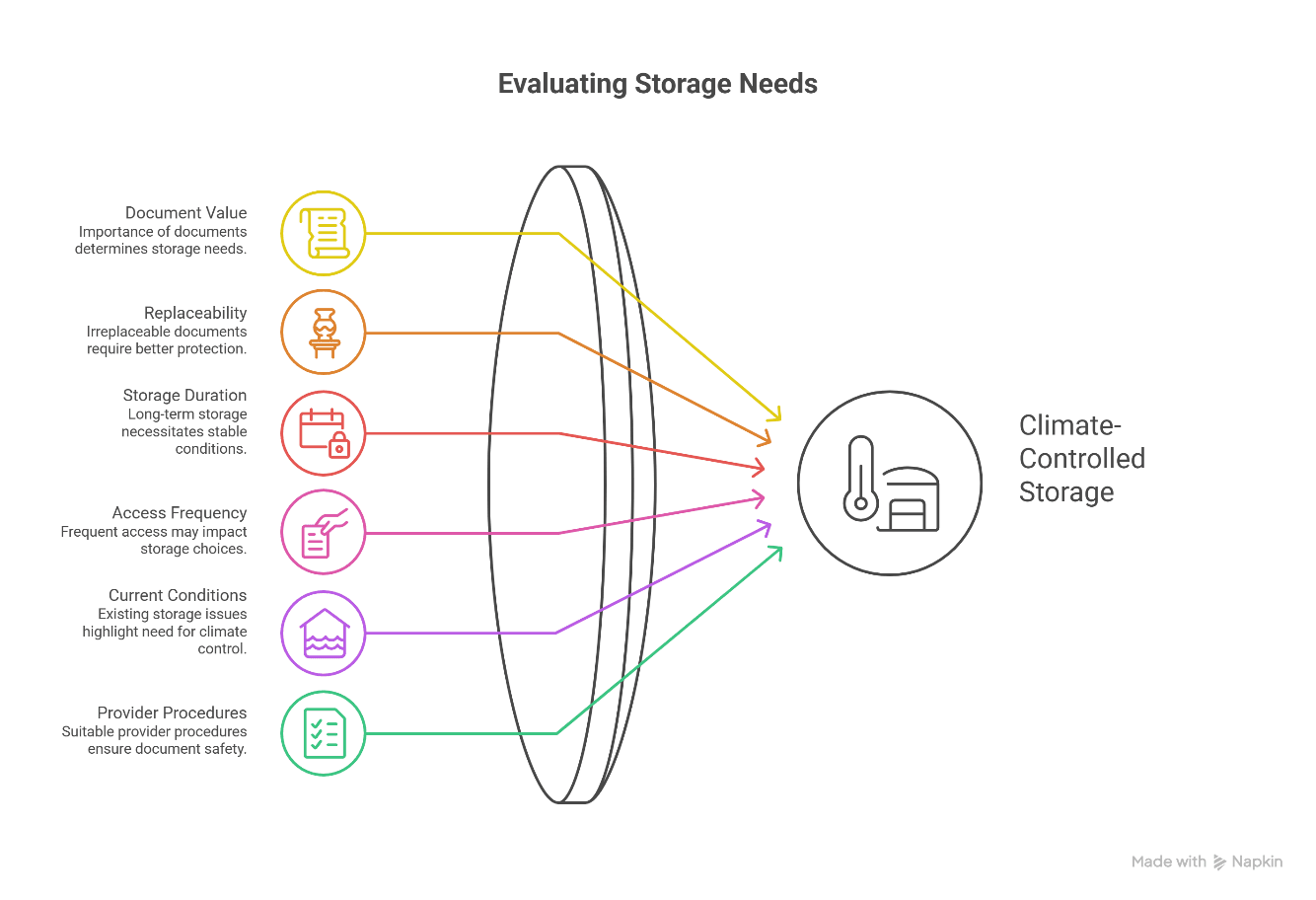
- What type of documents are being stored?
- Are they original or easily replaceable?
- How long will they need to be stored?
- How often will access be needed?
- What are the conditions in the current storage area?
- Does the storage provider have suitable procedures for these kinds of records?
The right solution should always match how important the documents are.
What to Do If Your Documents Already Feel Damp
If you find documents that feel damp, smell musty or show visible signs of moisture damage, try not to panic. Don’t force pages apart if they’re sticking together, avoid harsh chemicals or aggressive cleaning on valuable originals, and stay away from heat sources that aren’t meant for drying paper, they tend to cause more harm than good.
Move the affected documents away from the source of active moisture if it’s safe to do so, and get to the bottom of the underlying problem, whether that’s seepage, a leak, flooding or simply unsuitable storage conditions. For heavily damaged, valuable or irreplaceable documents, it’s worth seeking out a professional document conservation, restoration or preservation specialist.
The key takeaway is that this isn’t something to ignore just because the papers are still readable. Acting early is almost always easier than dealing with years of accumulated damage later.
Frequently Asked Questions
Can monsoon humidity damage documents even if they are inside a cupboard?
Yes. Documents don’t need direct contact with rainwater to be affected. High humidity, damp cupboards, wall seepage and unsuitable storage conditions can expose paper to moisture over time.
What is the best way to protect documents from moisture during monsoon?
Keep important papers clean and dry, away from floors and damp walls, organize them properly and inspect the storage environment regularly. For highly valuable or long-term records, a more controlled storage environment may also help.
Why do my documents smell musty during the rainy season?
A musty smell usually signals excess moisture or damp conditions in the storage area. Inspect the cupboard and documents carefully and look for possible sources such as seepage, poor ventilation or water exposure.
Can Mold damage important documents?
Yes. Mold can affect paper and other organic materials when moisture conditions are right for it. Valuable or heavily affected documents may need professional advice.
Is it safe to store important documents in plastic folders?
Plastic folders help with organization and offer some protection, but they aren’t a complete fix for poor storage conditions. Documents should be dry before storage, and the wider environment needs to be suitable too.
Which documents should receive extra protection during monsoon?
Original property papers, legal documents, educational certificates, business records, financial papers, insurance documents and irreplaceable family records all deserve particular care.
Should business documents be moved to external storage during monsoon?
It depends on the volume and importance of the records and the condition of the current storage area. Businesses with large amounts of paperwork often benefit from structured external document storage, especially when office space or environmental conditions are a concern.
How often should I check long-term stored documents?
It depends on how important the documents are and what the storage environment is like. Periodic checks matter because long-term storage shouldn’t mean forgetting about important papers entirely.
Don’t Wait for the Smell of Damp Paper to Tell You There Is a Problem
The monsoon has a way of exposing weaknesses that stay hidden the rest of the year. A tiny crack turns into a leak. A slightly damp wall becomes a seepage problem. A cupboard that seemed perfectly fine starts smelling musty. And a file you haven’t opened in years suddenly reminds you just how vulnerable paper really is.
Good document storage isn’t about being fearful of every drop of rain; it’s about paying attention before a preventable problem turns into an expensive or emotional one. Take a few minutes to check on your important papers this monsoon. Open the cupboard. Look behind the files. Check the walls. Notice the smell. Ask yourself honestly whether the place holding your most important documents is protecting them.
Sometimes, the most important damage is the damage you can’t see yet.
Your Important Documents Deserve More Than the Back of a Damp Cupboard Property papers can take years to replace. Original certificates often involve complicated procedures. Business records can disrupt day-to-day operations if they’re lost. Family documents and old papers can carry memories that simply can’t be recreated.
If you’re running out of safe space at home or in the office, or if monsoon humidity and damp conditions have you questioning where your important records really belong, it might be time to rethink your storage setup.
Your Space can help you explore practical document storage and specialty storage solutions for important records that need to stay organized and protected. Whether you’re managing household documents, business files or long-term records, the goal is simple: give your important papers the space and storage conditions they actually deserve.
Don’t wait for the monsoon to damage a document you can’t replace.
📞 Speak to Your Space: +91 9004434725
Protect your documents today. Reclaim your space. Keep what matters safely stored for tomorrow.
