

The Saddest Thing About Book Damage Is That You Don’t Notice It Until It’s Too Late
Every bookshelf tells a story.
Some books helped you pass an important exam.
Some were gifts from someone you love.
Some travelled with you through different homes and different stages of life.
Some still carry your handwritten notes from years ago.
You don’t open every book every week.
They quietly wait on your shelf.
Looking exactly the same.
Until one rainy afternoon.
You pull out a favorite novel.
The pages don’t feel right.
The corners have curled.
The paper smells damp.
A few pages stick together.
Tiny brown spots have appeared along the edges.
Nothing spilled on the book.
Nobody touched it.
So what happened?
The answer is something most people never think about.
Humidity.
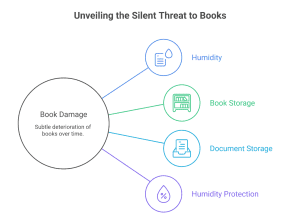
Every monsoon, moisture quietly enters homes, cupboards, libraries, and bookshelves. While you’re busy protecting furniture and electronics, your books may already be absorbing water from the air around them.
That’s why understanding book storage, document storage, and proper humidity protection is just as important as taking care of the books themselves.
Books Don’t Need Rain to Get Damaged
Many people believe books are only damaged if water falls directly on them.
That’s only part of the story.
The real danger is humidity.
During monsoon, the air carries far more moisture than usual.
Paper naturally absorbs that moisture.
Even if your books never get wet, they slowly begin reacting to the environment around them.
The process is gradual.
You don’t notice it in a day.
Or even a week.
But after months of exposure, the signs become impossible to ignore.
Why Paper Absorbs Moisture So Easily
Books are made from paper.
Paper is made from natural fibers.
Those fibers constantly respond to changes in humidity.
When moisture levels rise:
- Pages begin expanding.
- Covers lose their shape.
- Glue inside the binding weakens.
- Ink may slowly fade.
- Mold finds the perfect place to grow.
That’s why proper book storage is about protecting books from the environment, not just finding a place to keep them.
Five Signs Humidity Is Already Damaging Your Books
Your books usually give small warning signs before serious damage happens.
1. Pages Feel Wavy
Pages should lie flat.
If they begin to ripple or curl, moisture has probably been absorbed.
2. A Musty Smell Appears
One of the earliest signs of humidity damage is a damp smell.
Many people mistake it for the natural smell of old books.
It isn’t.
3. Brown or Yellow Spots
Tiny brown spots often indicate prolonged exposure to moisture.
Once they spread, they become difficult to remove.
4. Books Stick Together
Books stored tightly together in humid conditions can begin sticking to each other.
Separating them may damage the covers.
5. Covers Start Warping
Hardcovers may bend.
Paperbacks may curl.
This happens because different materials absorb moisture differently.
Who Should Worry About Book Storage?
This isn’t just a concern for collectors.
Almost everyone owns books worth protecting.
Including:
- Students preparing for competitive exams
- Teachers
- Lawyers
- Chartered Accountants
- Doctors
- Architects
- Researchers
- Schools
- Libraries
- Businesses with technical manuals
- Families preserving children’s books
For many people, replacing these books isn’t easy.
Some are out of print.
Others contain years of handwritten notes that simply cannot be recreated.
The Biggest Book Storage Mistakes
Without realizing it, many people make small mistakes that slowly damage their collections.
Storing Books Against Damp Walls
Walls often collect moisture during monsoon.
Books placed directly against them absorb that dampness.
Keeping Books in Closed Cupboards for Months
Without airflow, humidity remains trapped.
The books never get a chance to dry naturally.
Storing Books in Cardboard Boxes
Cardboard absorbs moisture quickly.
Once damp, it transfers that moisture to everything inside.
Leaving Books in Lofts or Garages
These areas experience significant temperature and humidity changes throughout the year.
Ignoring Seasonal Inspections
Books shouldn’t remain untouched for years.
A quick inspection every few months can prevent permanent damage.
It’s Not Just Books That Are at Risk
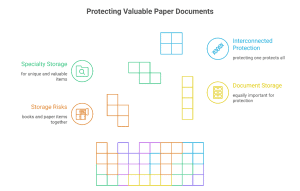
Where books are stored, you’ll often find other valuable paper items too.
Such as:
- Certificates
- Property papers
- Research files
- Journals
- Blueprints
- Old newspapers
- Family photographs
- Scrapbooks
- Diaries
- Historical documents
This is where document storage and specialty storage become equally important.
Protecting one often means protecting all.
Can Mold Grow on Books?
Yes.
And once it starts, it spreads faster than most people expect.
Books stored close together create an ideal environment for mold.
One affected book can eventually impact neighboring books if conditions remain damp.
This is another reason why humidity should never be ignored.
Simple Ways to Protect Books During Monsoon
Good book storage doesn’t have to be complicated.
A few simple habits can make a big difference.
Keep Books in a Dry Environment
Avoid areas prone to dampness or poor ventilation.
Allow Airflow Around Shelves
Don’t pack books too tightly together.
Small gaps help reduce trapped moisture.
Inspect Your Collection Regularly
Flip through older books occasionally.
Look for signs of moisture before serious damage occurs.
Keep Valuable Collections Separate
Rare books, signed editions, research materials, and family albums deserve additional protection.
Think Beyond Ordinary Shelves
When books carry educational, professional, or emotional value, storing them in the right environment becomes far more important than simply finding extra space.
For long-term preservation, suitable specialty storage or climate-controlled storage can help reduce the effects of humidity and seasonal changes.
A Book Is More Than Paper
Think about your favorite book.
Now imagine opening it after five years.
Would you rather find crisp pages…
Or discover mold, stains, and damaged memories?
Books don’t just contain information.
They preserve moments.
Exam preparation.
Career milestones.
Childhood stories.
Family traditions.
Personal notes.
Signed copies.
Every page carries something worth protecting.
The Next Time It Rains, Look at Your Bookshelf
Not because you’re expecting damage.
But because books rarely complain.
They quietly absorb everything happening around them.
And by the time they finally show signs of humidity…
The damage has often been building for months.
Protecting your books today means you’ll still be able to open them years from now—with the same stories, the same memories, and the same pages waiting to be turned.
Frequently Asked Questions About Book Storage
Can humidity damage books?
Yes. High humidity can cause pages to curl, bindings to weaken, mold to grow, and paper to deteriorate over time.
How should books be stored during monsoon?
Books should be stored in a clean, dry, well-ventilated environment away from damp walls, moisture, and direct exposure to humidity.
Can mold spread from one book to another?
Yes. If conditions remain damp, mold can spread across nearby books and paper materials.
What is the best way to protect valuable books?
Regular inspections, proper airflow, and storing valuable collections in stable environmental conditions help preserve books for the long term.
Why is document storage important for paper collections?
Document storage helps protect books, research papers, certificates, photographs, and other valuable paper records from humidity, dust, and environmental damage.
Can climate-controlled storage help protect books?
Yes. Climate-controlled storage provides a more stable environment, helping reduce humidity-related damage to books and other paper-based collections.
Every Great Book Deserves a Long Life
Whether it’s your favorite novel, years of study notes, professional reference books, or a family album passed down through generations, protecting paper from humidity today can preserve it for years to come.
If you’re looking for a safer way to store valuable books, important documents, or personal collections, the right storage environment can make all the difference.
📞 Talk to our storage specialists: +91 8433925040
