

An interior design studio should be a place where ideas come together. Mood boards take shape, materials get shortlisted, furniture gets selected and creative conversations turn into beautiful spaces.
But somewhere between the fabric samples, tile catalogues, furniture pieces and leftover project materials, something happens. The studio starts looking less like a creative workspace and more like a storage room.
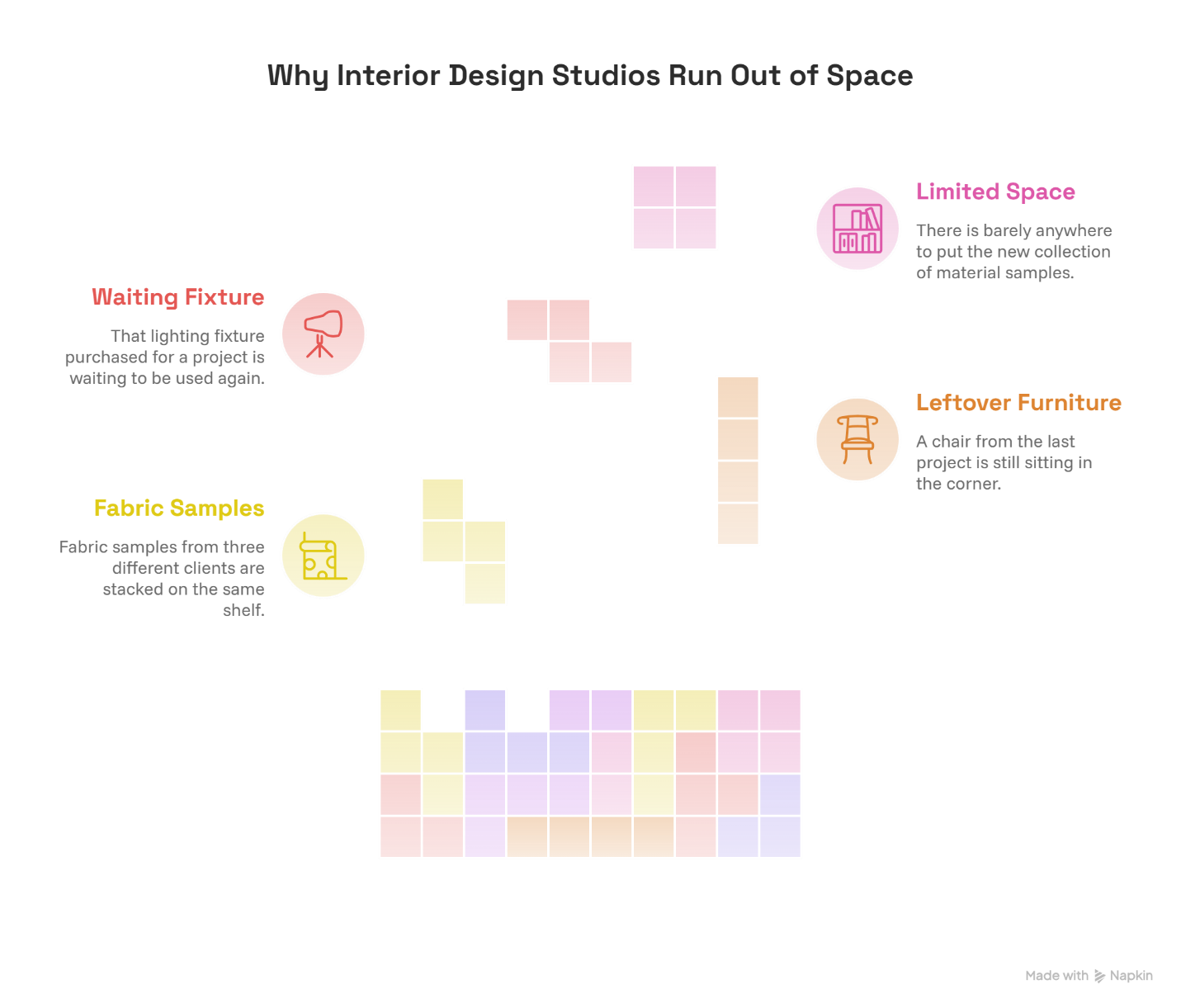
A chair from the last project is still sitting in the corner. Fabric samples from three different clients are stacked on the same shelf. That lighting fixture purchased for a project is waiting to be used again. And the new collection of material samples? There is barely anywhere to put it.
For many interior designers and architecture firms, running out of space is not necessarily a sign of having a large business. Sometimes, it is simply the result of having too many things that need to be kept, organised and accessed at different stages of different projects.
So, why do interior design studios run out of space so quickly? And what can businesses do about it? Let’s look at what’s really taking up all that room.
1. Material Samples Have a Way of Multiplying
Ask any interior designer about material samples, and you’ll probably hear the same thing: you can never have just a few. Fabric swatches, wallpaper books, wood finishes, laminate sheets, marble samples, tiles, paint charts and upholstery options are all part of the selection process.
Each project may require a different combination of materials. Designers also need to retain certain samples for future client discussions, comparisons and reference. The problem begins when these collections keep growing. A few sample books become multiple shelves. Small tile samples occupy drawers. Fabric swatches get mixed together. Before long, finding one specific material becomes a task in itself.
Why it creates a space problem
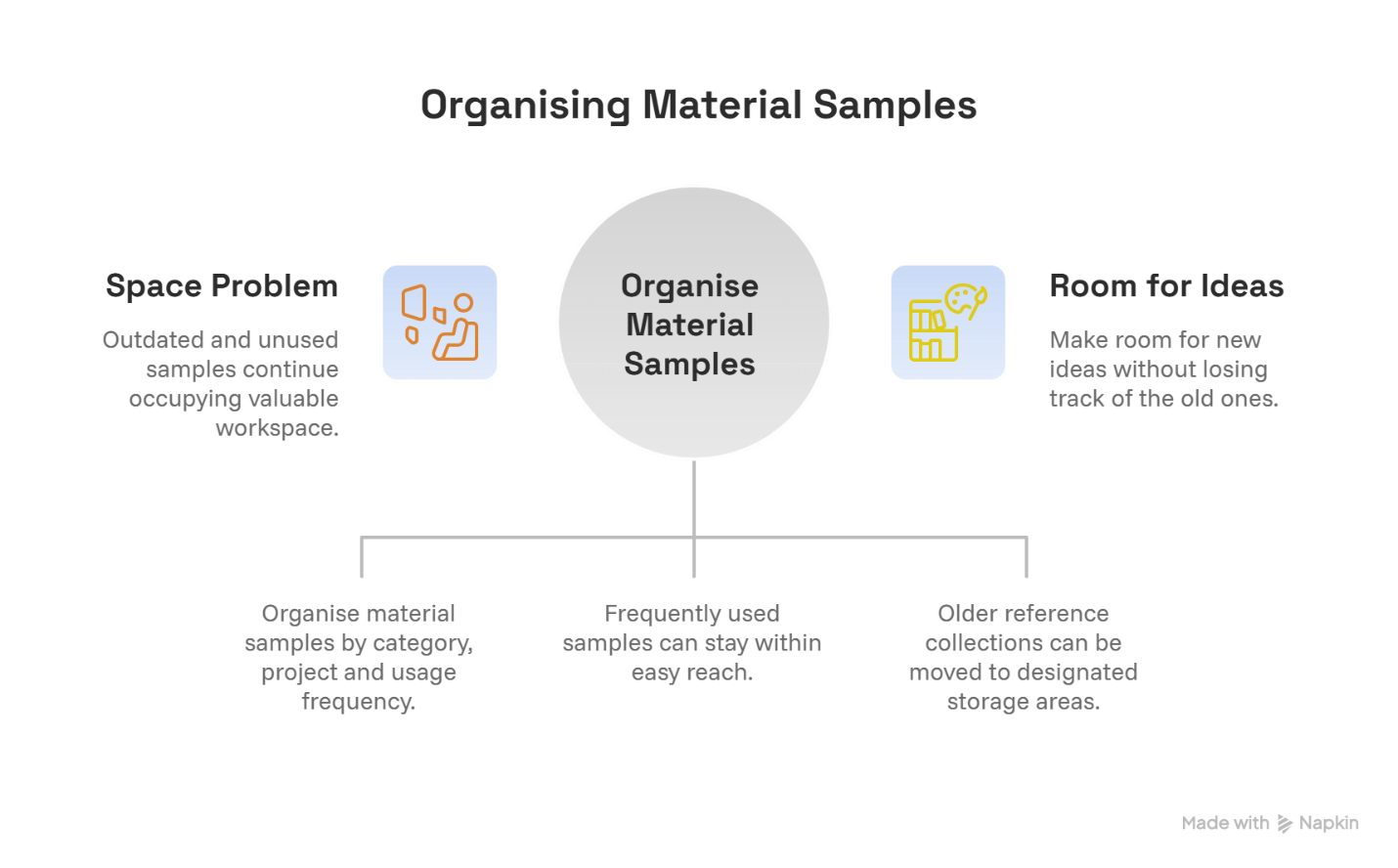
New samples arrive regularly, but older ones are rarely discarded. Different projects require different material combinations, and samples need to remain accessible for client presentations. Small items are easy to accumulate and difficult to organise, while outdated and unused samples continue occupying valuable workspace.
A practical first step is to organise material samples by category, project and usage frequency. Frequently used samples can stay within easy reach, while older reference collections can be moved to designated storage areas. The objective is simple: make room for new ideas without losing track of the old ones.
2. Furniture from Completed Projects Doesn’t Always Leave
A project may be complete, but the furniture doesn’t necessarily disappear with the final handover. An interior design firm might have chairs, side tables, lamps, decorative pieces, rugs, mirrors and display accessories left over from a project.
Some items may be reused for another client. Others might be kept for future styling, photography or presentations. Certain pieces may be waiting for collection, delivery or a decision about their next use. And where do they go in the meantime? Usually, wherever there is an empty corner.
Over time, these temporary arrangements become permanent space problems. Meeting rooms get occupied by furniture, work areas become difficult to access, and the studio starts losing its original purpose.
What can help?
Create separate categories for furniture intended for reuse, décor and styling accessories, items awaiting delivery or collection, pieces retained for future projects, and items that are ready to be sold, donated or disposed of. When furniture and décor are not required for immediate work, suitable external storage can help free up valuable studio space.
3. Every New Project Brings a New Set of Materials
Interior design businesses rarely work on just one project at a time. While one client is finalising a living room design, another may be planning a commercial workspace. A third project might be waiting for material approvals, while a fourth is already moving towards execution.
Each project brings its own set of samples, furniture selections, fixtures, accessories and documentation. The challenge is not simply the quantity of materials. It is keeping everything separate and easy to locate.
Imagine needing a particular flooring sample for a client meeting, only to discover that it is somewhere inside a pile of materials from another project. That is time spent searching instead of designing.
A project-wise organisation system can make a significant difference. Label storage boxes, assign shelves or sections to individual projects, and maintain a simple inventory of materials and items. This makes it easier to identify what belongs where, what is currently being used and what can be moved out of the active workspace.
4. The Studio Becomes a Holding Area for Everything
An interior design studio is expected to do several jobs at once. It is an office, a meeting space, a material library, a presentation area and sometimes even a temporary holding space for furniture and project supplies. The difficulty is that all these functions compete for the same square footage.
When the studio becomes crowded, the effects go beyond appearance. Client meetings may feel less organised, and designers spend more time locating samples and materials. Employees have less room to work comfortably, new inventory becomes harder to accommodate, and valuable floor space gets occupied by items that are not needed every day.
A studio should support the design process, not get in its way. One useful approach is to divide everything into three groups: items needed daily, items needed occasionally and items that are not currently required. Keep the first group close. Organise the second group in designated areas. Consider moving the third group to suitable external storage, depending on the nature of the items.
5. Old Project Materials Are Difficult to Let Go Of
Interior design is a business of possibilities. A leftover piece of wood, a discontinued fabric sample or a decorative accessory might be useful for a future project. That makes it tempting to keep almost everything.
And sometimes, keeping materials is a sensible business decision. Reusable items can help with future concepts, client presentations and project planning. But there is a difference between keeping useful materials and keeping everything indefinitely.
Without a regular review, studios can accumulate outdated material samples, damaged or incomplete items, duplicate catalogues, unused decorative accessories, leftover project materials and furniture that no longer fits the firm’s requirements.
A quarterly inventory review can help identify what should stay, what can be reused, what can be donated or sold and what should be discarded. The aim is not to throw away useful resources. It is to make sure the things being retained actually deserve the space they occupy.
6. A Growing Design Business Needs a Better Space Plan
When an interior design firm takes on more clients, its storage requirements naturally change. More projects mean more material samples, more furniture selections, more accessories and more items moving between suppliers, studios and project sites.
But business growth does not always come with a bigger office. Moving to a larger studio may not be practical or necessary. Sometimes, the more immediate solution is to use the existing workspace more efficiently.
A few changes can help. Review how much space is occupied by non-essential inventory, and separate active project materials from archived materials. Use clearly labelled storage containers and shelving, and track furniture and décor that move between projects. Schedule regular stock and material reviews, and identify items that can be kept outside the main studio. For items that do not need to remain on-site, external storage can be worth considering.
When Should an Interior Design Studio Consider External Storage?
 Not every material or piece of furniture needs to be inside the studio all the time. If your workspace is regularly occupied by furniture from completed projects, unused décor, archived samples or materials waiting for future use, it may be time to rethink where everything is kept.
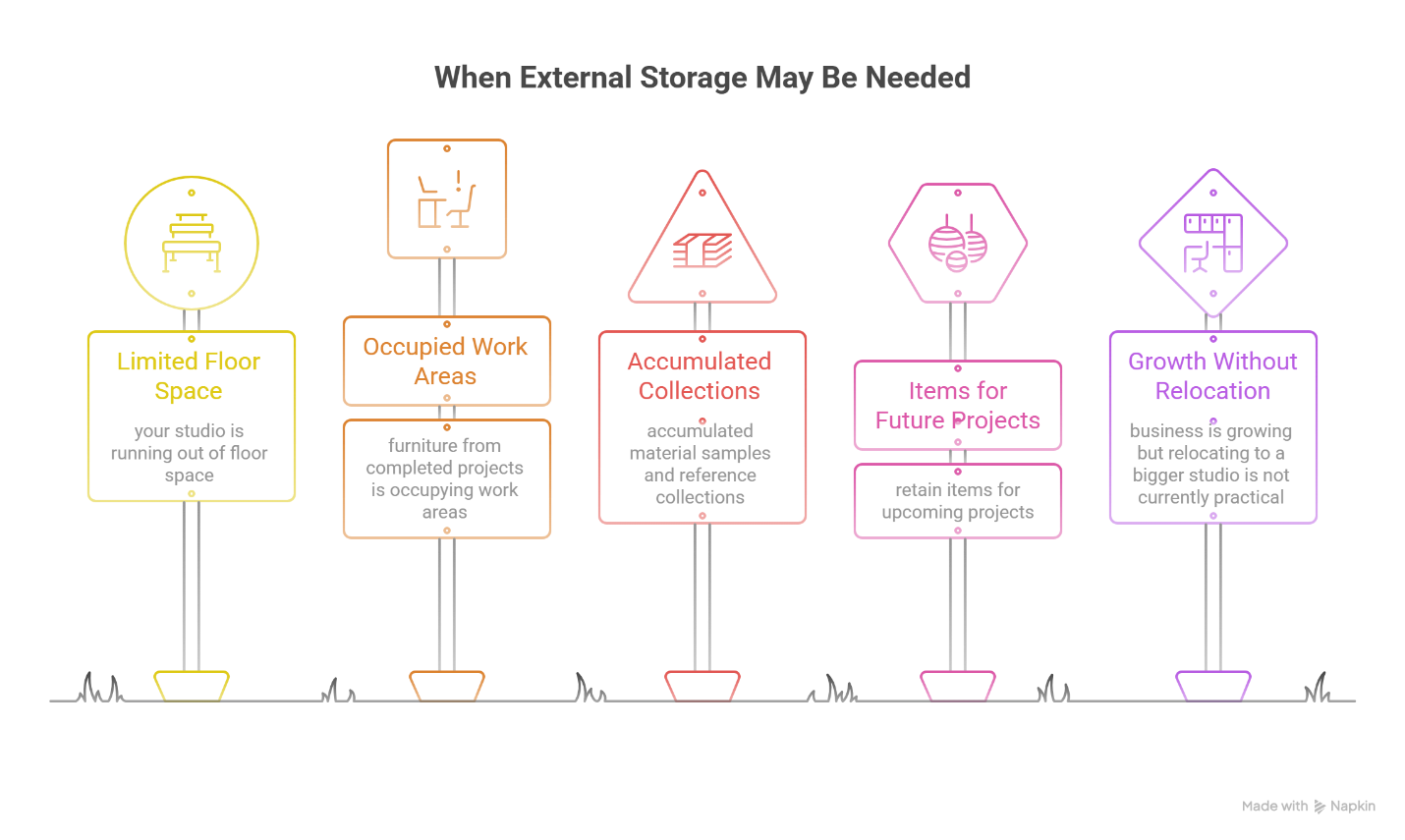
External storage can be useful when your studio is running out of floor space, when furniture from completed projects is occupying work areas, or when you have accumulated material samples and reference collections. It also helps when you need to retain items for upcoming projects, or when your business is growing but relocating to a bigger studio is not currently practical.
The right storage arrangement depends on what you need to store, how frequently you need access and whether the items require any specific handling or environmental conditions. Before choosing a storage solution, consider the size, quantity and nature of your inventory, along with how easily you need to retrieve it.
A Quick Space Check for Interior Design Studios
Before deciding that your studio needs more square footage, take a look at what is already occupying it. Ask yourself the following questions.
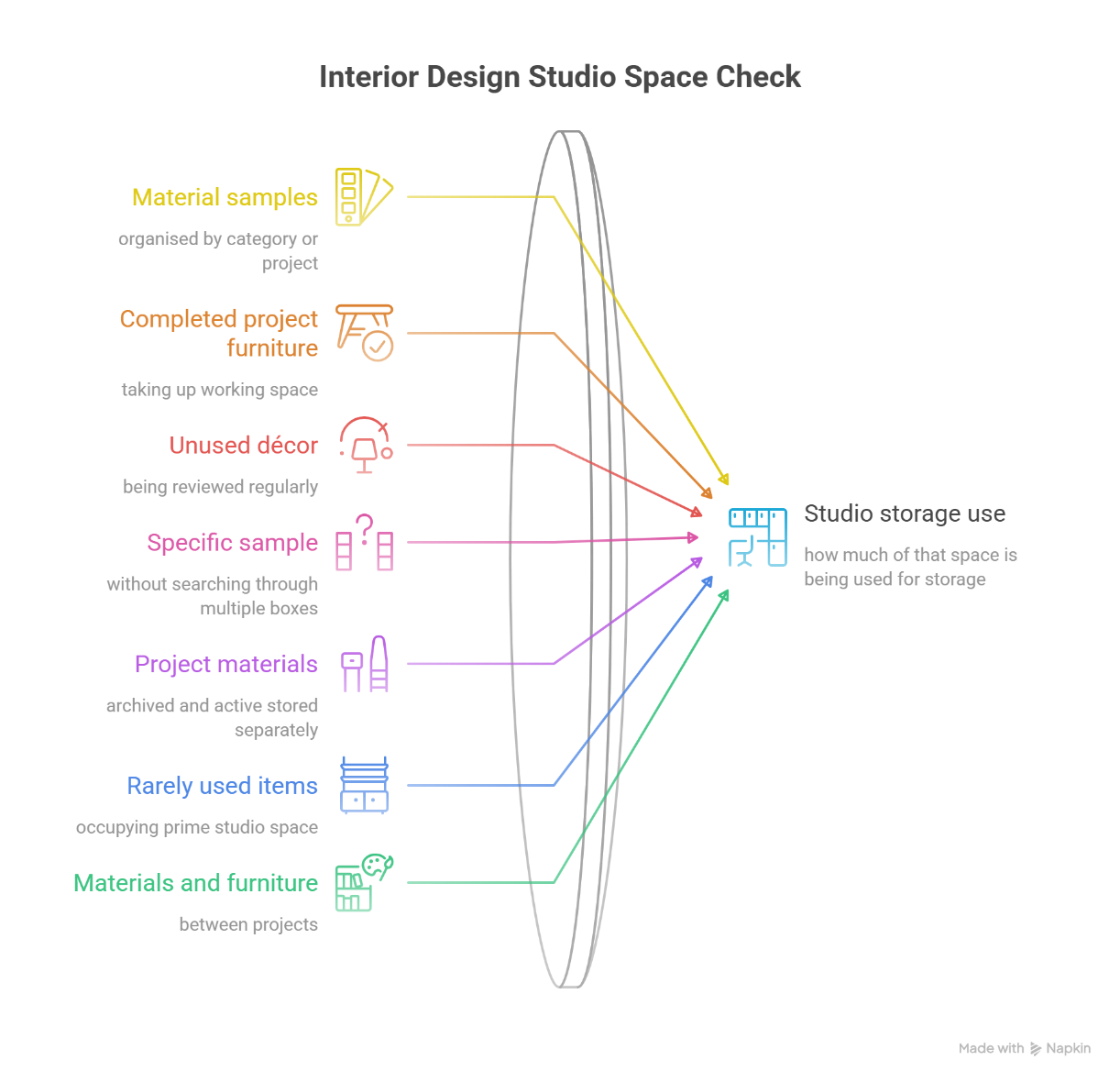
- Are material samples organised by category or project?
- Is furniture from completed projects taking up working space?
- Are unused décor and styling accessories being reviewed regularly?
- Can you locate a specific sample without searching through multiple boxes?
- Are archived and active project materials stored separately?
- Are items that are rarely used occupying prime studio space?
- Do you have a clear plan for materials and furniture between projects?
If several of these answers are a “no”, the issue may not be the size of your studio. It may be how much of that space is being used for storage.
Frequently Asked Questions
- Why do interior design studios need storage space?
Interior design studios manage a wide range of physical materials, including fabric samples, tiles, wood finishes, furniture, lighting, décor accessories and project supplies. As projects increase, these items can occupy valuable workspace and create a need for better storage management.
- What materials do interior designers commonly need to organise?
Common materials include fabric swatches, wallpaper books, flooring and tile samples, wood and laminate samples, lighting fixtures, furniture, rugs, mirrors, decorative accessories and presentation materials.
- How can interior designers organise material samples?
Designers can organise samples by material category, supplier, project or frequency of use. Labelling containers, maintaining a sample inventory and separating active samples from older reference collections can make retrieval easier.
- How can an interior design studio create more workspace without relocating?
A studio can review its inventory, reorganise material samples, separate active and archived project items, remove unused materials and consider suitable external storage for items that are not needed every day.
- Is external storage useful for interior design businesses?
Yes. External storage can help interior design businesses manage furniture, décor, project materials and other items that do not need to occupy the main studio. The suitability of a storage facility depends on the items being stored and their handling requirements.
Make Room for the Next Big Idea
An interior design studio should have room for creativity, collaboration and the next exciting project. It shouldn’t have to sacrifice its workspace to accommodate furniture from an old project, boxes of unused samples or materials that may not be needed for months.
Sometimes, creating more room doesn’t mean finding a bigger studio. It means finding a smarter way to manage everything outside it.
If your interior design business needs additional space for furniture, materials or other belongings, Your Space Doctor offers storage solutions for businesses across Mumbai, Pune and Bengaluru. Give your studio some breathing room and make space for what’s next.
Need storage space for your business?
