

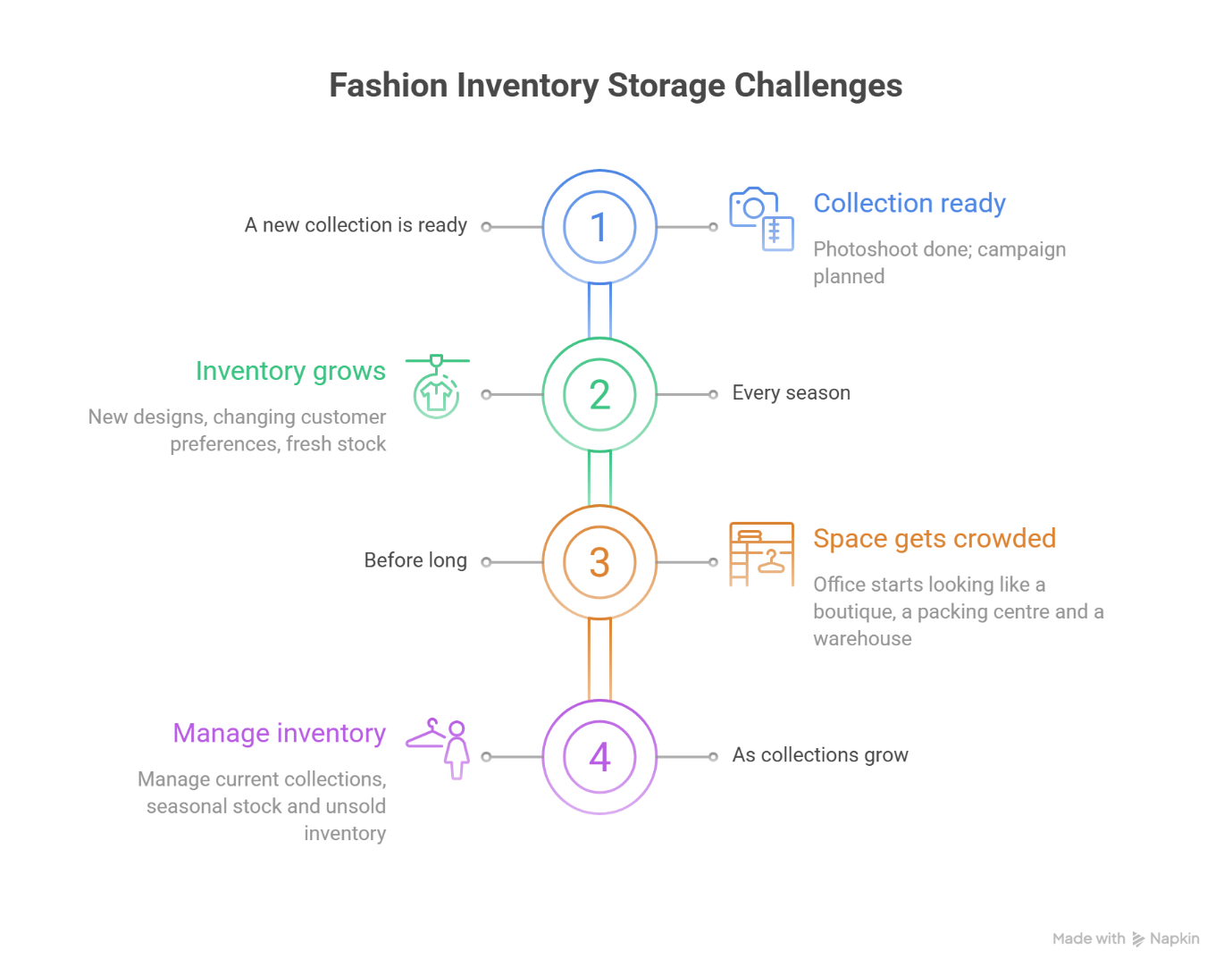
A new collection is ready. The photoshoot is done, the campaign is planned, and your latest designs are waiting to meet their customers.
There’s just one small problem. Where are you going to put the previous collection?
For fashion brands, managing inventory is not just about keeping garments on shelves. Every season brings new designs, changing customer preferences, fresh stock and another round of packaging materials. Meanwhile, unsold garments, accessories and older collections still need space. Before long, your office starts looking like a boutique, a packing centre and a warehouse all at once.
And if you’re running an online fashion store, a clothing label, a boutique or a growing apparel business, you probably know how quickly inventory can pile up. The challenge is finding a practical way to manage current collections, seasonal stock and unsold inventory without letting everything compete for the same space.
So, how can fashion businesses stay organised as their collections grow? Let’s look at some practical ways to manage fashion inventory and make better use of available storage space.
1. Separate Current Collections from Previous Seasons
One of the biggest challenges for fashion brands is managing multiple collections at the same time. Your latest summer collection may be ready for dispatch, but winterwear from the previous season could still be occupying valuable space. If everything is stored together, identifying the right stock becomes difficult.
Start by dividing your inventory into clear categories. Current collection covers garments currently being promoted and sold, while previous-season collection includes items from earlier launches. Upcoming collection is new stock waiting for its launch, and unsold inventory is whatever remains from previous sales cycles. Limited-edition pieces are special collections that may need separate tracking, and returns and exchanges are items awaiting inspection and restocking.
This simple classification helps your team understand which products need immediate access and which can be moved to a separate storage area. For example, your current collection may need to stay close to your dispatch team, while older seasonal stock can be organised separately. Not every collection needs front-row space all year round.
2. Create a Proper Inventory Management System
Imagine receiving an order for a particular dress, only to discover that the stock record says five pieces are available while nobody can find even one. That’s an inventory problem many growing fashion businesses want to avoid.
As your product range expands, manually remembering what is stored where becomes increasingly difficult. Create an inventory record for every product or stock-keeping unit (SKU). Useful details include the product name and SKU, the collection or season, size and colour, available quantity, stock location, product condition, purchase or production details, and sales and return status.
For example, a fashion brand selling the same shirt in four sizes and three colours should be able to track each variation separately. A spreadsheet may be enough for a smaller clothing business, while brands handling larger inventories may benefit from dedicated inventory management software. The important thing is to keep records updated whenever stock arrives, moves, gets dispatched or is returned.
3. Organise Garments by Type, Size and Collection
A storage area filled with clothing racks and cartons may look organised from a distance. But can your team find a specific product in under a minute? That’s the real test.
Fashion inventory becomes easier to manage when garments are arranged according to how your business sells and handles them. Consider organising clothing by product category (shirts, dresses, trousers, jackets and ethnic wear), collection (current, previous and upcoming), size (XS, S, M, L, XL and other available sizes), colour (useful when products have multiple colour variations) and season (summerwear, winterwear, festive collections and occasionwear).
Use garment racks, suitable shelving and clearly labelled storage containers wherever appropriate. For garments that need to remain on hangers, use suitable garment covers and allow enough space to prevent unnecessary crushing. Foldable clothing can be organised in labelled cartons or shelving units, depending on the fabric and storage requirements.
This makes stock retrieval easier and helps your team spend less time searching through piles of clothing.
4. What Should You Do with Unsold Fashion Inventory?
Every fashion brand has products that don’t sell as quickly as expected. A particular design may receive fewer orders. A seasonal collection may have leftover sizes. Or a product may simply lose demand once a new collection arrives. But unsold stock doesn’t automatically mean useless stock.
Depending on your business strategy, you may choose to include products in an end-of-season sale, bundle selected products with other items, or offer them through promotional campaigns. You could also move suitable products to an outlet or clearance section, retain selected pieces for future demand, or store inventory until you decide how to sell or use it.
The key is to separate unsold inventory from your active collection. This prevents older stock from occupying the same easily accessible space required for new arrivals.
You should also review the condition of unsold garments before storing them. Check for damaged packaging, missing tags, stains or other issues that could affect future sales. A collection may be out of season, but that doesn’t mean it has to disappear from your inventory records.
5. Store Seasonal Clothing with the Right Preparation
Seasonal inventory needs a little planning. A winterwear collection may remain unused for several months in a warmer climate, while summer clothing may need to be stored when the next seasonal range arrives. Before moving garments into storage, prepare them properly.
Clean garments before storage. Make sure clothing is clean and completely dry. Storing garments with stains, moisture or food residue can create problems over time.
Use suitable packaging. Choose clean, dry packaging materials appropriate for the fabric. Delicate garments may need individual protective covers.
Avoid excessive compression. Some fabrics and garments can develop creases or lose their shape when compressed or packed too tightly.
Label every carton. Include details such as collection name, garment category, size range and quantity.
Review storage conditions. Check that the storage environment is appropriate for the fabric and other materials. Pay attention to moisture, ventilation, dust and potential pest issues.
For delicate, embellished or high-value garments, follow the manufacturer’s or garment-care specialist’s storage recommendations.
6. Don’t Forget Fashion Accessories and Display Materials
Clothing isn’t the only inventory fashion brands need to manage. Accessories can occupy a surprising amount of space, especially when a brand sells multiple product categories or prepares for seasonal campaigns. Think about handbags and purses, belts and wallets, scarves and stoles, jewellery and fashion accessories, caps and hats, footwear, mannequins and display stands, and promotional and photoshoot props.
These items should be organised separately from garments wherever practical. Use suitable containers for smaller accessories and protective packaging for delicate or easily scratched products.
Mannequins, display stands and larger promotional materials may need dedicated space so they don’t interfere with everyday stock handling. For brands that frequently refresh their store displays or participate in exhibitions, keeping display materials organised can also make future campaigns easier to prepare.
7. Make Space for Packaging and Dispatch Materials
Here’s another storage challenge that fashion businesses sometimes underestimate. The garments are organised. The accessories are sorted. The inventory is under control. But where are you keeping the cartons, shopping bags, tissue paper, labels, wrapping materials and courier packaging?
Packaging supplies can occupy considerable space, particularly for online fashion brands handling regular orders. Create a separate area for shipping cartons in different sizes, courier bags and mailers, branded shopping bags, tissue paper and wrapping materials, product labels and tags, protective packaging, and promotional inserts and thank-you cards.
Keep frequently used packaging supplies close to the dispatch area. Bulk packaging inventory that isn’t required immediately can be organised separately, provided it remains clean and dry.
It also helps to review packaging stock regularly. There’s little point ordering another large batch of cartons if several hundred are already sitting in storage.
8. Plan Your Storage Around Fashion Seasons and Sales Cycles
Fashion inventory doesn’t move at the same speed throughout the year. Festive collections, summer ranges, winterwear, wedding-season clothing and special launches can all create different storage requirements. Instead of waiting until inventory starts overflowing, plan ahead.
Before a new collection launch, make room for incoming garments and accessories. During peak sales, keep fast-moving stock easily accessible. After a festive season, review remaining seasonal inventory. During end-of-season sales, separate clearance stock from current collections. And before the next season, organise previous collections and prepare space for new arrivals.
You can also estimate upcoming stock requirements using previous sales records and purchase plans. This helps your business anticipate periods when additional space may be needed.
For example, a clothing brand preparing for a festive launch may need room for new garments, packaging materials, display accessories and additional inventory before the campaign begins. A little planning can prevent last-minute storage problems when the next collection arrives.
9. When Should Fashion Brands Consider External Storage?
Sometimes, better organisation isn’t enough. Your business may already have labelled shelves, organised garment racks and a proper inventory system. But as your product range grows, the available space may still fall short.
This is particularly common for online clothing brands managing large product inventories, boutiques receiving multiple collections, fashion wholesalers handling bulk garments, apparel manufacturers managing finished stock, brands retaining previous-season collections, and businesses storing packaging and promotional materials.
External storage can be worth considering when your office, boutique or existing stockroom cannot comfortably accommodate all your inventory. Depending on the facility and storage arrangements, additional space may be useful for seasonal garments, unsold collections, bulk clothing inventory, fashion accessories, display materials and mannequins, packaging and dispatch supplies, and reserve stock and upcoming collections.
Before choosing a storage solution, consider the following:
Storage capacity: Estimate the volume of garments, cartons and accessories.
Storage duration: Identify whether you need temporary space between collections or a longer-term arrangement.
Access frequency: Decide how often your team will need to retrieve products.
Garment requirements: Consider the fabric, packaging, hanging requirements and protection needed.
Inventory tracking: Maintain records of what is stored and where it is located.
Storage conditions: Check whether the facility is suitable for the garments and materials you intend to store.
The objective is to keep your primary business premises focused on sales, customer experience and daily operations, while managing additional inventory separately.
10. Build a Fashion Inventory Storage Checklist
A proper storage routine doesn’t have to be complicated. Whether you operate a boutique, an online clothing brand or an apparel business, a simple checklist can help keep inventory organised.
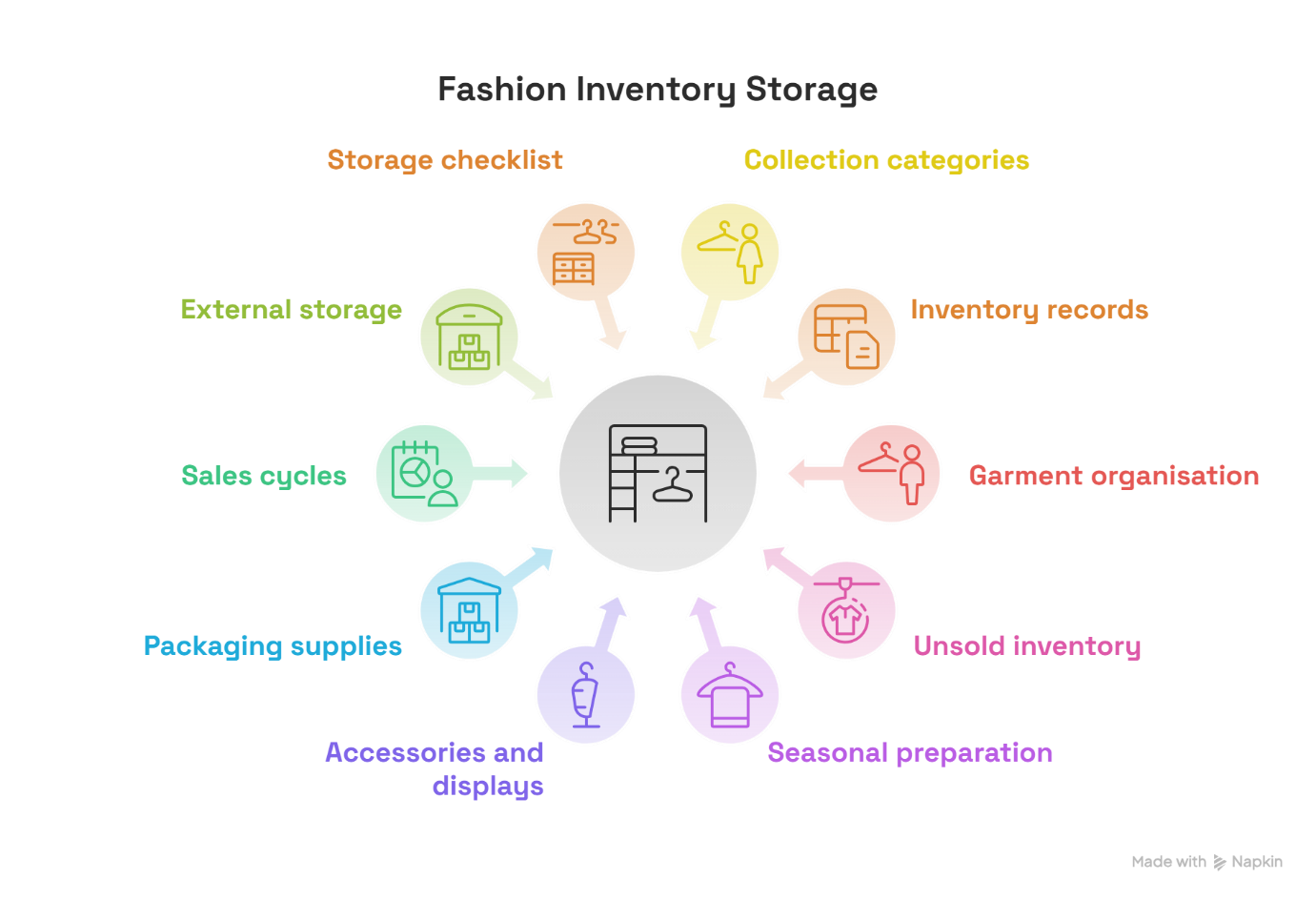
Separate current and previous-season collections, and prepare an updated inventory of all garments. Categorise clothing by product, size and colour, and keep unsold stock apart from active inventory. Clean and dry garments before storage, and use suitable garment covers and storage containers. Organise accessories separately, and label cartons with collection and product details. Maintain a separate area for packaging materials, and review stock before every new collection launch. Track incoming, outgoing and returned inventory, and assess whether additional storage space is required.
Review this checklist before major launches, seasonal transitions and end-of-season sales. A consistent system can make inventory easier to locate, manage and retrieve.
Frequently Asked Questions About Fashion Inventory Storage
- How should fashion brands store seasonal clothing collections?
Fashion brands should clean and dry garments, organise them by collection and category, use suitable packaging and label storage cartons clearly. Storage conditions should be appropriate for the fabric and garment type.
- What should clothing brands do with unsold inventory?
Brands can consider clearance sales, promotional offers, outlet sales, future collections or retaining selected stock. Products that aren’t required immediately can be organised separately, subject to their storage requirements.
- How can fashion businesses manage large clothing inventories?
Maintain an updated inventory with SKU, size, colour, quantity and location details. Categorise garments, label storage areas and record stock movement whenever products are received, dispatched or returned.
- How should garments be packed for long-term storage?
Garments should be clean and completely dry before packing. Use suitable packaging, avoid excessive compression and protect delicate fabrics appropriately. Review storage conditions periodically.
- Why do fashion brands need additional warehouse storage?
Growing fashion brands may need additional space for previous collections, unsold stock, new arrivals, accessories and packaging materials. External storage can help separate reserve inventory from daily business operations.
- Can fashion accessories and packaging materials be stored along with clothing?
They can be organised within the same overall storage arrangement if the facility is suitable, but accessories and packaging should be separated and protected appropriately. Fragile accessories and materials with special storage requirements may need dedicated arrangements.
10. Make Room for Your Next Collection!
Every new fashion collection brings fresh designs, new opportunities and, inevitably, more inventory. But your previous collection, unsold garments, accessories and packaging supplies still need a place.
Instead of allowing stock to take over your boutique, office or workspace, consider a more organised storage arrangement. Your Space offers storage solutions across Mumbai, Pune and Bengaluru for businesses looking to manage their space and inventory requirements more efficiently.
Whether you’re running a clothing brand, an online fashion store, a boutique or an apparel business, explore additional storage options for your business belongings. Because your next collection deserves space to arrive without your previous one getting in the way!
Need additional storage space for your fashion inventory?
