
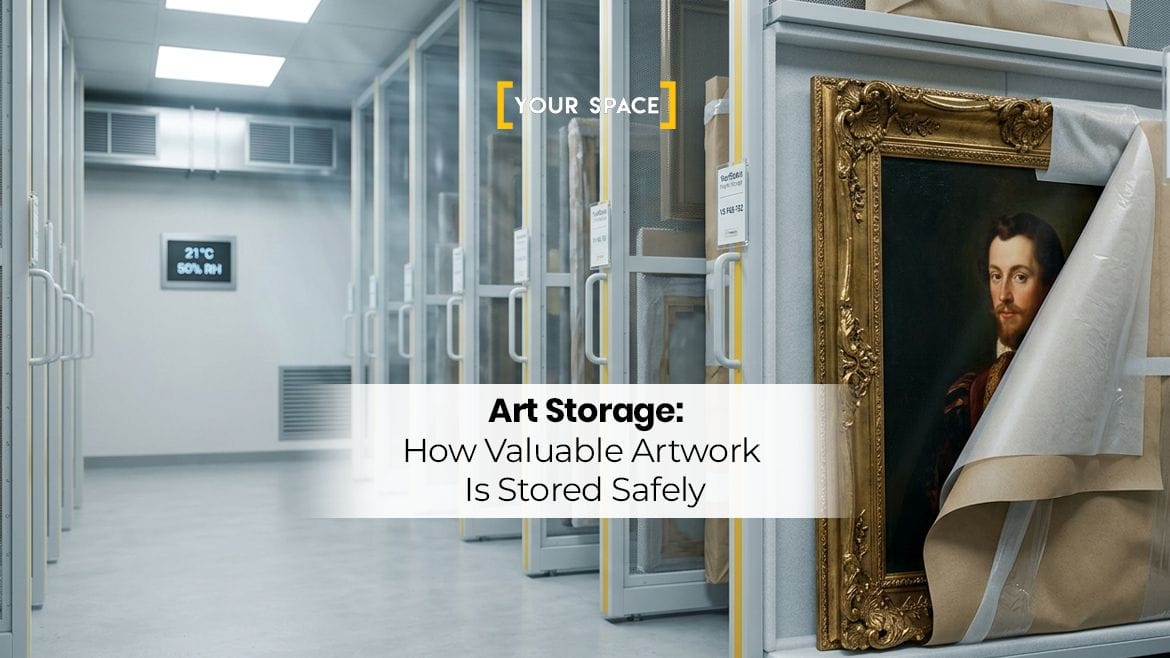
You Don’t Notice Bad Art Storage… Until It’s Too Late
Let’s start with something most people don’t think about.
A painting looks fine when you hang it.
It looks fine when you take it down.
And it still looks fine when you wrap it and keep it away.
But give it a few months.
Sometimes a year.
Then open it again.
That’s when things feel different.
The colors don’t feel as sharp.
The canvas doesn’t sit as straight.
Something feels… off.
And the worst part?
You can’t reverse it.
That’s the moment people realize:
Art wasn’t stored. It was just kept.
And there’s a big difference between the two.
Why Art Storage Is Not the Same as Regular Storage
You can store furniture anywhere.
You can stack boxes anywhere.
But artwork doesn’t behave like that.
It reacts.
To air.
To light.
To temperature.
To humidity.
Even small changes can slowly affect it.
That’s why art storage and painting storage are treated differently from normal storage.
It’s not about space.
It’s about environment.
What Actually Damages Artwork in Storage
Most damage doesn’t happen suddenly.
It happens quietly.
Over time.
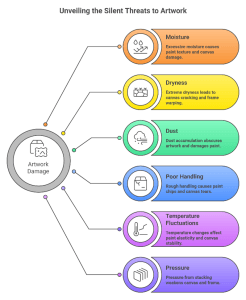
Here’s what usually affects artwork:
• moisture in the air
• excessive dryness
• dust accumulation
• poor handling
• pressure from stacking
• temperature fluctuations
These things don’t look dangerous at first.
But they slowly impact:
• paint texture
• canvas structure
• frame condition
That’s why secure art storage and climate controlled storage matter more than people think.
What Makes Art Storage Safe
Safe art storage is not complicated.
But it is precise.
It focuses on protecting artwork from the things that damage it over time.
Climate Controlled Art Storage for Paintings
One of the biggest factors is climate.
Too much humidity leads to Mold.
Too little leads to cracking.
Fluctuating temperatures weaken materials.
That’s why climate controlled storage for artwork is essential.
It keeps conditions stable, so artwork remains unchanged over time.
Protective Handling in Painting Storage
How artwork is handled matters just as much as where it is stored.
Paintings should be:
• wrapped properly
• supported correctly
• never stacked carelessly
Even a small bend or pressure point can cause long-term damage.
Organized Art Storage Systems
Art should never be randomly placed.
Professional art storage facilities use:
• vertical storage racks
• separated compartments
• structured placement systems
This prevents accidental damage and allows easy access.
What People Usually Store in Art Storage
Art storage is not limited to gallery paintings.
It includes a wide range of items:
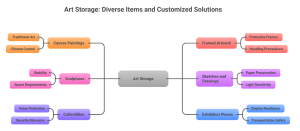
• canvas paintings
• framed artwork
• sculptures
• sketches and drawings
• collectibles
• exhibition pieces
Each item has different storage needs.
That’s why art storage solutions are often customized based on the type of artwork.
Who Needs Art Storage the Most
Many people assume art storage is only for galleries.
But that’s not true.
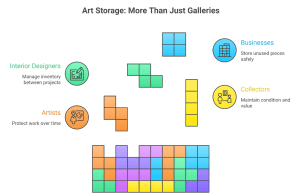
Artists
Artists create continuously.
Not every piece is displayed.
Storage helps protect their work over time.
Collectors
Collectors invest in artwork.
Proper secure art storage helps maintain its condition and value.
Interior Designers
Designers rotate artwork between projects.
They rely on painting storage solutions to manage inventory.
Businesses and Offices
Many offices use artwork for interiors.
Unused pieces are stored safely for future use.
The Real Challenge: Space vs Protection
Here’s the real problem.
Artwork takes space.
Homes and offices don’t always have that space.
So people compromise.
They store art in cupboards.
Behind doors.
In storage rooms.
And that’s where the risk begins.
Because artwork needs more than just a place.
It needs the right conditions.
That’s why art storage bridges the gap between limited space and proper protection.
A Situation That Happens More Often Than You Think
You buy a painting.
You love it.
You display it for months.
Then life changes.
You shift homes.
You renovate.
You redecorate.
The painting is taken down.
Wrapped.
Stored.
And forgotten for a while.
When you open it again…
It’s not the same.
Not damaged completely.
But not perfect either.
And that’s when you realize:
Storage wasn’t done right.
Why Proper Art Storage Is a Long-Term Decision
Artwork is not temporary.
It stays for years.
Sometimes decades.
Sometimes generations.
The way it is stored today affects how it looks years later.
With proper art storage and painting storage systems, artwork remains:
• preserved
• stable
• protected
• valuable
Art Storage Is About Respecting the Work
At the end of the day, artwork is more than an object.
It carries:
• time
• effort
• creativity
• meaning
Storing it properly is not just about protection.
It’s about respecting the work itself.
Before You Choose Art Storage, Read This
What is art storage used for?
Art storage is used to safely store paintings, sculptures, and artwork in controlled environments to prevent damage.
Why is climate-controlled storage important for artwork?
It protects artwork from humidity, temperature changes, and environmental damage.
Can paintings get damaged in normal storage?
Yes. Improper storage can cause fading, cracking, Mold growth, and structural damage.
Who should use art storage services?
Artists, collectors, designers, and businesses storing artwork benefit from art storage.
How is painting storage different from regular storage?
Painting storage focuses on protection, controlled environments, and careful handling.
Some Things Need Protection…Not Just Space
Artwork is not something you replace.
Once damaged, it never feels the same again.
Storing it properly ensures it stays exactly as it was meant to be.
Visit: Your Space
Call Us: +91 8433925040
