
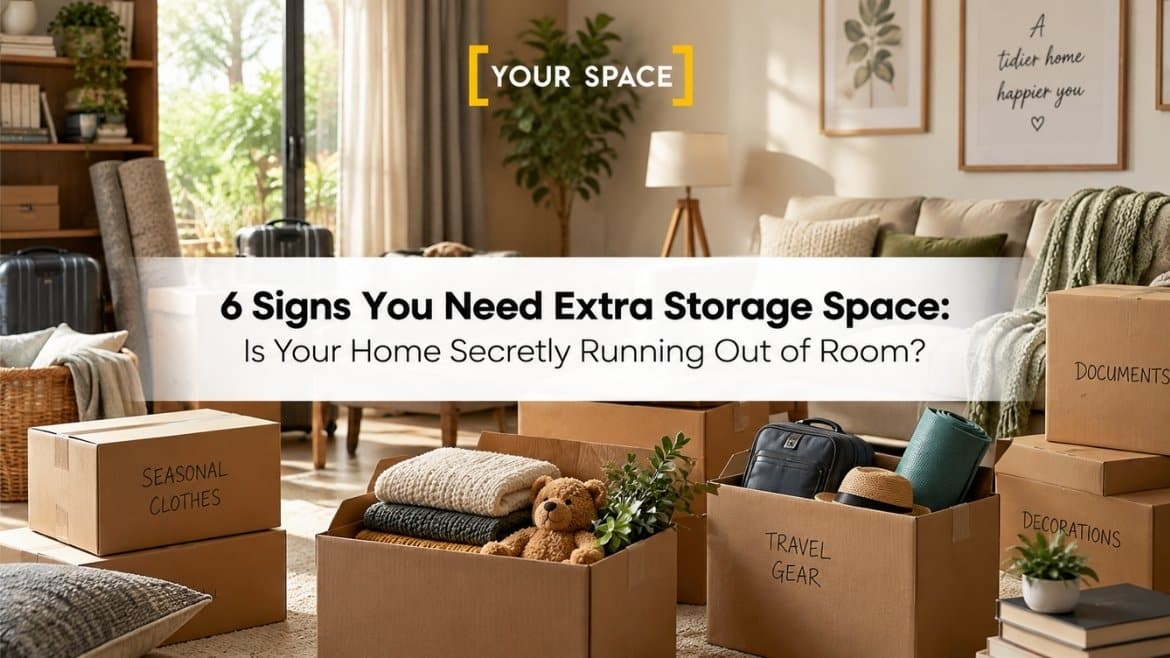
There’s a point when you stop noticing how much stuff is around you. Not because it has disappeared — quite the opposite. You’ve simply become used to it. The suitcase that has been sitting under the bed for eight months? Normal. The cartons stacked in the spare room? You hardly notice them anymore. The wardrobe that needs to be opened carefully because something might fall out? Just another morning. And that pile of belongings you promised you’d sort “this weekend”? Well, that weekend somehow turned into three months.
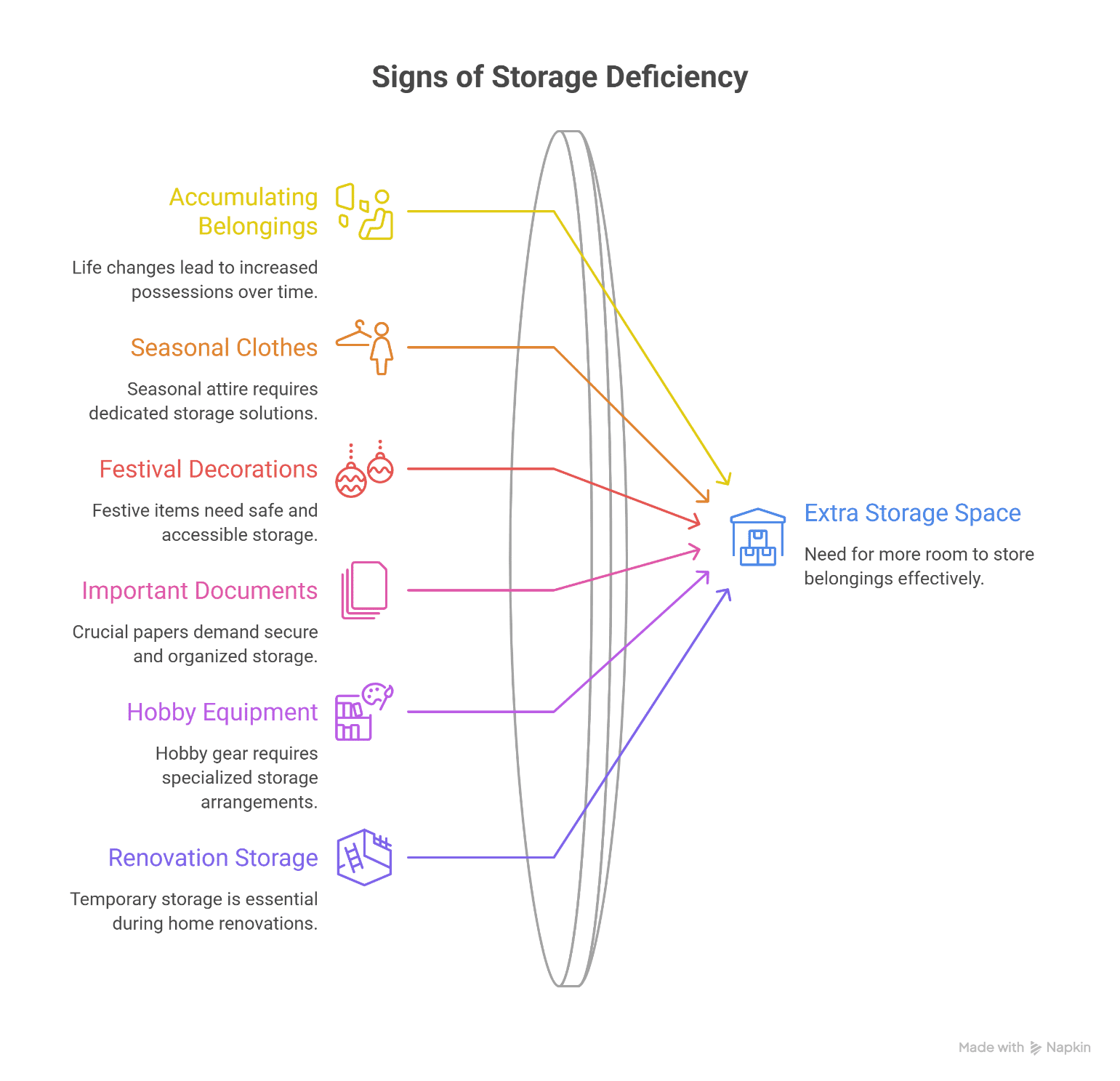
This happens in perfectly normal homes. As life changes, belongings accumulate. A family grows. Children grow up. New furniture comes in. Seasonal clothes need somewhere to go. Festival decorations are brought home. Important documents need to be kept. Hobbies require equipment. Renovations create temporary storage problems.
The issue isn’t always that you own too much. Sometimes, you simply don’t have enough storage space for everything you want to keep. And that’s an important difference. You don’t necessarily need to throw away belongings that are valuable, useful or sentimental. You may simply need a smarter way to store the things you don’t use every day.
So, how do you know when you’ve reached that point? Here are six signs you may need extra storage space.
Your Home Isn’t Getting Smaller. Your Belongings Are Taking Over.
Before getting into the signs, think about how storage usually happens at home. At first, there’s plenty of room. A few boxes go into the cupboard. Then another box goes into the loft. Winter clothes are packed away. A suitcase is placed under the bed. An old chair is moved into the spare room. Then something else needs a place.
Eventually, every available corner has a purpose. The cupboard is full. The loft is full. The balcony has a few boxes. The spare room has become a storage room. And you’re still trying to figure out where the next thing will go.
This is usually when people start searching for home storage solutions. But before you buy another cupboard or start thinking about moving into a larger home, look for these signs.
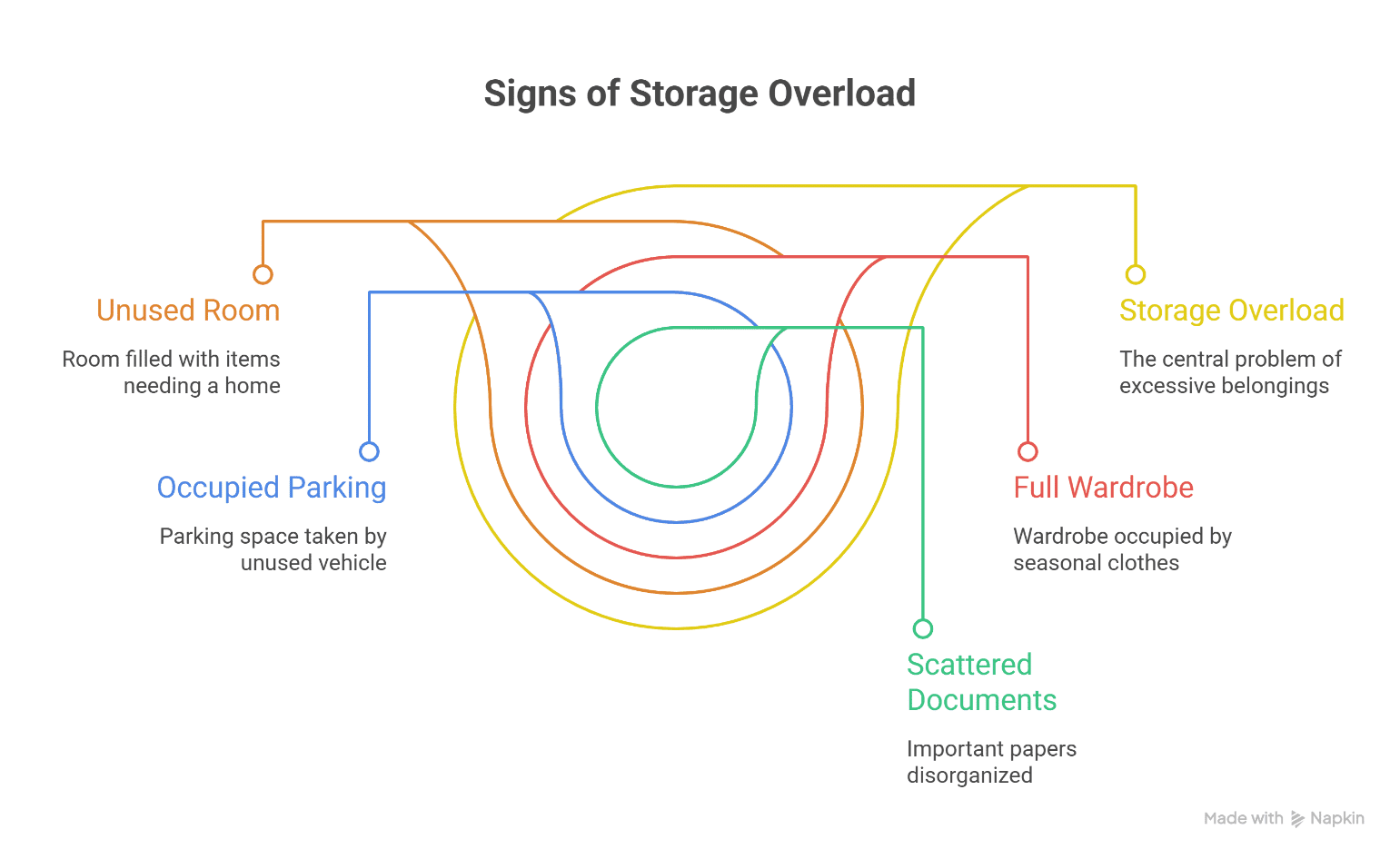
1. Your Spare Room Has Become a Storage Room
Remember what you originally planned for that room? Maybe it was going to be a guest bedroom. Maybe a home office. Perhaps a study, hobby room or even a place where family members could relax. Instead, it’s slowly filled up with things that don’t have another home.
Suitcases are stacked in one corner. Old furniture sits against the wall. Boxes are pushed behind the door. Festival decorations are waiting for their next use. There might even be an old mattress or appliance sitting there because “we’ll figure it out later.”
At some point, you realize something: you’re not keeping a spare room anymore — you’re keeping a storage room. That’s a pretty strong indication that your household has outgrown its current storage arrangement.
When the Guest Room Stops Being a Guest Room
A room shouldn’t become unusable simply because your belongings need somewhere to stay. If you genuinely want to keep those items, moving rarely used belongings into external household storage can give you the room back without forcing you to get rid of everything. Your guest room can become a guest room again. Your home office can become an office again. And your family can actually use the space you’ve been paying for all along.
2. Your Wardrobe Is Full of Things You Don’t Currently Use
Open your wardrobe. How much of what’s inside do you actually wear this month? There are probably clothes you wear regularly. Then there are the winter jackets, heavy blankets, festive outfits, occasion wear, travel bags, and clothing you need only during certain seasons.
None of these things are necessarily unwanted. They’re simply not part of your everyday life right now. And yet they’re occupying the same valuable wardrobe space as the clothes you wear every week.
The Problem With Seasonal Belongings
This is where seasonal storage can be particularly useful. Instead of trying to fit every season into your everyday cupboards, you can separate belongings according to how frequently you use them. Winter clothing doesn’t need prime wardrobe space during the summer. Diwali decorations don’t need to occupy a cupboard throughout the year. Travel equipment doesn’t need to sit in the hallway when you’re not travelling. The more clearly you separate everyday belongings from occasional belongings, the easier it becomes to manage your home.
3. Your Parking Space Is Occupied by a Vehicle You Rarely Use
Here’s one that often gets overlooked. Maybe you have a two-wheeler you haven’t used in months. Perhaps you’ve moved closer to work and now use public transport. Maybe another family member is currently away. Or perhaps you’ve bought another vehicle but aren’t ready to sell the old one.
The vehicle is still yours. You still want to keep it. But it’s taking up valuable parking space every day. This is where vehicle storage may be worth considering, depending on the storage provider and the type of vehicle involved.
The broader point is simple: belongings that you don’t use regularly don’t always need to occupy the space you rely on every day. The same thinking applies to household belongings. Sometimes the answer isn’t “get rid of it.” It’s “store it somewhere more suitable.”
4. Your Important Documents Are Scattered Around the House
This is one of those problems that doesn’t seem serious until you urgently need a document. You know you have it. You’re just not sure where. You check the bedroom drawer — nothing. Then the cupboard — still nothing. Then another folder. Finally, you find it inside a file that hasn’t been opened in years.
If your important records are spread across multiple drawers, cupboards and cartons, you’re not alone. Homes can accumulate a surprising amount of paperwork over time — insurance records, property papers, financial documents, receipts, certificates, old records and family paperwork. And eventually, finding something becomes a treasure hunt.
When Finding a Document Becomes a Treasure Hunt
Good document storage isn’t simply about putting papers somewhere safe. It’s about having an organized system where you know what you have and where it is. For households or businesses managing larger quantities of records, dedicated storage can help keep paperwork from taking over everyday cupboards and workspaces. Of course, sensitive documents should always be stored according to their specific handling and security requirements. The important thing is to avoid letting valuable paperwork become part of the general household clutter.
5. Your Furniture Has Nowhere to Go During a Renovation
Renovation sounds exciting. Until the contractor asks: “Where are we moving all this furniture?” Suddenly, the sofa is in the dining room. The dining table is pushed against a wall. Chairs are stacked in a corner. Boxes are everywhere. And you’re trying to keep everything away from dust and construction activity while still allowing workers to move around.
If the renovation is going to last weeks or months, this can become exhausting. Temporary furniture storage can give you another option. Instead of shifting the same furniture from room to room, you can move suitable belongings into storage during the renovation and bring them back once the work is finished. It creates a cleaner working environment and gives your home some much-needed breathing room.
6. You’ve Been Saying “I’ll Sort It Out Later” for Months
Let’s be honest — this is probably the sign most people recognize immediately. There’s a pile somewhere in your home that you’ve been meaning to deal with. You know what’s inside. You know it needs attention. But every time you walk past it, there’s something more urgent to do. So you say: “I’ll sort it out later.” And then later becomes next week, then next month, then several months.
The interesting part is that you may not even want to throw those belongings away. Maybe they’re sentimental. Maybe you’ll use them again. Maybe they’re expensive to replace. Maybe you simply aren’t ready to make a decision. And that’s okay. Storage can give you a middle ground — you can keep the belongings without allowing them to dominate your living space.
Do You Really Need to Declutter Everything?
Decluttering has its place. If something is broken, unwanted and unlikely to be useful again, getting rid of it may make sense. But not every item that isn’t used every day is clutter. A wedding outfit isn’t clutter because you don’t wear it every morning. A suitcase isn’t clutter because you’re not travelling this week. A festival decoration isn’t clutter because Diwali is months away. An old family piece isn’t clutter simply because it isn’t currently being used. And important documents certainly aren’t clutter just because you haven’t looked at them recently.
Sometimes you don’t have a clutter problem. You have a space problem. That’s where extra storage space becomes an alternative worth considering.
When Extra Storage Space Makes More Sense Than Moving
When your home feels crowded, it’s natural to think about moving. A bigger home sounds like the obvious solution. But moving isn’t always practical. Property prices can be high. Rent can increase. Moving costs add up. Changing locations can affect work, schools, commutes and daily routines.
And there’s another problem: even a bigger home can eventually fill up. Instead of immediately asking, “Do we need a bigger house?”, try asking, “Which of our belongings actually need to be inside our home every day?” That question can change the entire conversation.
Separate Living Space From Storage Space
Your home is where you live. It’s where you sleep, eat, work, relax and spend time with your family. It doesn’t necessarily have to be where every single possession you own stays permanently. That’s the basic idea behind external personal storage. Belongings that you genuinely want to keep but don’t need every day can have a separate place. This can be particularly useful for seasonal items, furniture, decorations, luggage and other suitable possessions.
What Belongs in External Storage?
There isn’t one answer for everyone. Your storage needs depend on your lifestyle and the belongings you own. But suitable items can include seasonal clothing, festival decorations, furniture, suitcases, hobby equipment, personal belongings, household items used occasionally, items needed during a temporary home renovation, suitable business-related belongings, and records and documents where appropriate. The key is to choose items you want to keep but don’t need constantly within reach. And always check the storage provider’s policies before storing anything.
How to Decide What You Actually Need to Store
You don’t have to empty your house and start from scratch. Walk through one room at a time. Pick up an item and ask: do I use this regularly? If yes, keep it accessible. Then ask: will I need this soon? If yes, keep it somewhere convenient. Then ask: do I want to keep this, but haven’t used it for months? That’s where external storage might make sense.
This simple approach can help you separate your belongings into three categories: use regularly, use occasionally, and want to keep but rarely need. The third category is where additional storage space can make the biggest difference.
Frequently Asked Questions
What are the main signs that I need extra storage space?
The clearest signs include an unusable spare room, overflowing wardrobes, seasonal belongings taking over everyday storage, furniture occupying useful areas, scattered documents and belongings that have remained untouched for months.
What is household storage?
Household storage refers to storing suitable personal and household belongings outside your primary living space when you need additional room at home.
Is external storage better than buying another cupboard?
It depends on your situation. Another cupboard may help with everyday organization, while external storage can be more useful for belongings that you want to keep but don’t need to access regularly.
Can I use storage during a home renovation?
Yes. Temporary furniture storage can be useful when rooms need to be cleared during renovation work.
Can seasonal belongings be kept in storage?
Suitable seasonal belongings can be stored outside the home, depending on the storage provider’s policies. Proper cleaning, packing and preparation are important before storing them.
Is personal storage only for people who are moving?
No. Personal storage can also be useful for renovations, seasonal belongings, lifestyle changes, temporary relocations, hobbies and households that simply need additional space.
Should I throw away belongings I haven’t used recently?
Not necessarily. Some belongings may be valuable, sentimental or needed occasionally. If you genuinely want to keep them, storage can be an alternative to getting rid of them.
Your Home Should Have Room for Your Life
Your home isn’t supposed to feel like a warehouse. It should have space for morning routines, family dinners, guests, work, relaxation and all the little things that make it yours. But as life changes, belongings accumulate. A few boxes become a cupboard full. A cupboard becomes a spare room. A spare room becomes a storage room. And eventually, you realize you’re not short of a home — you’re short of usable space.
That’s an important distinction. You don’t necessarily need to throw away things that matter. You don’t necessarily need to buy a bigger house. And you don’t necessarily need to keep squeezing more cupboards into every available corner. Sometimes, you simply need to rethink where your belongings live.
If your home is showing several of these six signs, it may be time to explore extra storage space. Because the goal isn’t to own less just for the sake of owning less. It’s to make room for the life you’re actually living.
Give Your Belongings a Place Without Giving Up Your Home
At Your Space , we understand that not everything you store is something you want to get rid of. Sometimes it’s your furniture waiting for a renovation to finish. Sometimes it’s seasonal clothing. Sometimes it’s festival decorations you’ll need again next year. Sometimes it’s personal belongings that have sentimental value. And sometimes, you simply need your home back.
Our household storage and personal storage solutions help you keep suitable belongings in a dedicated storage space instead of allowing them to take over your everyday living areas. Whether you need furniture storage, seasonal storage, document storage, personal storage or additional household storage, we can help you find a practical solution based on your needs.
Serving customers in Mumbai, Pune and Bengaluru, Your Space offers secure, flexible and convenient storage solutions designed to make storing your belongings easier. So, before you start searching for a bigger home, take a look around your current one. Maybe you don’t need more walls. Maybe you just need more space between your belongings and your everyday life.
Need extra storage space? Let Your Space help you make room.
📞 Call us: +91 8433925040
Store what matters. Reclaim your space. Live more comfortably.
