
Day 1: Everything Looks Fine
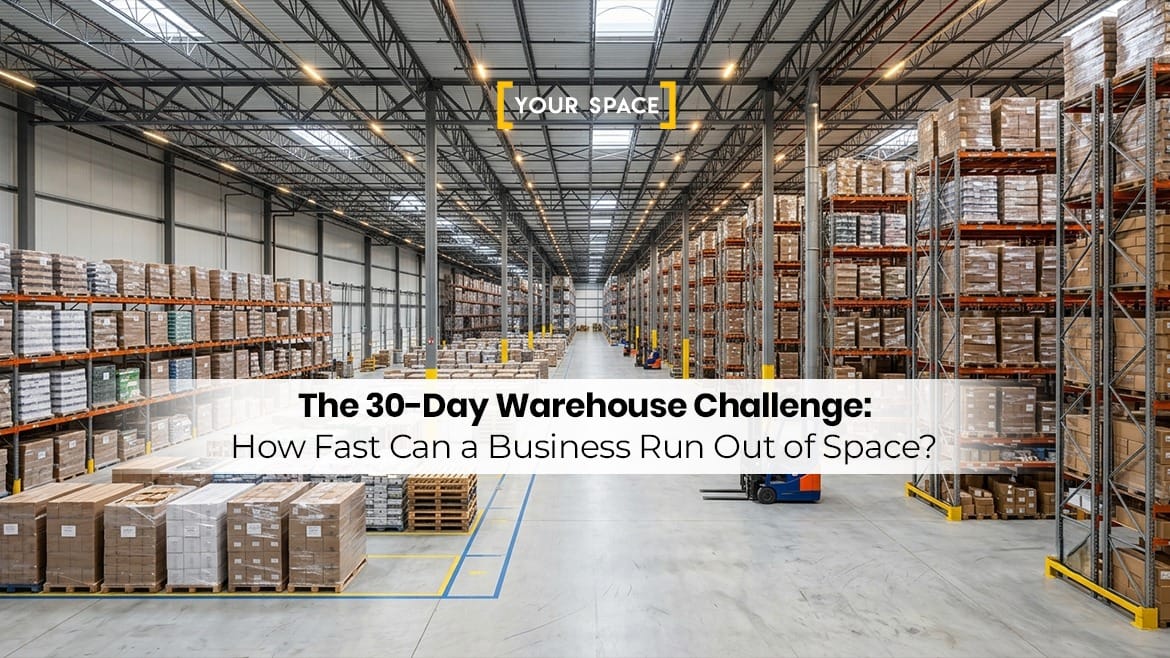
On the first morning, the warehouse looks perfectly normal.
There are cartons on the shelves.
A few pallets are waiting to be dispatched.
The receiving area has enough room.
The team knows where everything is.
Nobody is worried.
The business has been growing steadily, but there seems to be plenty of warehouse space left.
Then the first shipment of the month arrives.
Nothing unusual.
Just another batch of products.
The cartons are unloaded, counted, labelled, and moved inside.
There’s still plenty of room.
At least, that’s what everyone thinks.
Day 4: The First New Shipment Arrives
Four days later, another shipment arrives.
This one is larger.
Sales have been good, so the business decided to increase inventory.
The warehouse team finds space.
Some cartons are moved higher.
Others are shifted to a different section.
A few boxes are temporarily placed near the dispatch area.
“Once these orders go out, we’ll have the space back,” someone says.
It sounds reasonable.
And for a while, it works.
This is how many warehouse storage problems begin.
Not with one enormous shipment.
With a series of small decisions that seem perfectly sensible at the time.
Day 7: The Warehouse Starts Looking Different
One week into the challenge, something has changed.
The aisles aren’t quite as clear.
The receiving area is getting crowded.
Fast-moving products are no longer sitting in the easiest-to-reach locations.
The team is spending a little more time looking for specific cartons.
Nothing has gone seriously wrong.
But the warehouse is beginning to lose its rhythm.
This is the point where good inventory management becomes important.
Because warehouse capacity isn’t just about how many boxes can physically fit inside a building.
It’s about how efficiently people can move, find, pick, pack, and dispatch those boxes.
Day 10: Sales Go Up. So Does the Inventory.
Then something good happens.
Sales increase.
Orders are coming in faster.
The business owner is happy.
But there’s a catch.
For every product leaving the warehouse, new inventory is arriving to prepare for future demand.
That’s the strange thing about growth.
More sales don’t always mean less inventory.
Sometimes they mean more inventory moving through the business at the same time.
A growing company can therefore run into a warehouse problem while everything else is going extremely well.
The business isn’t failing.
It’s growing.
It has simply outgrown the way it stores its stock.
The Warehouse Is Full, But Is It Actually Full?
Here’s where things get interesting.
A warehouse can be technically full without being operationally full.
Imagine every shelf is packed tightly.
There’s almost no unused floor space.
On paper, that might look efficient.
In practice, it can create problems.
Workers can’t reach products easily.
Pallets have to be moved to reach other pallets.
Fast-moving stock ends up behind slow-moving stock.
Picking takes longer.
Receiving becomes difficult.
Dispatch gets delayed.
The problem isn’t always a shortage of square feet.
Sometimes it’s poor warehouse optimization.
Day 14: The “Temporary” Area Becomes Permanent
By the middle of the month, the team has created a temporary storage area.
It’s meant to hold inventory for a few days.
Then another shipment arrives.
The temporary area gets used again.
Soon, everyone knows that this corner is where “extra stock” goes.
Nobody planned it.
Nobody officially approved it.
It simply happened.
And that’s another common warehouse problem.
Temporary storage has a habit of becoming permanent.
What Happens When Inventory Doesn’t Have a Proper Home?
Products get moved more often.
Labels become harder to follow.
Stock counts become less reliable.
Employees spend more time searching.
Some inventory gets forgotten.
Other inventory gets ordered again because nobody realizes it is already sitting somewhere in the warehouse.
That’s when excess inventory becomes more than a financial problem.
It becomes a space problem.
Day 18: The Warehouse Team Starts Playing Tetris
By now, every incoming shipment requires a conversation.
“Where are we going to put this?”
A few cartons move.
A pallet gets shifted.
A shelf is rearranged.
Another section is reorganized.
It starts to feel like a giant game of Tetris.
Except this game has a cost.
Every unnecessary movement takes time.
Every misplaced product creates another search.
Every blocked aisle makes daily operations slower.
And when warehouse workers spend their day moving yesterday’s inventory around instead of handling today’s orders, productivity suffers.
Day 21: The Business Discovers Its Hidden Cost
At this stage, the business owner might finally notice that the warehouse problem isn’t just about space.
It’s affecting money.
Employees are spending additional time locating stock.
Products are being handled multiple times.
Some items are sitting in inconvenient locations.
New storage equipment may be required.
Dispatch takes longer.
And the company is considering renting more space.
This is the moment when commercial storage or business storage can become part of a wider warehouse strategy.
Not every item needs to occupy prime operational space.
Day 24: Not All Inventory Deserves the Same Space
Here’s a simple question:
Why should a product that sells every day receive the same storage priority as something that sells once every three months?
It shouldn’t.
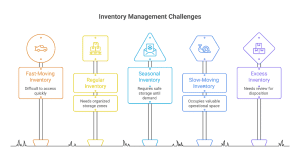
A smarter inventory management strategy separates products based on movement and importance.
Fast-moving inventory
Keep it easy to access.
Regular inventory
Place it in organized storage zones.
Seasonal inventory
Store it safely until demand returns.
Slow-moving inventory
Keep it away from high-value operational space.
Excess inventory
Review whether it should be discounted, returned, relocated, or stored separately.
This isn’t about squeezing more products into a warehouse.
It’s about making the existing space work harder.
Day 27: The Business Has a Choice
By now, the company has several options.
It could rent a larger warehouse.
It could reorganize the existing space.
It could reduce excess stock.
It could move slow-moving inventory elsewhere.
It could work with a 3PL logistics provider.
Or it could combine several approaches.
There isn’t one answer for every business.
The right solution depends on:
- Inventory volume
- Product type
- Order frequency
- Seasonal demand
- Delivery requirements
- Available warehouse space
- Growth plans
The important part is recognizing the problem before the warehouse becomes impossible to operate.
Day 30: The Warehouse Runs Out of Space
Thirty days have passed.
Remember the warehouse on Day 1?
It looked comfortable.
Now the business is looking at every available corner differently.
The aisles are narrower.
The receiving area is busier.
Inventory is moving constantly.
The next shipment is already scheduled.
And suddenly, the question isn’t:
“Do we need more inventory?”
It’s:
“Where are we going to put it?”
That’s the real 30-day warehouse challenge.
The Real Lesson: Businesses Don’t Usually Run Out of Space Overnight
A warehouse rarely becomes overcrowded in one dramatic moment.
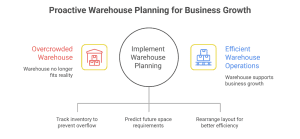
It happens gradually.
A new product line.
A bigger order.
A successful campaign.
A festive season.
A new customer.
A supplier shipment that arrives earlier than expected.
One decision follows another.
And eventually, the business discovers that the warehouse it thought was large enough six months ago no longer fits its current reality.
That’s why warehouse planning needs to happen alongside business growth.
When Should a Business Start Looking for More Warehouse Space?
Don’t wait until employees can barely walk between pallets.
Watch for the warning signs.
1. You are using aisles as storage areas
A clear warning that capacity is being stretched.
2. Fast-moving products are difficult to reach
Your storage layout may no longer match your sales pattern.
3. Employees spend too much time searching for stock
Your inventory system and physical organization may need attention.
4. New shipments have nowhere to go
This is one of the clearest signs that additional inventory storage may be necessary.
5. You’re renting space you can’t use efficiently
More space isn’t automatically the answer. The space needs to support your actual operations.
What Growing Businesses Should Ask Before Renting a Bigger Warehouse
Before signing a new warehouse lease, ask:
- How much inventory do we actually need to store?
- Which products move quickly?
- Which products are seasonal?
- How much stock is sitting unsold?
- How much space do we need during peak season?
- Do we need all inventory close to the dispatch area?
- Could some stock be stored externally?
- Would 3PL warehousing make more sense than managing everything ourselves?
These questions can prevent a business from paying for space it doesn’t really need.
Sometimes the Answer Isn’t a Bigger Warehouse
This is an important distinction.
A company may not need a completely new warehouse.
It may simply need a better way to handle overflow.
For example, a business could keep its fast-moving inventory close to daily operations while moving seasonal, excess, or slower-moving stock into separate business storage.
That creates breathing room without forcing the entire operation to relocate.
For growing e-commerce businesses, this can also make it easier to handle sudden demand during major sales periods.
The Best Warehouse Is the One That Can Keep Up With Your Business
Growth is supposed to create problems.
They’re just better problems to have.
More orders.
More customers.
More products.
More revenue.
But growth becomes difficult when your physical operations can’t keep up.
A warehouse should support the business—not become the thing holding it back.
The goal isn’t to fill every available shelf.
The goal is to know what you have, where it is, how quickly you need it, and how much space your business will need next.
Because the best time to think about warehouse capacity isn’t when the last available corner is already occupied.
It’s before that happens.
Frequently Asked Questions
How quickly can a business run out of warehouse space?
There isn’t a fixed timeline. A business can outgrow its warehouse within weeks if inventory increases rapidly, particularly during product launches, festive seasons, or major sales periods.
What causes warehouse space to run out?
Rapid inventory growth, excess stock, seasonal products, poor warehouse layout, slow-moving inventory, and inefficient stock management can all contribute.
How can inventory management improve warehouse space?
Effective inventory management helps businesses identify fast-moving, slow-moving, seasonal, and excess inventory so each category can be stored appropriately.
What is 3PL warehousing?
3PL warehousing involves outsourcing part or all of your storage and logistics operations to a third-party logistics provider.
Is business storage useful for excess inventory?
It can be. Businesses with seasonal or slow-moving inventory may use external storage to keep excess stock away from their primary operational space.
Should a growing business rent a bigger warehouse?
Not always. Before expanding, businesses should review inventory levels, warehouse layout, stock movement, and the possibility of using external storage or 3PL services.
Don’t Wait Until Your Warehouse Has No Room Left
Your business shouldn’t have to slow down because there’s nowhere to put the next shipment.
If growing inventory is taking over your operational space, Your Space Doctor can help businesses explore practical warehouse storage, business storage, and 3PL warehousing options based on their inventory requirements.
📞 Talk to our business storage team: +91 8433925040
