
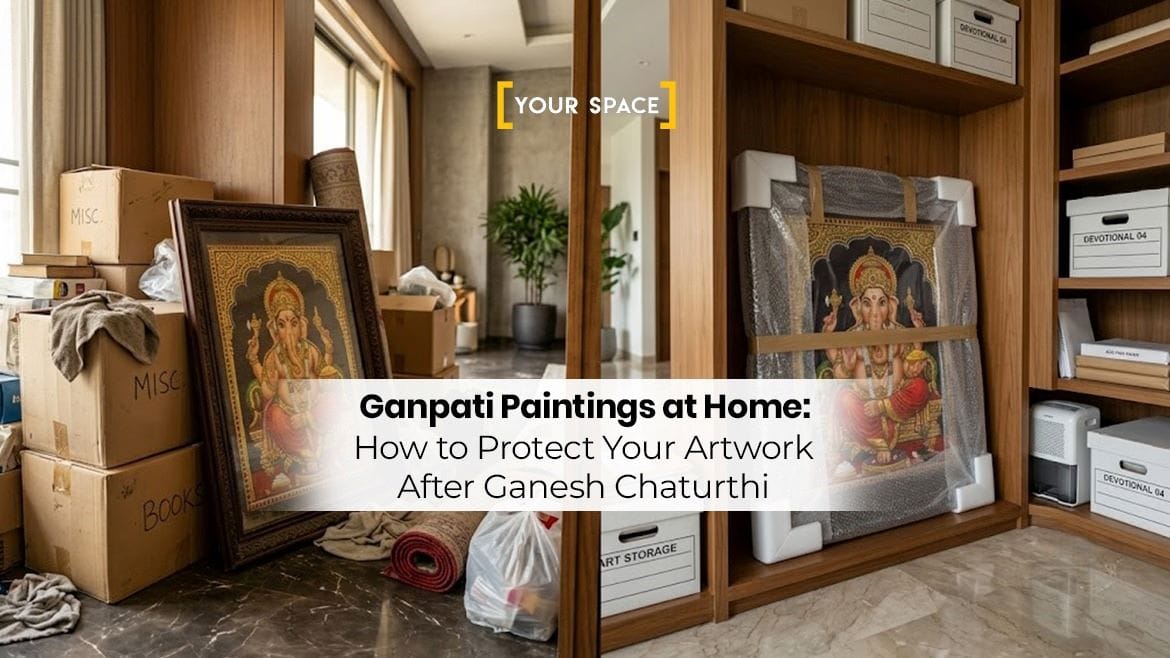
Every year, Ganesh Chaturthi brings colour, music and a completely different energy into our homes.
The decorations come out. The lights go up. The mandap is prepared. Flowers are arranged. And somewhere in all of this, a beautiful Ganpati painting or piece of Ganesh artwork may become part of the celebration.
For some families, it’s a decorative piece bought specially for the festival. For others, it may be a painting they’ve owned for years. It might even be a piece of traditional Indian artwork that has become part of the home’s décor.
During the festival, there’s no question about where it belongs. It’s on display. But after Ganesh Chaturthi? That’s when things get interesting.
The decorations start coming down. Boxes begin returning to cupboards. Lights are packed away. Festival belongings are moved into lofts, cupboards and spare rooms. And the Ganpati painting often gets the same treatment.
Someone carefully takes it down, wraps it in whatever material is available and places it somewhere “safe.” The problem? Safe doesn’t always mean suitable for artwork.
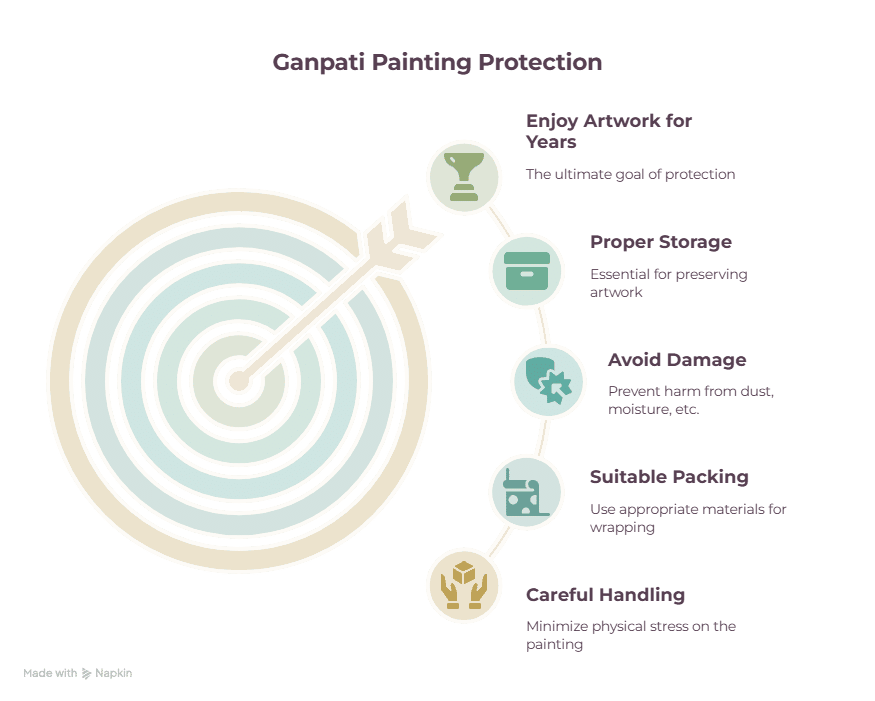
A painting can sit quietly in a cupboard for months while dust, moisture, sunlight, pressure or unsuitable packing gradually affects its condition. If your Ganpati artwork is something you want to enjoy for years, storing it properly deserves a little more attention.
The Festival Ends, But Your Ganpati Painting Stays
Ganesh Chaturthi may last for a limited period, but a painting doesn’t have an expiry date. That’s what makes artwork different from many other festive decorations.
Lights can be replaced. Paper decorations can be discarded. Some decorative materials may be used only once. But a good Ganpati painting can stay with you for years.
It may move from one wall to another. It may be displayed every Ganesh Chaturthi. It may eventually become part of your permanent home décor. It could even have sentimental value.
So when the festival ends, the goal shouldn’t simply be to “put the painting away.” The goal should be to protect the artwork until you’re ready to display it again.
Why Ganpati Paintings Need Proper Storage
Paintings are not like ordinary household objects. Depending on the material and construction, artwork can be affected by environmental conditions and handling.
- Humidity can be a concern for certain materials.
- Direct sunlight can affect some paints, papers and other components over time.
- Dust can accumulate on surfaces.
- Improper wrapping can cause problems.
- Placing heavy objects on top of a painting can result in physical damage.
This is particularly important if your Ganpati artwork has a canvas, paper, wood, decorative frame or other material that requires careful handling. Good art storage starts with understanding that the artwork itself needs protection.
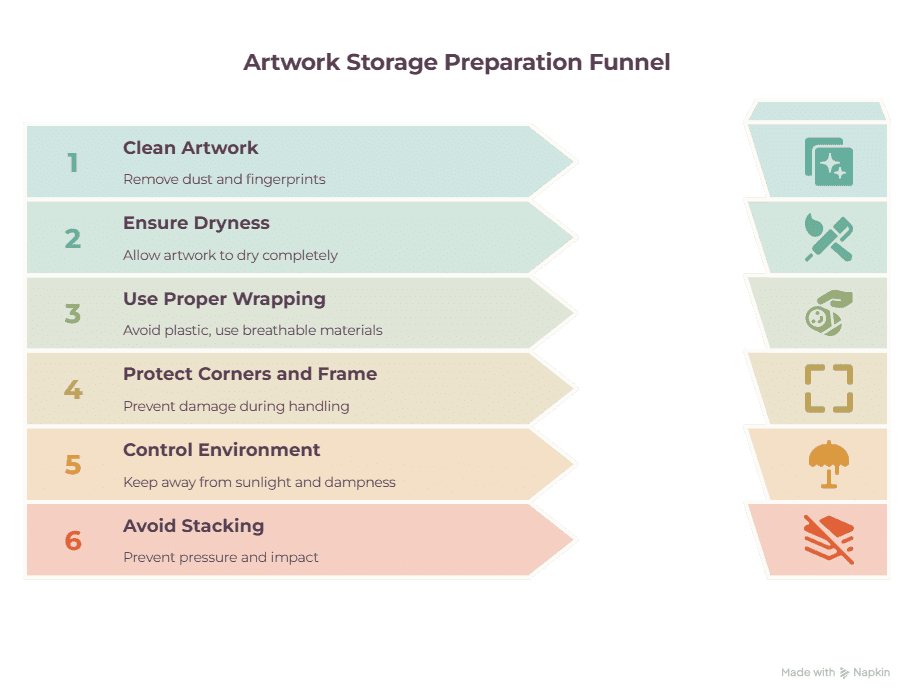
1. Clean Your Artwork Before Storing It
Before packing your Ganpati painting away, take a moment to inspect it.
- Is there visible dust?
- Are there fingerprints on the frame?
- Has anything accumulated around the corners?
If the artwork needs cleaning, use a method appropriate for its material and finish. This is important because not every painting should be cleaned in the same way.
A delicate or valuable artwork may require professional advice rather than household cleaning products. The golden rule is simple: don’t experiment on artwork you’re trying to preserve.
If you’re unsure about the appropriate cleaning method, especially for valuable or delicate pieces, consult an art conservation professional.
2. Make Sure the Painting Is Completely Dry
This sounds obvious, but it is one of the easiest things to overlook. Never pack artwork while it is damp.
If you’ve cleaned the frame or surface, allow it to dry completely before storage. Moisture trapped against certain materials for an extended period can create an unsuitable storage environment.
This becomes especially important in humid conditions. For households in cities where humidity can be significant, choosing an appropriate storage environment becomes an important part of painting preservation.
3. Don’t Wrap Artwork Directly in Plastic
Plastic may seem like the obvious answer. It keeps dust away. It’s easy to find. And it looks like protection.
But wrapping artwork tightly in a non-breathable material without considering the storage environment can potentially trap moisture. That’s not something you want to happen to artwork stored for months.
The right protective materials depend on the artwork’s construction, condition and storage environment. For valuable pieces, proper art-packing materials and professional handling are worth considering.
The objective isn’t simply to cover the painting. It’s to protect it appropriately.
4. Protect the Corners, Frame and Surface
When people think about painting storage, they usually focus on the painted surface. But the frame needs attention too.
A framed Ganpati painting can be vulnerable to knocks and scratches while being moved. Corners can get damaged. Frames can become marked. The artwork can also be affected if something presses directly against its surface.
When moving or storing a framed painting, handle it carefully and avoid placing it where other household items can fall against it. If several pieces are being stored together, they should be arranged according to appropriate art-handling practices rather than simply stacked randomly.
5. Keep Paintings Away From Direct Sunlight and Damp Areas
Where you store artwork matters almost as much as how you pack it.
A sunny corner may look harmless. A damp wall may seem convenient. A loft may appear to be the perfect place because nobody uses it regularly. But these aren’t automatically suitable environments for paintings.
Direct sunlight can contribute to fading or deterioration of certain materials over time. Excessive moisture can create problems for certain artwork materials. That’s why artwork storage should take the storage environment into consideration.
The ideal conditions can vary depending on the type of artwork, so valuable or sensitive pieces should be assessed individually.
6. Don’t Stack Heavy Items on Your Artwork
This is one of the easiest mistakes to avoid. Your painting should never become the bottom layer of a pile of household boxes.
It might start with one carton. Then someone adds another. Then a suitcase. Then a bag. Six months later, nobody remembers what’s underneath.
Your Ganpati artwork shouldn’t have to carry the weight of your entire storage problem. Keep paintings protected from impact, pressure and unnecessary handling. If you’re storing multiple pieces, plan the arrangement rather than treating artwork like ordinary boxes.
Where Should You Store a Ganpati Painting at Home?
If you have suitable storage space at home, choose an area that is clean, dry and away from direct sunlight and potential physical damage.
Avoid areas where the artwork could be exposed to:
- Excessive moisture
- Direct sunlight
- Dust
- Water leaks
- Frequent movement
- Heavy objects
- Extreme environmental fluctuations
The specific requirements will depend on the artwork. A simple decorative print may have different needs from an original painting or valuable framed artwork. The more valuable the piece, the more carefully you should think about its storage conditions.
When Home Storage Isn’t Enough
Here’s the reality for many urban homes. You may want to store your Ganpati artwork properly. But where?
The cupboards are full. The loft is crowded. The spare room is already being used. The walls are occupied. And you have other seasonal belongings competing for the same limited space.
This is when external storage becomes worth considering. Instead of forcing artwork into whatever space happens to be available, you can explore a dedicated storage solution that is appropriate for the type of belongings you need to keep. This can be particularly useful if you have several paintings or artwork pieces rather than just one.
Why Professional Art Storage Can Make Sense
Professional art storage is not simply about finding an empty room. Artwork requires more thoughtful handling than ordinary household belongings. Depending on the artwork, considerations can include:
- Handling: Paintings need to be moved carefully to reduce the risk of accidental damage.
- Packing: Suitable protective materials should be selected according to the artwork.
- Environment: Certain artwork may require controlled or carefully managed environmental conditions.
- Organization: Proper identification and arrangement make it easier to retrieve artwork when needed.
- Security: Valuable artwork should be kept in an appropriate secure environment.
For valuable, delicate or extensive collections, professional guidance can be particularly useful.
Ganpati Artwork Deserves More Than a Random Corner
There’s something interesting about festive artwork. We often think of it as decoration. But a painting can become much more than that.
It can become part of your family’s celebrations. You may have purchased it during a particular Ganesh Chaturthi. Perhaps it was a gift. Maybe you found it at an art exhibition. Maybe you simply loved the way it looked in your home.
Whatever the reason, if you want to keep it for years, it deserves to be treated as artwork rather than another festival item.
And that means thinking beyond “Where can I fit this?” Instead, ask: “Where can I keep this safely until I need it again?” That small change in thinking can make a big difference.
What About Ganpati Paintings That Are Used Every Year?
If you bring the same painting out every Ganesh Chaturthi, create a simple storage routine. After the festival:
- Clean it appropriately.
- Inspect it for damage.
- Prepare it for storage.
- Pack it carefully.
- Label it.
- Store it in a suitable location.
Then, when Ganesh Chaturthi approaches next year, you already know exactly where it is. This is much better than pulling it out of a random cupboard after months of being surrounded by unrelated household items. Over time, that routine becomes part of your festival preparation.
Can Other Ganpati Artwork Be Stored the Same Way?
Yes, but the exact approach depends on the artwork. A framed canvas, paper print, traditional painting, decorative panel and mixed-media artwork can have very different storage requirements. That’s why there’s no single packing method that works for every piece.
Before putting valuable artwork into long-term storage, consider its:
- Material
- Frame
- Size
- Condition
- Age
- Value
- Sensitivity to environmental conditions
If you’re uncertain, professional advice is preferable to experimenting with a valuable piece.
Frequently Asked Questions
How should I store a Ganpati painting after Ganesh Chaturthi?
Clean it appropriately, make sure it is completely dry, protect it from dust and physical damage, and keep it in a suitable environment away from direct sunlight and excessive moisture.
Can I keep a Ganpati painting in my loft?
A loft may or may not be suitable depending on its environmental conditions. Check for heat, humidity, dust, leaks and other factors before using it for artwork storage.
Can I wrap a painting in plastic?
Avoid assuming that ordinary plastic wrapping is suitable for every painting. Non-breathable wrapping can potentially trap moisture depending on the conditions. Valuable artwork should be packed using appropriate materials.
How does humidity affect paintings?
Humidity can affect certain painting and framing materials, particularly when conditions are unsuitable for long periods. The level of sensitivity depends on the artwork’s materials and construction.
Can Ganpati paintings be kept in external storage?
Suitable artwork can be stored externally, but the storage environment and handling practices should be appropriate for the specific artwork.
Is professional art storage necessary for every painting?
Not necessarily. The appropriate storage solution depends on the artwork’s value, material, condition, size and storage requirements. More valuable or delicate pieces may benefit from professional storage and handling.
Conclusion: Your Ganpati Painting Shouldn’t Disappear into a Cupboard
Ganesh Chaturthi may come and go every year. Your Ganpati artwork doesn’t have to.
A beautiful painting can become part of your home’s story for years. It can come out during every Ganesh Chaturthi, hang on your wall during the festival and return to storage when the celebrations are over.
The important thing is what happens in between.
- Don’t throw it into an overcrowded cupboard.
- Don’t leave it against a damp wall.
- Don’t pile boxes on top of it.
- And don’t assume that “out of sight” automatically means “safe.”
Take a few minutes to clean, prepare and store your artwork thoughtfully. And if your home simply doesn’t have the space or suitable conditions for long-term storage, professional art storage can be a practical alternative.
Because your Ganpati painting isn’t just another decoration. It may be something you want to see again next Ganesh Chaturthi — and many more after that.
Looking for a Safer Place to Store Your Ganpati Artwork?
At Your Space, we understand that artwork requires a different level of care from ordinary household belongings.
Whether you’re storing a Ganpati painting, framed artwork, seasonal décor or other suitable personal belongings, having dedicated storage can help you reclaim valuable space at home while keeping the things you want to preserve.
If you’re based in Mumbai, Pune or Bengaluru, Your Space offers convenient storage solutions for belongings that don’t need to occupy your home all year.
So, when Ganesh Chaturthi is over and the decorations start coming down, you don’t have to wonder where your artwork will go.
Keep your Ganpati artwork safe. Keep your home spacious.
📞 Call Your Space: +91 8433925040
Store what matters. Protect what you love. Make space for what comes next.
