
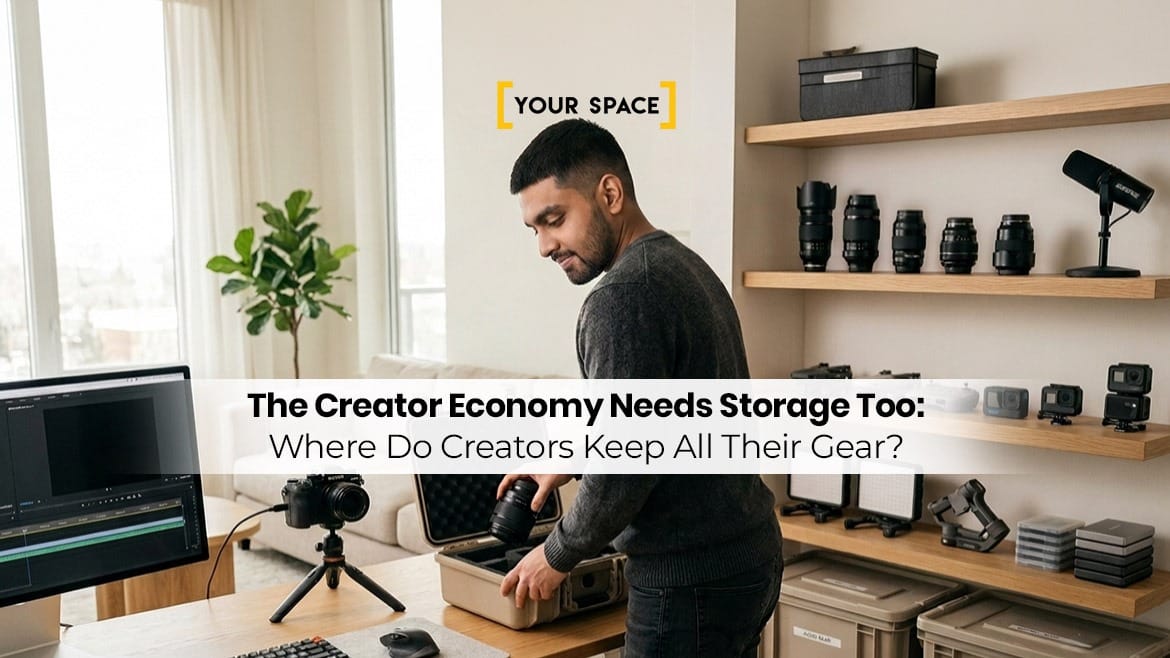
Nobody Warns You About This Part of Becoming a Creator
The first purchase feels exciting.
A ring light.
Then a tripod.
Then a microphone.
A better camera.
Another lens.
Soft box lights.
Backdrops.
Props.
Hard drives.
Memory cards.
A drone.
A second camera body.
A podcast setup.
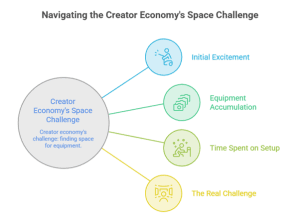
Somewhere along the journey, your bedroom quietly transforms into a studio.
At first, it feels exciting.
Then one day you realize something unexpected.
You’re spending more time moving your equipment than actually creating content.
Welcome to one of the fastest-growing challenges in the creator economy.
It’s not finding ideas.
It’s finding space.
The Creator Economy Has Changed What We Keep at Home
Ten years ago, very few people owned professional filming equipment.
Today, creators work from:
- Apartments
- Bedrooms
- Home offices
- Garages
- Small studios
- Shared workspaces
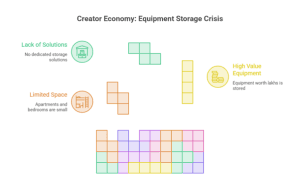
Many own equipment worth several lakhs.
Yet most of it lives inside wardrobes, under beds, behind sofas, or stacked inside cardboard boxes.
The modern creator doesn’t just need better content.
They need better equipment storage.
Your Studio Keeps Growing, Even If Your Home Doesn’t
Creating content is addictive.
Every project needs something new.
A better microphone.
Another light.
A larger backdrop.
A second monitor.
A teleprompter.
Product samples.
Packaging supplies.
Seasonal props.
Camera accessories.
The problem?
Your apartment doesn’t magically grow every time your business does.
Eventually, every creator reaches the same question:
“Where am I supposed to keep all this?”
Creative Equipment Is an Investment, Not Just Gear
One damaged lens can cost thousands.
A camera body represents months of work.
Lighting equipment isn’t cheap.
External hard drives contain years of client work.
Yet many creators store them in places never designed for expensive electronics.
Equipment often ends up:
- Under the bed
- Inside cupboards
- In damp storage rooms
- Next to windows
- In cardboard boxes
- On open shelves collecting dust
That’s a risky way to treat tools that generate income.
Proper camera storage isn’t just about staying organized.
It’s about protecting your investment.
The Hidden Enemies of Creator Equipment
Most creators think theft is the biggest risk.
It isn’t.
The real threats are much quieter.
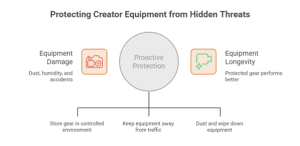
Dust
Dust settles inside lenses, lighting equipment, camera bodies, and cooling vents.
Over time, it affects performance and increases maintenance.
Humidity
Moisture can damage electronics, lenses, batteries, cables, and fabric backdrops.
Even equipment that isn’t being used continues reacting to its environment.
That’s why many professionals choose climate-controlled storage for valuable gear.
Accidental Damage
How many times have you nearly knocked over a tripod while walking through your room?
Or watched expensive equipment become part of everyday household traffic?
Sometimes the safest place for creator gear isn’t beside the dining table.
The Prop Problem Nobody Talks About
Ask any creator what’s taking up the most space.
It probably isn’t the camera.
It’s everything around it.
Product samples.
Festival decorations.
Furniture.
Fake plants.
Packaging materials.
Background panels.
Shelving.
Lifestyle accessories.
Fashion collections.
Cooking utensils.
Fitness gear.
Every niche creates its own collection of props.
Individually they don’t seem like much.
Together, they can occupy an entire room.
When Your Home Starts Feeling Like a Warehouse
Creators often experience something unexpected.
The place where they live slowly becomes the place where they work.
The sofa becomes equipment storage.
The dining table becomes an editing desk.
The wardrobe becomes a camera cabinet.
The guest room becomes a prop room.
The home starts functioning like a warehouse.
But unlike a warehouse, it wasn’t designed for inventory management.
That’s where smart business storage starts making sense—not because you’re running out of creativity, but because you’re running out of space.
Professional Creators Think Beyond Storage
As creators grow, they also begin thinking differently.
Instead of asking:
“Where can I fit this?”
They ask:
“Where can I protect this?”
That’s an important shift.
Because creative equipment isn’t just expensive.
It’s what allows them to earn a living.
Whether it’s photography gear, podcast equipment, video production tools, or branded merchandise, storing it properly helps preserve both its value and reliability.
More Space Means Better Creativity
Something interesting happens when creators organize their equipment well.
Ideas flow more easily.
Shoots start on time.
Editing becomes less stressful.
Finding cables doesn’t take twenty minutes.
Packing for client shoots becomes effortless.
A well-organized creative workspace isn’t just aesthetically pleasing.
It reduces friction.
And less friction often leads to more creativity.
Your Content Deserves Better Than a Corner of the Room
The creator economy isn’t slowing down.
Every year, more people turn hobbies into businesses.
Bedrooms become studios.
Garages become production spaces.
Apartments become offices.
As creative businesses grow, their equipment grows with them.
Eventually, every creator reaches a point where protecting their gear becomes just as important as buying it.
Because cameras don’t create content on their own.
People do.
And people create better when their workspace supports their creativity—not competes with it.
Frequently Asked Questions
Why is equipment storage important for content creators?
Creator equipment is often expensive and sensitive to dust, moisture, and accidental damage. Proper storage helps protect that investment.
What equipment should creators store safely?
Cameras, lenses, drones, microphones, lighting equipment, tripods, hard drives, props, backdrops, and seasonal production equipment all benefit from organized storage.
Can humidity damage camera equipment?
Yes. High humidity can affect electronics, lenses, batteries, and fabric accessories, making a stable storage environment important.
What is specialty storage?
Specialty storage is designed for valuable, delicate, or unique items that require extra care compared to ordinary household storage.
When should a creator consider business storage?
If equipment, props, inventory, or production materials begin taking over living space, business storage can help create a more organized and productive workspace.
How can better organization improve content creation?
A well-organized setup reduces time spent searching for equipment, minimizes damage, speeds up production, and allows creators to focus on creating rather than managing clutter.
Your Creativity Needs Space to Grow
Every successful creator starts with an idea — but sustaining that success requires protecting the tools that make it possible. Whether you’re storing cameras, lighting, props, or production equipment, the right equipment storage solution can help keep your gear organized, secure, and ready for your next project.
📞 Talk to our storage specialists: +91 843t3925040
