
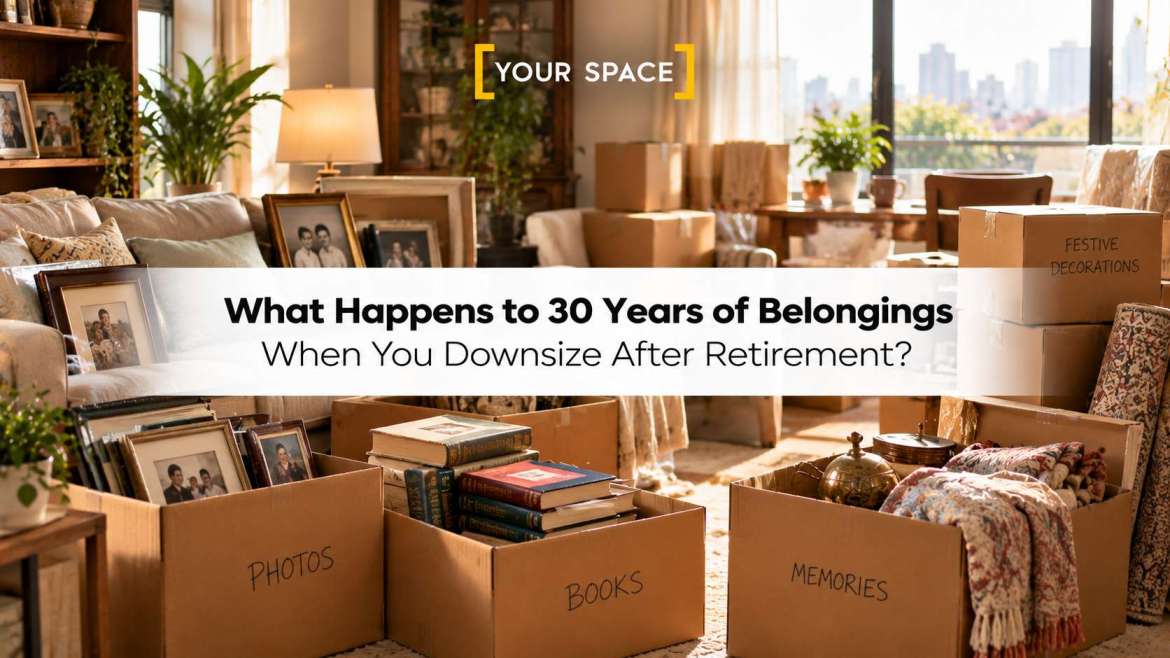
There is a strange moment that happens when you decide to move into a smaller home after retirement. You look around your house and suddenly realise: “We have a lot of stuff.” Not useless stuff. Not necessarily clutter. Just… years of life.
The dining table where the family celebrated birthdays. The cupboard filled with old photographs. The sofa that survived three house moves. Your children’s school trophies. A trunk full of Diwali decorations. Books you haven’t opened in years but still can’t imagine throwing away. Your mother’s old furniture. Your father’s documents.
And then there’s the practical question:
Where is all of this supposed to go when the new home is half the size?
This is the part of downsizing after retirement that doesn’t get talked about enough. Moving into a smaller home is relatively simple. Figuring out what happens to everything you’ve collected along the way? That’s the real project.
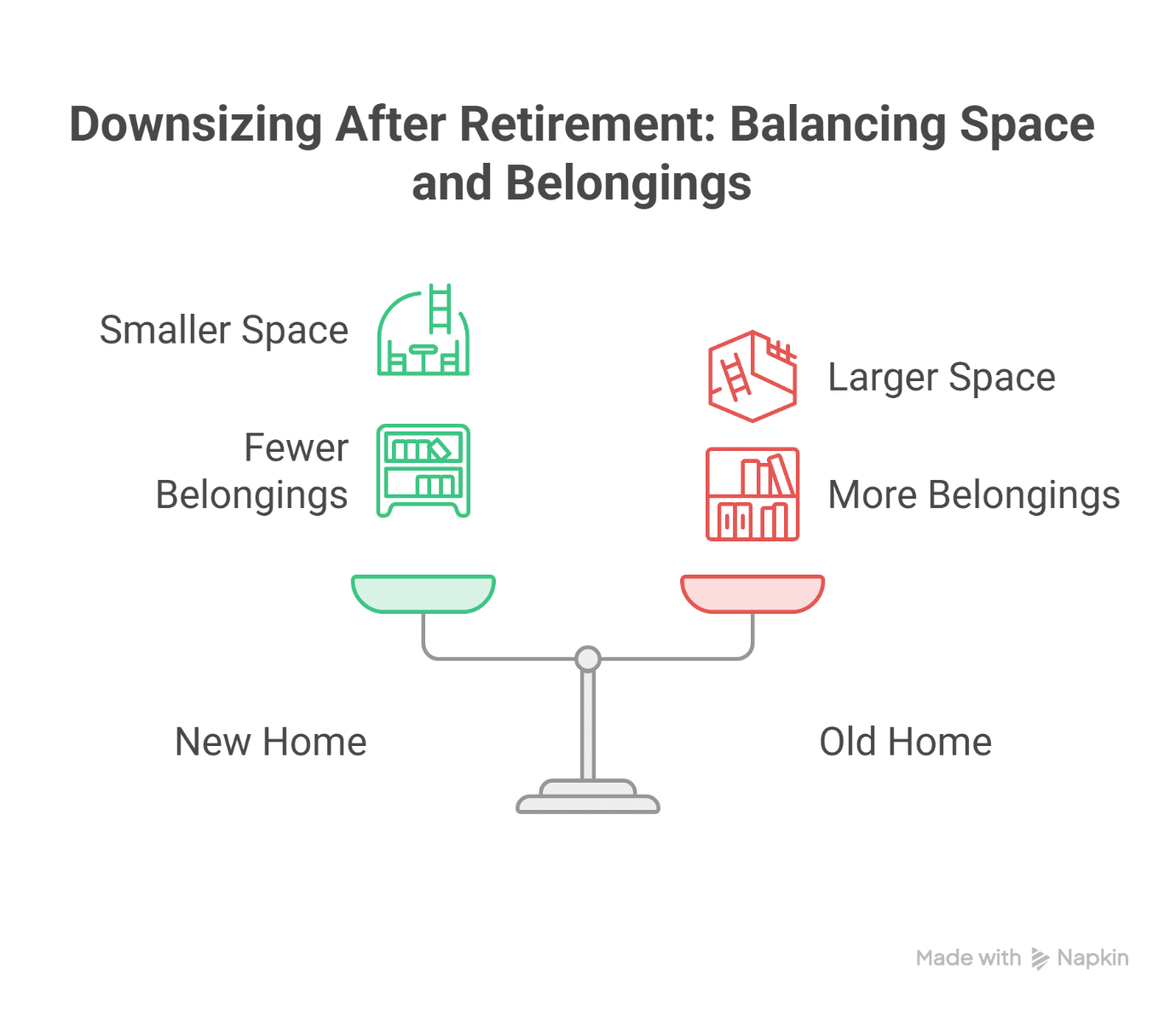
Your Belongings Have Outgrown Your Current Lifestyle
For many Indian families, the family home gradually becomes a storage system without anyone consciously deciding to make it one. One cupboard becomes two. The spare bedroom becomes the place where things go “temporarily.” The loft gets filled. Then the garage. Then that one mysterious cabinet nobody opens anymore.
And there’s a perfectly good reason for it. Life happened. Children grew up. Family members moved cities. Festivals came and went. Furniture was replaced. New things arrived. Old things stayed.
After 20 or 30 years, the house isn’t just a home anymore. It’s an archive. Retirement is often when people finally ask:
Do I still need all of this around me?
Downsizing Doesn’t Mean Throwing Your Life Away
This is an important distinction. There is a difference between “I don’t use this every day” and “I don’t want this anymore.”
A wedding album may not be useful, but it can still be priceless. Your child’s old school books may never be opened again, but you may still want to preserve them. An inherited cabinet may not fit into your new apartment, but that doesn’t mean you’re ready to give it away.
This is why a simple keep-or-discard approach doesn’t always work for retirement downsizing. A better system has four categories:
- Keep: Things you use regularly and want in your new home.
- Preserve: Sentimental or family belongings you don’t need every day but want to retain.
- Pass On: Things that family members or others may genuinely benefit from.
- Let Go: Broken, unwanted or genuinely unnecessary items.
That second category, Preserve, is where the storage conversation becomes particularly useful.
The Things That Usually Become Difficult to Part With
Every family has its own version of these.
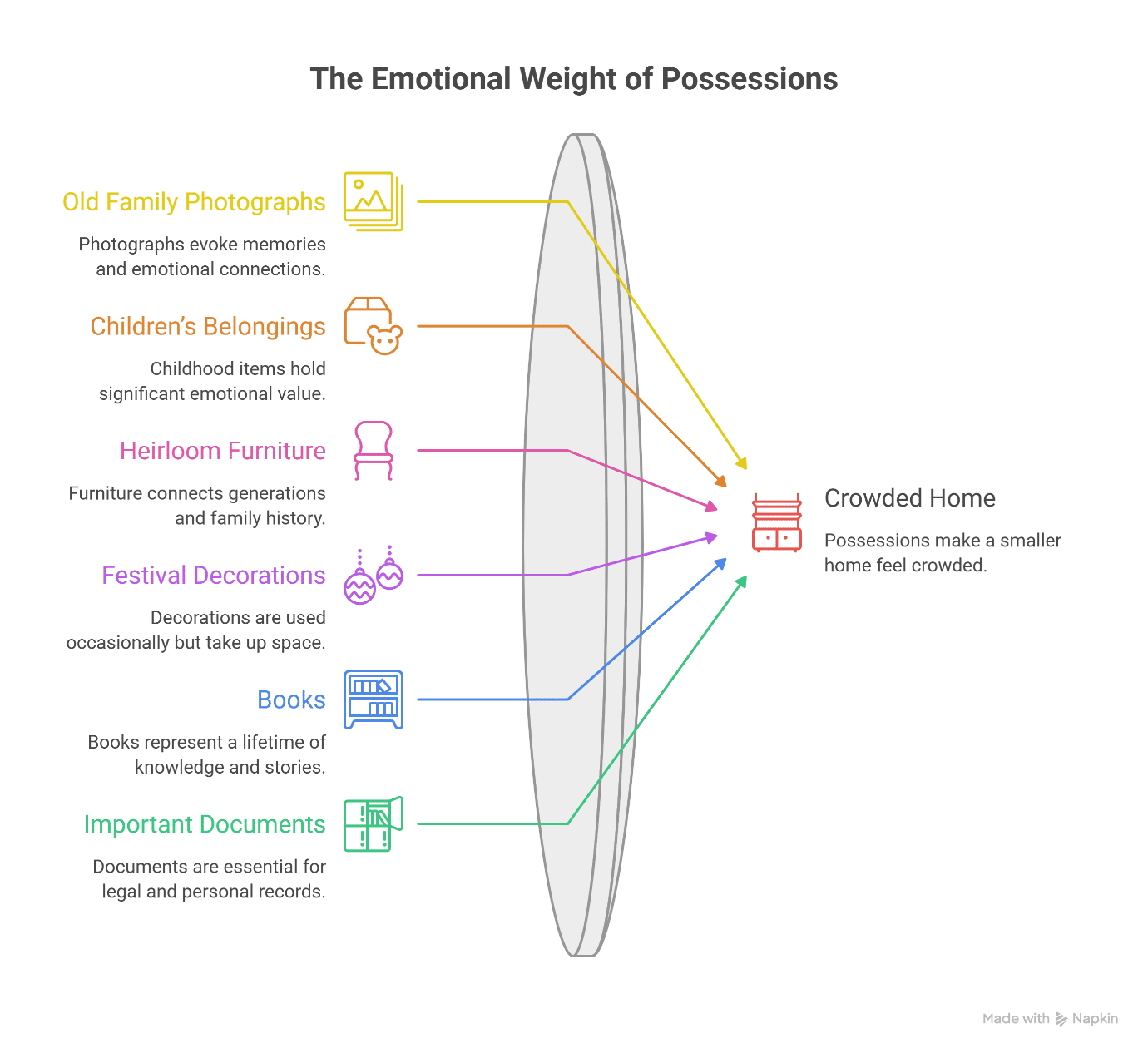
- Old Family Photographs: You may not look at them every month. But when you do, they take you straight back to another time.
- Children’s Childhood Belongings: Old trophies, artwork, school books, toys and photographs can carry enormous emotional value.
- Heirloom Furniture: The furniture may not match your new home, but it may have belonged to parents or grandparents.
- Festival Decorations: Large boxes of Diwali, Ganpati, Christmas or wedding decorations can take up considerable space despite being used only occasionally.
- Books: A lifetime of reading can create an impressive collection. And downsizing doesn’t necessarily mean suddenly becoming comfortable with throwing books away.
- Important Documents: Property papers, old records, certificates and family documents may need to be retained even when they’re rarely accessed.
These are exactly the kinds of possessions that can make a smaller home feel crowded.
So Where Do These Things Go?
You have a few choices. Give them to family. Donate them. Sell them. Keep them at home. Or use household storage.
Storage can be useful when you want to preserve belongings without allowing them to occupy your everyday living space. Think about it this way: your new home needs to support your current lifestyle, while your stored belongings represent parts of your past and occasional future needs. They don’t necessarily need to compete for the same square footage.
What About Your Children’s Old Rooms?
This deserves its own conversation. For years, a child’s bedroom may have remained almost untouched after they moved out. The furniture stays. The books stay. The old photographs stay. And eventually, the room becomes a mixture of bedroom, storage area and memory museum.
Before deciding what happens to those belongings, talk to your children. Ask what they actually want. Some may want everything. Some may want photographs and documents but not furniture. Some may say: “Mum, please get rid of it all.” And that’s okay too.
The important thing is that the decision is made consciously rather than simply because you’re running out of space.
The Furniture Problem Nobody Warns You About
Furniture is one of the hardest things to manage when downsizing. Boxes can be sorted. Clothes can be donated. Paperwork can be organised. A six-foot wooden cabinet is another story.
Before moving, look at the new home’s layout. Then ask:
- Does this piece fit physically?
- Does this piece fit the way we want to live now?
You don’t want your new home to become a smaller version of your old home with every piece of furniture squeezed into whatever space remains. Sometimes keeping one meaningful piece is better than trying to keep everything. And if you’re not ready to decide about the rest, storage gives you time.
Give Yourself a “Maybe” Category
Here’s a useful trick: don’t force every decision to be permanent. Create a Maybe category for belongings you’re genuinely unsure about.
Move into your new home. Live there for a few months. See what you actually miss. Maybe you discover you really do want that old bookshelf. Maybe you realise you haven’t thought about it once. That’s useful information.
Downsizing becomes much easier when you’re allowed to make decisions gradually.
Storage Can Buy You Time
This is one of the biggest advantages of using storage during retirement downsizing. You don’t have to make every decision on moving day. Instead of saying “Take it or throw it away,” you can say “Let’s store it for now and decide later.”
That can be particularly valuable when you’re dealing with emotionally important belongings. Once the pressure of moving is gone, you can revisit those items with a clearer head.
What Should Stay in Your New Home?
Your new home should be built around your current life. Keep the things you genuinely use:
- Your favourite chair
- The kitchen equipment you actually need
- Everyday clothes
- Books you still read
- Photographs you want around you
- Furniture that makes the home comfortable
- Things that make the space feel like yours
Downsizing shouldn’t turn your new home into an empty showroom. It should make it easier to live in.
And What Should Go Into Storage?
Storage is particularly useful for belongings that are:
- Sentimental
- Seasonal
- Occasionally needed
- Difficult to replace
- Valuable to the family
- Too large for the new home
- Needed by visiting family
- Not required in everyday life
For example, you might store:
- Festival decorations: They may come out once a year.
- Extra furniture: You may want it if family circumstances change.
- Childhood belongings: You aren’t ready to part with them.
- Family photographs: They matter, even if they aren’t displayed.
- Extra household items: You may need them occasionally but not every day.
Don’t Turn Storage Into Another Attic
There is one important rule: storage should not become a place where you send things simply because you don’t want to make a decision. Review your stored belongings periodically. Ask:
- Do I still want this?
- Has anyone used it?
- Would I miss it if it disappeared?
If the answer keeps being no, it may finally be time to let it go. The purpose of storage is to create useful space, not permanently postpone every decision.
Downsizing Can Actually Make Retirement Feel Bigger
This sounds contradictory. But think about it. A smaller home can mean:
- Less cleaning
- Less maintenance
- Fewer unused rooms
- Less furniture to move around
- Less time organising things
And potentially more time for the things retirement was supposed to make possible: morning walks, travel, family visits, reading, gardening, friends and hobbies. Or simply sitting quietly without thinking about everything that needs to be repaired, cleaned or organised.
That’s the real benefit of downsizing. You’re not necessarily trying to own less. You’re trying to make room for more life.
A Simple 30-Day Downsizing Plan
You don’t need to empty your entire home in one weekend.
Week 1: Identify
Walk through each room and identify what you use regularly and what you haven’t touched in a long time.
Week 2: Sort
Create your Keep, Preserve, Pass On and Let Go categories.
Week 3: Prepare
Measure the new home and decide what physically belongs there. Arrange storage for belongings you’re keeping but don’t need immediately.
Week 4: Move
Move essentials first. Then bring in the remaining items gradually. This gives you the opportunity to see how the new home actually works before filling every available corner.
The Real Question Isn’t “How Much Can I Take?”
When you’re downsizing after retirement, the natural question is: “What can fit into the new house?” But perhaps the better question is:
What kind of life do I want this house to support?
That changes everything. The new home isn’t supposed to be a museum of everything you’ve owned. And it doesn’t need to erase everything you’ve experienced. It can simply be the place where your next chapter happens. The belongings that belong to earlier chapters can be preserved elsewhere.
Frequently Asked Questions
What should I do with belongings when downsizing after retirement?
Sort them into categories such as Keep, Preserve, Pass On and Let Go. Items you value but don’t need daily can be considered for household or personal storage.
Is storage a good option for retirees?
Storage can be useful for retirees who are moving into smaller homes but aren’t ready to permanently part with sentimental, seasonal or family belongings.
What should I do with old furniture that doesn’t fit my new home?
First decide whether the furniture has practical or sentimental value. If you aren’t ready to sell or donate it, storage can give you time to decide.
Should I get rid of my children’s old belongings?
Not without discussing them with your children. They may want certain belongings even if they no longer live at home.
How can I downsize without feeling overwhelmed?
Work room by room rather than trying to sort the entire house at once. Give yourself permission to create a temporary “Maybe” or “Preserve” category.
Is downsizing after retirement emotionally difficult?
It can be. A family home often contains decades of memories. Taking time to sort belongings thoughtfully rather than treating downsizing as a simple decluttering exercise can make the process easier.
Moving to a Smaller Home? Let Your Belongings Take a Different Route.
If you’re downsizing after retirement, moving closer to family, shifting into a smaller apartment, or simply running out of space for furniture and personal belongings, you don’t have to make the difficult choice between keeping everything at home and giving everything away.
Your Space Doctor provides household and personal storage solutions across Mumbai, Pune and Bengaluru, giving you a practical place for belongings you want to keep but don’t need around every day.
Whether it’s an old family cupboard, festival decorations, extra furniture, childhood memories, books or other household belongings, you can move them out of your everyday space without necessarily saying goodbye.
Ready to make your new home feel lighter?
📞 Call Your Space Doctor at +91 8433925040 to discuss your storage requirement.
Keep what matters. Store what you don’t need today. And make more room for the life you’re ready to enjoy.
