

The Question Nobody Asks Until It’s Too Late
Imagine this.
You’re renovating your home.
Moving abroad.
Decluttering.
Or simply creating space.
So you carefully move your furniture into storage.
Months later, you bring everything back.
The sofa looks fine.
The dining table looks fine.
The wardrobe looks fine.
Until one day…
You notice tiny holes.
A little dust near the base.
A strange hollow sound when you knock on the wood.
And suddenly a terrifying thought appears:
Did my furniture get termites while it was in storage?
It’s one of the most common fears people have about furniture storage.
And surprisingly…
Most people never get a clear answer.
Let’s fix that.
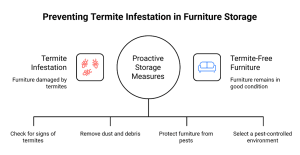
The Short Answer: Yes, Furniture Can Get Termites
But probably not for the reason you think.
Many people imagine termites magically appearing inside storage facilities.
That’s usually not what happens.
Termites are attracted to conditions.
Not locations.
And certain storage environments create the perfect conditions for them.
That’s why understanding wooden furniture storage is more important than simply finding space.
What Actually Attracts Termites?
Here’s where things get interesting.
Termites don’t care whether your furniture is expensive.
They don’t care if it’s antique.
And they definitely don’t care if it’s sentimental.
They care about three things:
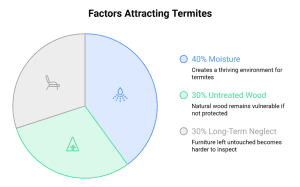
Moisture
This is the biggest factor.
Moisture creates an environment where termites thrive.
Untreated Wood
Natural wood remains vulnerable if not properly protected.
Long-Term Neglect
Furniture that sits untouched for long periods becomes harder to inspect.
Which allows small problems to become large ones.
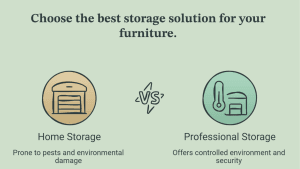
Why Home Storage Areas Are Often Riskier Than Professional Storage
Most people assume their home is safer than storage.
But consider where furniture often gets stored:
- garages
- basements
- spare rooms
- sheds
- under staircases
These areas frequently have:
- poor airflow
- hidden moisture
- inconsistent temperatures
- limited inspections
This creates ideal conditions for pest activity.
Ironically, professional furniture storage facilities often provide far better protection.
The Real Enemy Isn’t Termites
It’s Moisture
This is something most people don’t realize.
Termites rarely appear without environmental issues.
The bigger problem is usually moisture.
Moisture can lead to:
- mold growth
- wood swelling
- wood warping
- pest attraction
Which is why modern climate-controlled storage focuses heavily on environmental stability.
Because preventing moisture often prevents termite risks too.
How Wooden Furniture Gets Damaged Without You Noticing
Damage doesn’t happen overnight.
That’s what makes it dangerous.
Month one:
Everything looks normal.
Month three:
Tiny signs appear.
Month six:
Structural damage begins.
By the time most people notice something is wrong…
The problem has already developed.
This is why periodic inspections matter during long-term furniture storage.
Which Furniture Is Most Vulnerable?
Not all furniture carries the same risk.
The most vulnerable pieces include:
Solid Wood Furniture
Dining tables
Wardrobes
Bookshelves
Cabinets
Antique Furniture
Older wood can be especially sensitive.
Wooden Decorative Pieces
Display cabinets
Wall units
Storage chests
Unfinished Wood Items
Furniture without protective treatments tends to face higher risk.
Signs You Should Never Ignore
If you notice any of the following:
- tiny holes in wood
- fine dust around furniture legs
- hollow-sounding wood
- weakened corners
- unusual cracking
It’s worth investigating immediately.
Early detection can save furniture.
Late detection often becomes expensive.
How Proper Furniture Storage Reduces Risk
The safest furniture storage solutions focus on prevention.
That means:
Clean Furniture Before Storage
Dust and organic material attract problems.
Keep Furniture Dry
Moisture management is critical.
Use Climate-Controlled Storage
Stable conditions reduce environmental stress.
Inspect Periodically
Even stored furniture deserves occasional attention.
Store Furniture Properly
Avoid direct floor contact whenever possible.
The Bigger Mistake Most People Make
People focus entirely on space.
They ask:
“Where can I keep this?”
Instead of asking:
“Where can I protect this?”
Those are very different questions.
Because furniture isn’t just large.
It’s valuable.
And sometimes irreplaceable.
Why Prevention Is Always Cheaper Than Repair
Termite treatment costs money.
Furniture restoration costs money.
Replacement costs even more.
Preventive household storage and furniture storage solutions are usually the most affordable option long term.
Because protecting furniture is easier than repairing it.
The Truth Most People Aren’t Aware Of
Here’s the reality.
Furniture doesn’t automatically get termites in storage.
But poor storage conditions dramatically increase the risk.
The goal isn’t simply storing furniture.
The goal is creating an environment where pests, moisture, and damage struggle to survive.
And that starts with choosing the right storage conditions.
Before You Store Your Furniture, Read This
Can furniture get termites while in storage?
Yes, especially if storage conditions involve moisture, poor ventilation, or untreated wood.
What attracts termites to stored furniture?
Moisture, untreated wood, and long periods without inspection are the most common factors.
Is climate-controlled storage better for wooden furniture?
Yes. Climate-controlled storage helps reduce moisture-related risks that can attract pests.
How often should stored furniture be inspected?
Periodic inspections every few months help identify issues before they become serious.
Is professional furniture storage safer than a garage?
In many cases, yes. Professional storage facilities often provide more stable environmental conditions.
Your Furniture Deserves Protection, Not Just Storage
The best time to prevent damage is before it starts.
Whether you’re moving, renovating, or simply creating space, protecting your furniture today can save you expensive surprises tomorrow.
Call us: +91 8433925040
Visit: Your Space
