

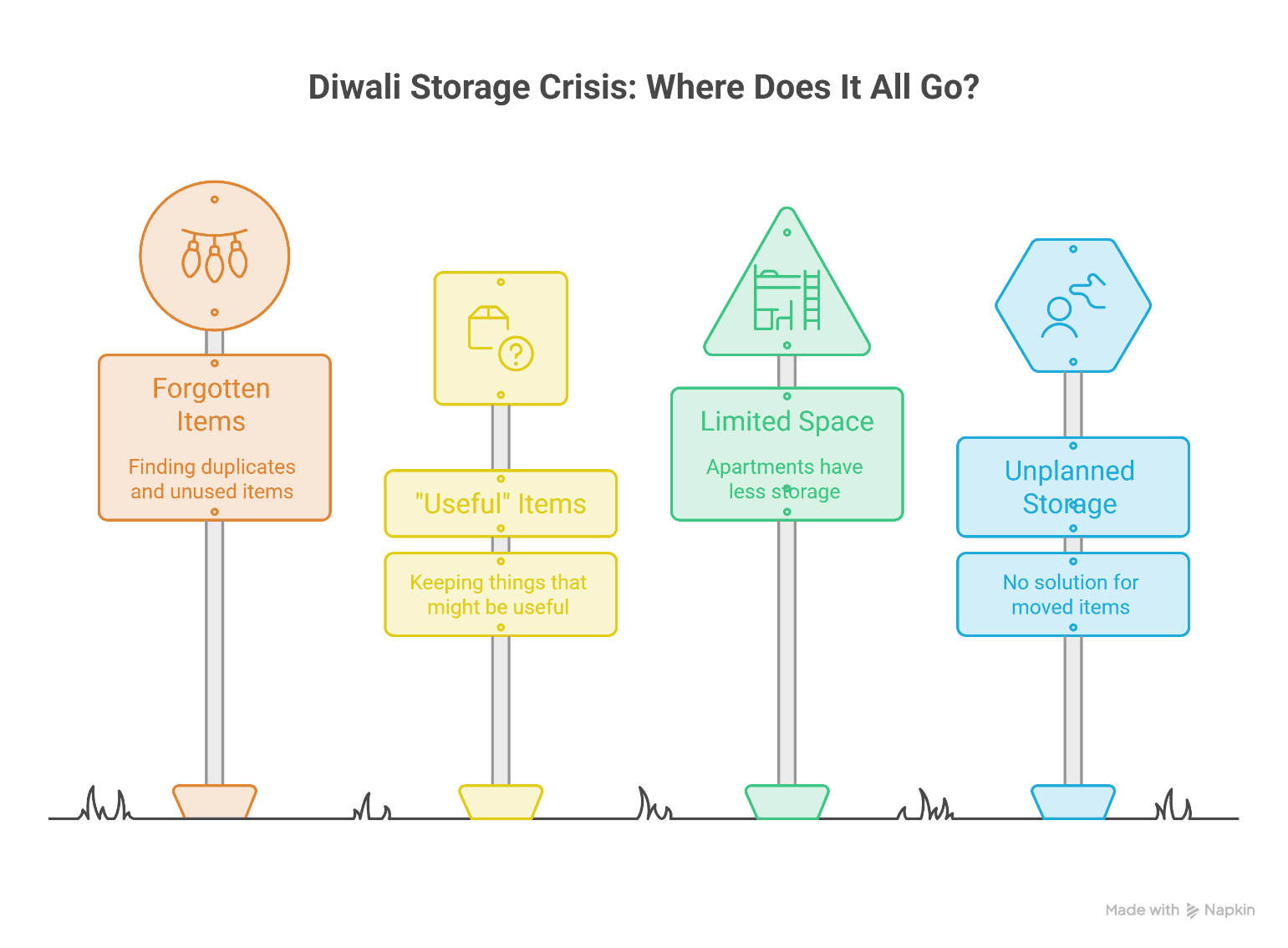
Every year, just before Diwali, the same scene plays out. Cupboards are thrown open, beds get moved, old boxes suddenly become interesting, curtains come down, furniture gets shifted, and suitcases appear from nowhere. Someone finds three sets of Diwali lights they’d forgotten they owned, and someone else insists, “Let’s keep this, it might be useful.”
Then comes the question nobody planned for: “Fine, but where are we going to keep it?” That’s the part of Diwali cleaning nobody talks about. Cleaning the house is one job; finding a new home for everything you moved while cleaning it is another and in modern Indian homes, especially apartments where every square foot matters, that second problem can be far harder than the first. Your house doesn’t become bigger just because Diwali is coming.
The Diwali Cleaning Paradox Nobody Talks About
Diwali cleaning is supposed to make the house feel lighter, but sometimes it does the exact opposite. You pull things out of cupboards to clean them, move furniture to clean behind it, empty shelves, sort clothes, bring out decorations and prepare space for guests and suddenly your home looks like a warehouse halfway through the process. Boxes sit in the bedroom, furniture piles up in the living room, bags line the corridor, and decorations take over the dining table, with someone inevitably warning, “Don’t touch that, we’re still sorting it.” Three days later, it’s still there.
This is why Diwali cleaning and decluttering are really two different jobs. Cleaning removes dirt; decluttering removes unnecessary things. Storage solves the third problem — where do the things you still want to keep actually go?
You Don’t Actually Have a Cleaning Problem
Here’s a thought worth considering maybe your home isn’t too full because you own too many things, maybe it’s too full because everything you own is being stored in the same place, regardless of how often you use it. Your everyday clothes share space with wedding clothes, your regular kitchenware shares cupboards with large serving sets, your daily furniture sits alongside pieces used only when relatives visit, and your everyday storage competes with Diwali decorations that might come out just once a year. Your wardrobe may be holding summer clothes, winterwear, occasion wear and luggage all at once. That’s not necessarily an ownership problem — it’s a storage allocation problem.
You Have a “Where Do I Put This?” Problem
Imagine you find an old decorative lantern during Diwali cleaning. You haven’t used it in two years, but you like it, so you don’t want to throw it away, you just don’t need it every day. So what happens? It goes back into the cupboard, joining the extra chairs, the spare mattress, the old suitcases, the festive crockery, the Christmas decorations, the artificial flowers and the boxes of lights. The result: your Diwali cleaning finishes, the house looks cleaner, but your storage cupboards are somehow even more crowded than before. That’s exactly where Diwali storage needs to enter the conversation.
What Usually Comes Out During Diwali Cleaning?
Every household is different, but a few categories show up again.
Old Furniture
A chair that isn’t used every day, a table that belongs in another room, a piece you’re keeping because you might use it later during Diwali cleaning, these pieces often just get moved from room to room, which doesn’t solve the underlying problem. If furniture is genuinely useful but rarely needed, furniture storage is worth considering.
Extra Mattresses and Bedding
This becomes especially important when you’re expecting guests. You may need extra mattresses, pillows, blankets and bedding during the festive season, but what happens for the other eleven months? If these items are consuming valuable cupboard or bedroom space all year, seasonal storage can give you another option.
Clothes and Suitcases
Diwali means new clothes, which means a more crowded wardrobe and then there are suitcases that may only be used a few times a year, plus festive outfits that aren’t everyday clothing. A good storage system doesn’t necessarily mean getting rid of these things; it means keeping frequently used belongings accessible while moving occasional-use items elsewhere.
Diwali Decorations
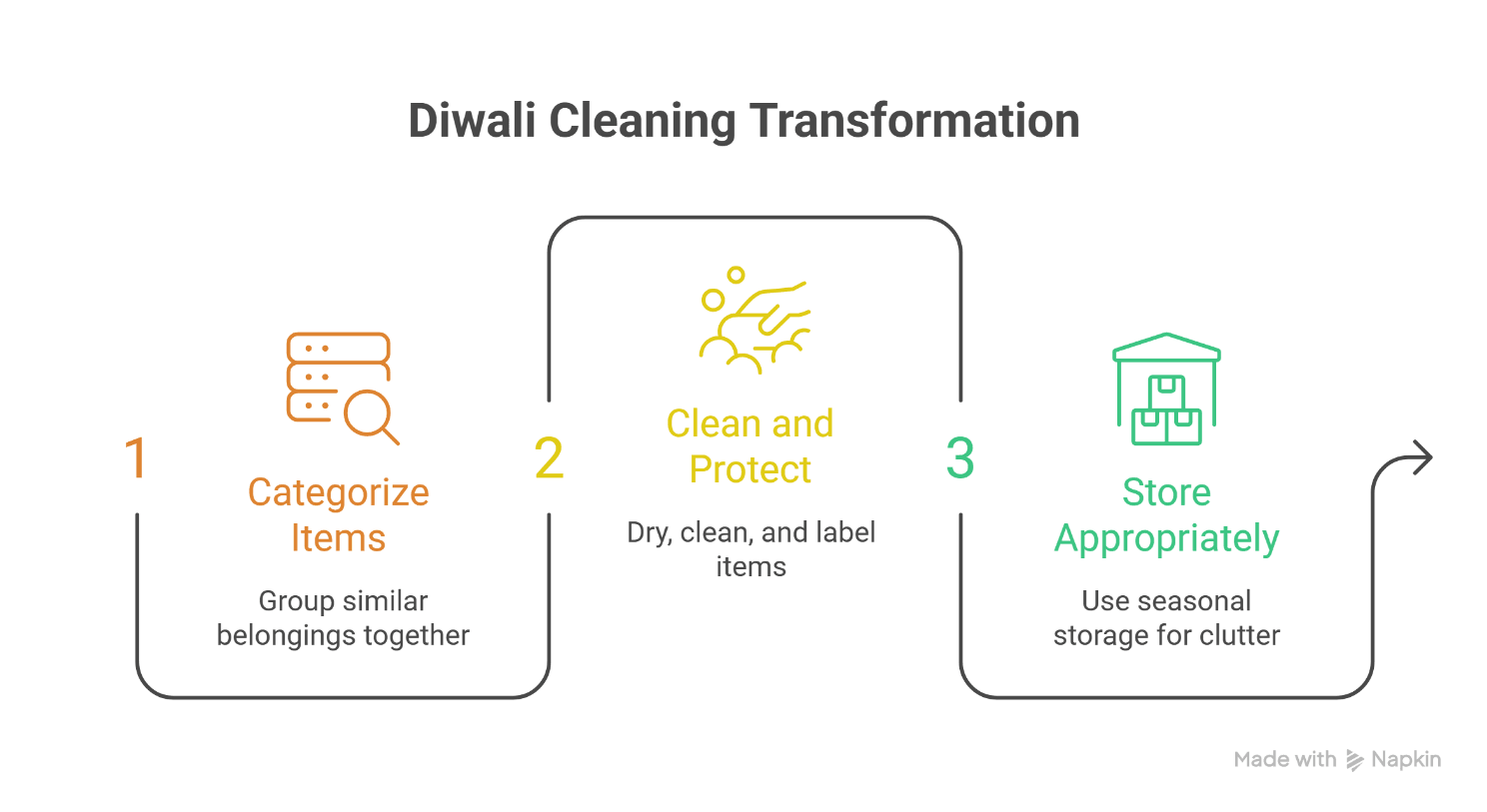
This is probably the most obvious category: diyas, lanterns, lights, artificial flowers, torans, rangoli materials, decorative pieces and festive props. The problem is that many of these things are used for a few days and stored for the rest of the year, which makes them perfect candidates for seasonal storage. But there’s one rule doesn’t treat next year’s decorations like this year’s garbage. Clean them, dry them, protect fragile pieces, group similar items together, label the boxes, and store them appropriately.
Old Appliances and Electronics
Diwali cleaning often uncovers forgotten electronics an old television, a spare monitor, a rarely used appliance, cables, speakers, electronic decorations. Sometimes these are kept because they still work, sometimes because they may be useful later. If you’re keeping them, don’t simply throw everything into a damp corner or stack heavy boxes on top electronics require more thoughtful storage than ordinary household clutter.
Boxes, Gifts and Miscellaneous Belongings
Then there’s the category every home has: “we’ll decide later.” Gift boxes, old packaging, decorative objects, family belongings, things waiting to be passed on, things waiting to be repaired, things waiting for a future house this is the category where a simple storage system can make the biggest difference.
The Guest Room Is Not a Storage Room
Here’s a common festive-season transformation. The guest room starts out as “this is where relatives will stay,” then Diwali cleaning begins — a few boxes are moved in, then extra bedding, then suitcases, then decorations, then a piece of furniture. Suddenly the room is full, and when the guests actually arrive, everyone starts moving everything all over again. If you’re regularly hosting family during Diwali, Christmas or other celebrations, it makes sense to treat the guest room as guest space, not permanent storage. Occasionally used belongings can be stored elsewhere until they’re needed, so that when guests arrive, you’re preparing a room — not excavating one.
Why Diwali Decorations Need Their Own Storage System
Festive decorations are surprisingly difficult to store — they’re often fragile, oddly shaped, seasonal, easy to damage, hard to stack, and used only occasionally. Lights tangle, decorative pieces break, paper materials crease, fabric decorations collect dust, and glass items chip. When everything goes into one box, finding anything next year becomes a treasure hunt. A better system is simple: keep similar decorations together, use appropriate protection for fragile pieces, avoid crushing delicate items, label containers, and keep an inventory if you have a large collection. The goal isn’t to make storage complicated — it’s to make next year’s Diwali easier than this year’s.
The 80/20 Rule of Festive Storage
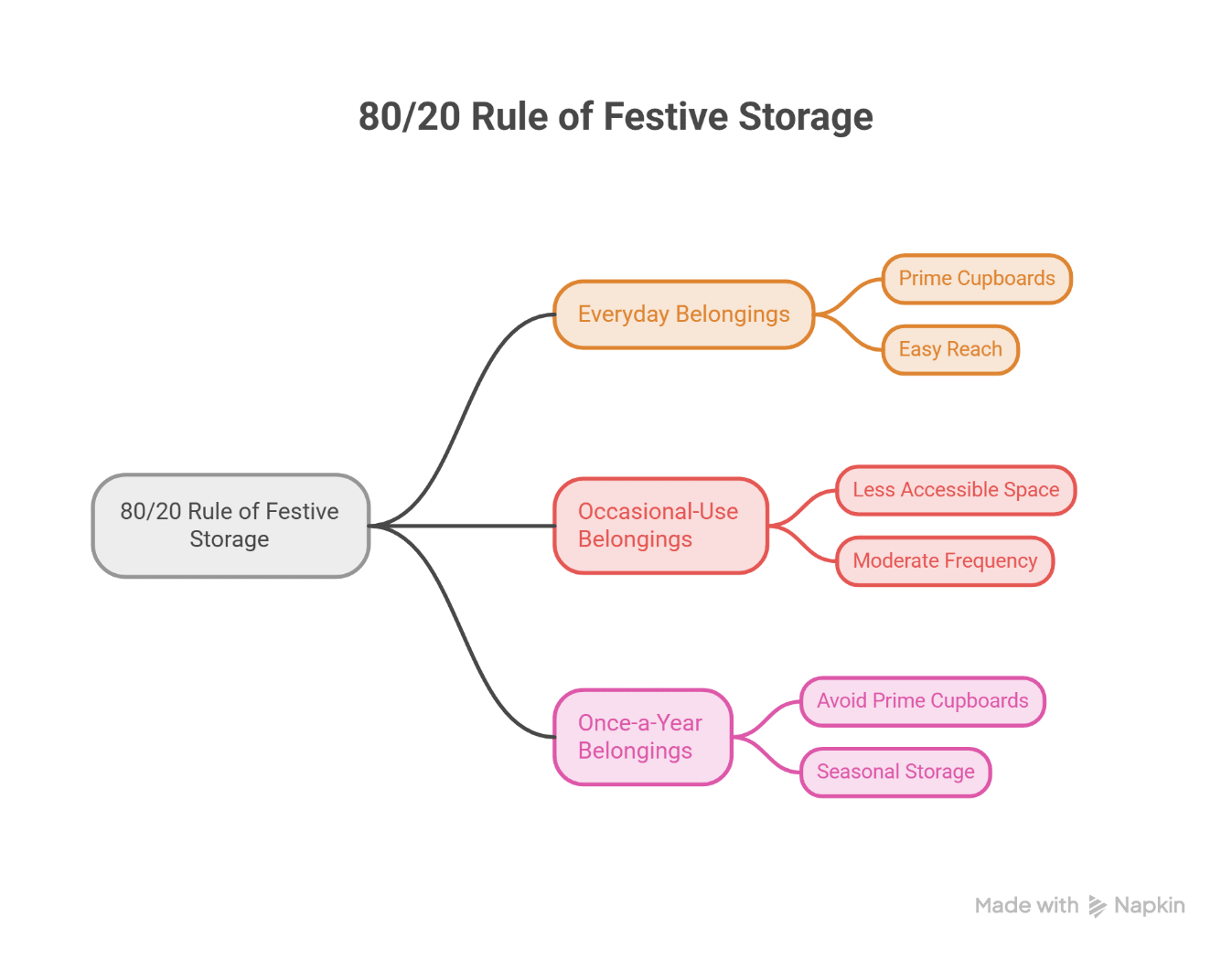
Here’s a useful way to think about your home: you probably use a relatively small percentage of your belongings very frequently, while the rest is used only occasionally. Yet your home gives almost everything the same amount of physical space, which doesn’t make much sense. Your everyday belongings should be the easiest to reach, your occasional-use belongings can occupy less accessible space, and your once-a-year belongings don’t necessarily need to occupy your prime cupboards at all. That’s the basic logic behind seasonal storage; you’re not getting rid of things; you’re changing where they live according to how often you use them.
What Should Stay at Home and What Can Move Into Storage?
Ask yourself four questions. Do you use this regularly? If yes, keep it accessible. Will you need this in the next few weeks? If yes, don’t bury it. Do you only use this once or twice a year? That may be a good candidate for seasonal storage. And are you keeping this because you genuinely need it? If the answer is no, storage isn’t necessarily the solution, sometimes the right answer is donating, selling, recycling or letting go. Storage should solve a space problem; not become a hiding place for decisions you don’t want to make.
How to Prepare Your Home Before Diwali
Start earlier than you think, don’t wait until the weekend before Diwali. Begin by identifying belongings that aren’t required for the immediate festive period, then separate everyday items from seasonal items and group similar things together: decorations with decorations, occasion wear with occasion wear, extra bedding together, furniture separately, important documents separately, fragile belongings separately. Then label everything. It sounds basic, but imagine next year when you’re looking for one string of lights — would you rather open eight mystery boxes, or find one clearly marked “Diwali Lights — Box 2”?
The Business Version of the Same Problem
Now take the same problem and multiply it by a few hundred boxes that’s what happens to some businesses during Diwali. An e-commerce brand prepares additional inventory, a corporate gifting company receives products for hampers, a retailer brings in festive merchandise, a manufacturer prepares seasonal stock, a D2C business sees its packaging requirements spike. Suddenly the office isn’t just an office, it’s a warehouse, packing room, inventory room and dispatch centre all at once. For businesses, festive inventory storage can provide additional capacity during the period when demand is highest, so instead of permanently expanding the office for a few high-volume weeks, businesses can consider storage that matches their seasonal needs.
What Happens After Diwali?
This is the part most people forget: everyone plans for Diwali, but few people plan for the week after. The lights come down, the decorations go back into boxes, the gifts get sorted, the extra furniture is moved again, unsold business inventory remains, and leftover packaging material piles up, and the same storage problem returns. That’s why good Diwali storage planning shouldn’t end when the festival ends. Think about the full cycle, before Diwali, during Diwali, after Diwali, next Diwali because the easier you make that cycle, the less likely you’ll be to start from scratch every year.
What Makes Good Seasonal Storage?
If you’re storing belongings for weeks or months, the storage environment matters. Fabric, wood, paper, electronics, furniture, decorations and fragile items all have different requirements, and a suitable storage setup should take the nature of those belongings into account. Security is another consideration, organisation matters too, and if you’re storing many boxes, being able to identify what is where can save a huge amount of time. Features such as climate-controlled storage, CCTV monitoring, protective packing and digital inventory systems are common examples of what some storage providers offer for Your Space Doctor, only the services and features offered should be described specifically on the final website page.
The Real Meaning of “Making Space”
We often say, “we need to make space,” but making space doesn’t always mean throwing things away. Sometimes it means moving things around, reorganising, letting go, or simply accepting that your home isn’t the right place for every belonging you own. A spare mattress can be useful, a wedding decoration can be meaningful, a suitcase can be necessary, a piece of furniture can be valuable none of it needs to be thrown away simply because you don’t have room for it today. It may simply need a different address.
The Best Diwali Cleaning Hack Might Not Be Cleaning
This is the real takeaway. Before you spend an entire weekend pulling everything out of every cupboard, ask yourself what you’re trying to achieve. If the answer is, “I want my home to feel spacious, organised and ready for family,” then cleaning alone isn’t enough, you need to think about space management. What needs to stay? What can be moved? What can be donated? What can be stored? What will you need again next year? Those questions can turn Diwali preparation from a frantic cleaning exercise into a proper reset.
Final Thoughts
Diwali has always been associated with cleaning, renewal and making the home feel fresh again. But modern homes face a problem previous generations didn’t quite have in the same way, we’ve accumulated a lot more stuff, while our homes haven’t necessarily become much bigger. So, this year, don’t just ask, “what should I clean?” Ask, “what deserves to occupy space in my home every day?” Your Diwali decorations can still stay. Your extra furniture can still stay. Your festive clothes can still stay. Your memories can stay. They just don’t all have to compete for the same cupboard because the real goal of Diwali cleaning isn’t to make your house look empty, it’s to make your home feel like home again.
FAQs
What is the best way to store Diwali decorations?
Clean and dry decorations before storing them. Separate fragile items, protect delicate pieces, group similar decorations together and label boxes clearly for easier retrieval next year.
Where can I store Diwali decorations when I don’t have enough space?
Depending on the quantity and type of belongings, you can consider dedicated household or seasonal storage instead of filling cupboards, balconies or guest rooms with decorations throughout the year.
How can I make more space at home before Diwali?
Separate everyday belongings from occasional-use items, declutter things you no longer need, organise seasonal belongings and consider external storage for items you want to keep but don’t need at home every day.
Should I store furniture during Diwali?
If you have furniture that is useful but rarely used, suitable furniture storage can free up valuable living space, particularly when you’re preparing your home for guests.
What should I do with extra mattresses before Diwali?
Extra mattresses and bedding can be kept in a suitable storage area when they’re not needed. If they occupy significant space for most of the year, external household storage may be an option.
Can I store festive clothes outside my home?
Yes. Seasonal or occasion wear that isn’t needed regularly can potentially be stored outside the home, provided the storage environment is appropriate for the clothing.
When should I start preparing my home for Diwali?
Starting several weeks before Diwali gives you more time to sort belongings, donate or dispose of unwanted items, organise decorations and arrange additional storage if required.
Is storage the same as decluttering?
No. Decluttering involves deciding what you no longer need or want. Storage is about finding a suitable place for belongings you have decided to keep.
Can businesses use Diwali storage?
Yes. Businesses can have seasonal requirements for additional inventory, gift hampers, packaging materials and festive merchandise. Business or inventory storage can provide additional capacity during peak periods.
What happens to my belongings after Diwali?
That depends on your storage arrangement. If belongings are kept in seasonal storage, they can remain there until you need them again, subject to the provider’s terms.
Finished Cleaning? Now Give Everything a Place.
Diwali cleaning should leave you with a home that feels more comfortable — not a guest room full of boxes and a balcony full of furniture. If you have Diwali decorations, extra furniture, seasonal clothing, mattresses, household belongings or festive business inventory that you want to keep but don’t need taking up everyday space, Your Space can help you explore a practical storage solution.
Clean the house. Clear the space. Keep what matters.
