
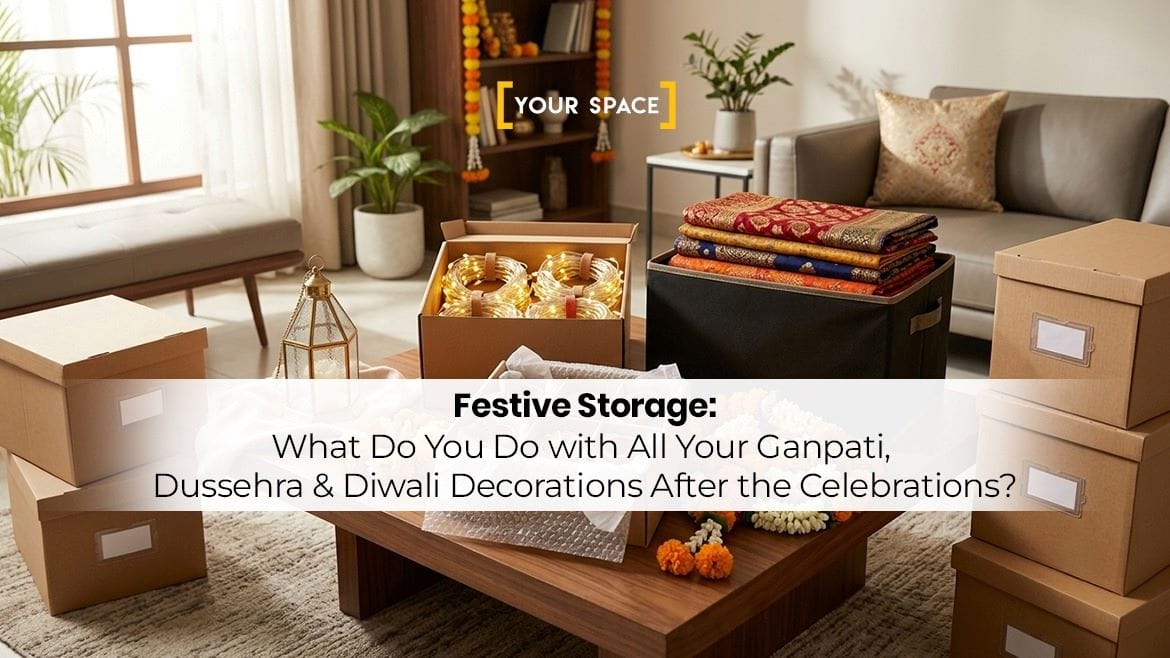
The lights are switched off. The last guest has left. The sweets are almost finished. The house finally becomes quiet again. And then you look around: there are boxes of decorations in one corner, fairy lights tangled together, a Ganpati backdrop waiting to be packed away, Diwali diyas sitting on the dining table, decorative fabrics folded on a chair, and extra lamps, torans, artificial flowers and festive accessories waiting for someone to decide where they belong.
And someone inevitably says, “We’ll pack everything properly next year.” You know how that story ends: everything goes into whichever box is available, the box goes into the loft, the loft gets closed, and eleven months later, when Ganpati or Diwali comes around again, everyone starts searching for the same things. “Where are the lights?” “Did anyone see the diya box?” “Where did we keep the decorations?” “Wasn’t the Ganpati backdrop somewhere here?”
This is exactly why festive storage deserves more thought than it usually gets. Ganpati, Dussehra and Diwali may last for days or weeks, but the decorations and festive belongings can stay with you for years. And if they’re not stored properly, next year’s celebration can begin with a very familiar ritual: opening five boxes to find one string of lights.
The Festival Ends. The Storage Problem Begins.
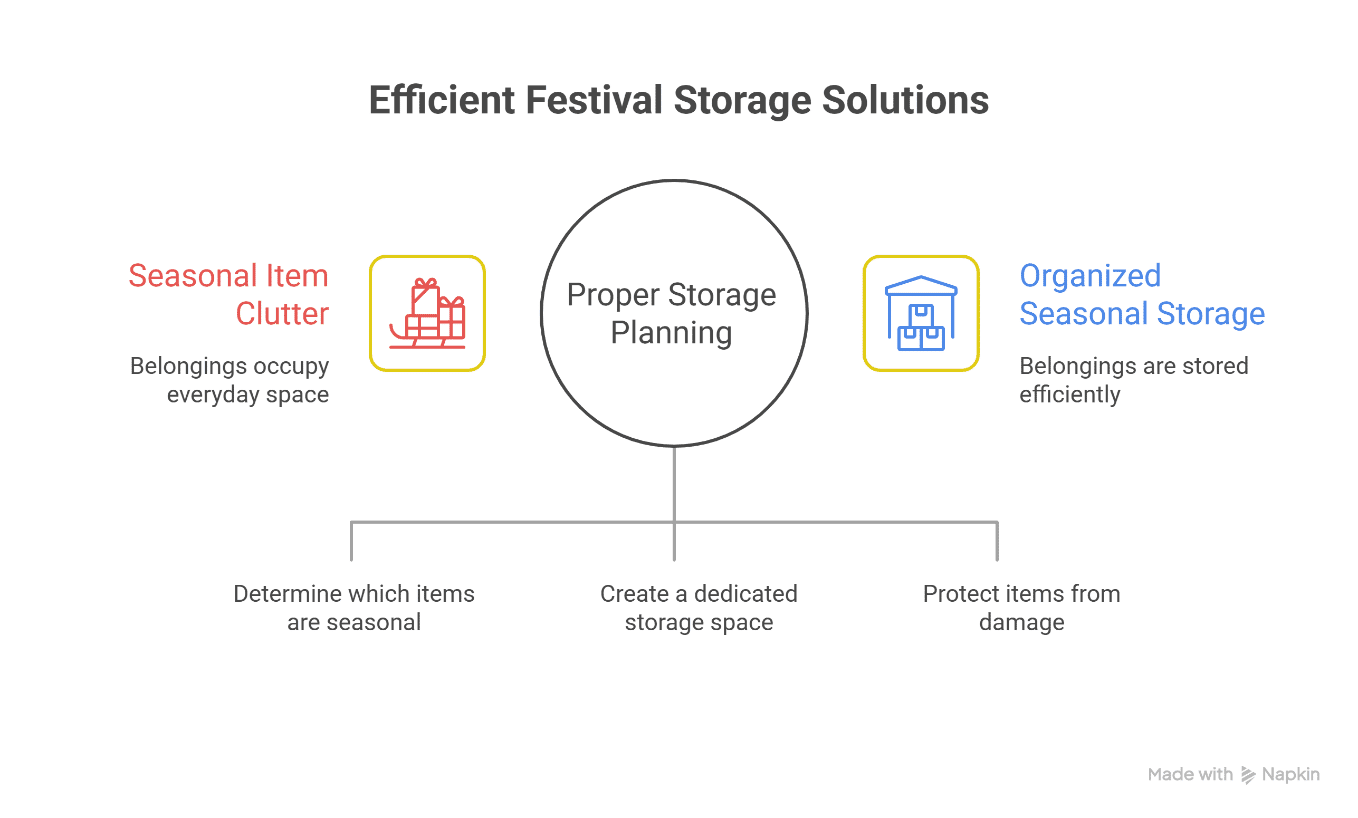
During the festival, everything has a purpose. The lights go around the balcony, the decorations transform the living room, the Ganpati setup becomes the centre of the home, the diyas come out, and the festive fabrics and decorative pieces suddenly make perfect sense. But once the celebrations end, those same belongings become seasonal items, you don’t need them tomorrow, next month, or perhaps even for another year.
That creates a unique storage problem. You want to keep them; you may have spent good money on them; some may have sentimental value; some may be reusable. But they don’t need to occupy everyday storage space for the next eleven months, and that’s were planning your festival storage properly can make a huge difference.
Before the Festival, Everything Has a Place
Think about the weeks before Diwali. Suddenly, the house is full of activity, boxes come down from the loft, old decorations are opened, lights are tested, diyas are cleaned, new decorations are purchased, and old ones are reused. The house becomes brighter, more colourful and, frankly, a little chaotic, but there’s excitement behind that chaos.
After the festival, however, the same belongings lose their temporary homes. Everything needs to go somewhere, and because nobody is particularly excited about packing decorations after a celebration, things often get put away quickly rather than correctly. That’s when problems begin.
After the Festival, Nobody Knows Where Anything Goes
The problem isn’t necessarily the amount of decoration, it’s the lack of a storage system. A diya goes into one box, its accessories go into another, the lights are stuffed into a plastic bag, the decorative fabric is folded and pushed into a suitcase, and the Ganpati decorations get mixed with Diwali items. By next year, you’ve created a treasure hunt. This is why good festive decoration storage should begin on the day you pack things away, not when the next festival arrives.
Why Indian Festivals Create a Surprisingly Large Storage Problem
India’s festive calendar means seasonal belongings can accumulate quickly. One festival ends and another eventually comes around. Ganpati brings its own decorations and setup materials; Navratri and Dussehra can bring decorative items, fabrics and celebration-related belongings; and Diwali brings lights, diyas, lanterns, torans, rangoli materials and decorative pieces.
If you’re keeping reusable decorations, your collection can grow year after year, and because many of these things are used for only a short period, they can spend most of the year occupying cupboards, lofts and storage rooms. That is where seasonal storage becomes practical.
Ganpati Decoration Storage Needs More Care Than You Think
Ganpati celebrations can involve much more than the idol itself, homes may use decorative backdrops, artificial flowers, fabrics, lighting, ornaments, stands and other decorative elements. Some items are delicate, some are made from materials that can be affected by moisture, some are difficult to replace, and some carry emotional value because they’ve been used by the family for years.
After the celebration, these items shouldn’t simply be thrown into the nearest carton, they deserve to be cleaned, dried and packed according to what they are made from. If something is fabric, it should be completely dry before storage; fragile decorations should be protected from crushing; and electrical decorations should be handled carefully and stored appropriately. The goal is simple: next year’s celebration should begin with usable decorations, not damaged ones.
Dussehra and Navratri Belongings Have the Same Problem
Festive clothing, decorative fabrics, accessories and celebration materials often spend most of the year unused. That doesn’t mean they’re disposable. If something is going to be used again next year, it needs a place where it can remain protected until then.
Instead of treating everything as “old festival stuff,” think of it as your seasonal collection. Once you see it that way, organizing becomes much easier, you know what belongs together, you know when you’ll need it, and you can decide whether it needs to stay at home or can be stored elsewhere.
Diwali Decorations Can Take Up More Space Than You Realize
Diwali is where things can really add up. A family may have years’ worth of fairy lights, diyas, lanterns, torans, artificial flowers, decorative pieces, rangoli materials, candles, festive table décor and other items. One year’s collection may fit easily into a cupboard; five years’ worth is another story.
The interesting part is that most of these items are not clutter in the traditional sense, you may genuinely use them, just not every day. That makes Diwali decoration storage different from ordinary decluttering. The question isn’t “Should I throw this away?” It’s “Where should I keep this until next Diwali?”
The Most Common Mistake: Putting Everything into One Box
It sounds convenient: one giant box, everything goes inside, done, until next year. The problem is that a giant mixed box saves time today and creates work tomorrow. You might need one item and must unpack everything to find it. Worse, delicate decorations can get crushed under heavier objects, electrical items can become tangled, and fabrics can get mixed with dusty materials. A little organization now can save a lot of frustration later.
What Should You Actually Store After Diwali?
The answer depends on what you plan to reuse. Reusable decorations should be cleaned and packed properly rather than treated as disposable items.
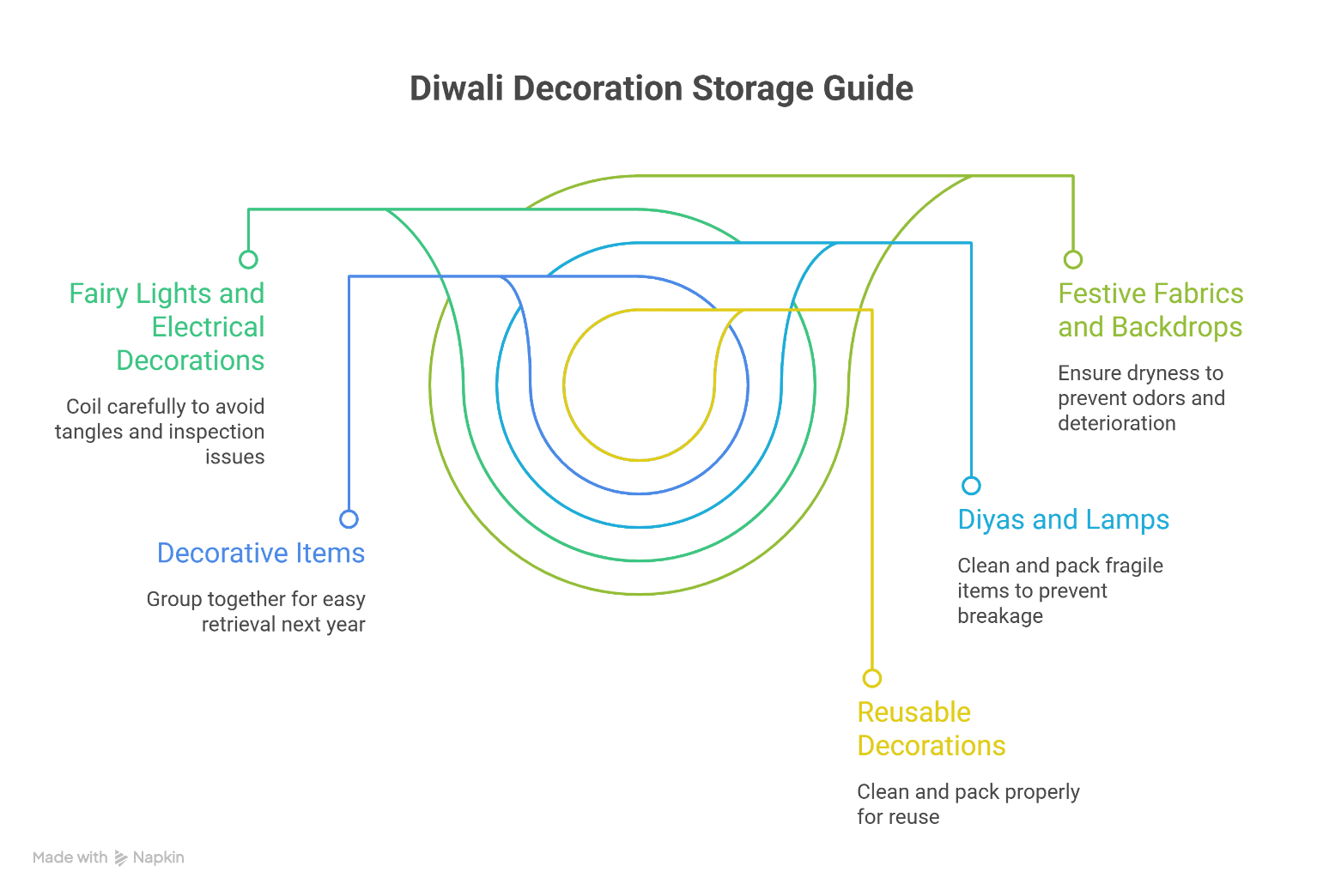
Decorative Items
Artificial flowers, torans, figurines and decorative pieces should be grouped together so they’re easy to locate next year.
Diyas and Lamps
Clean reusable diyas and lamps before storing them. Fragile items should be packed in a way that reduces the chance of breakage.
Fairy Lights and Electrical Decorations
Don’t simply throw electrical decorations into a bag, loose wires quickly become tangled and can be difficult to inspect later. Coil them carefully and keep related components together.
Festive Fabrics and Backdrops
Fabric should be completely dry before it is packed away. Moisture trapped inside folded fabric can lead to unpleasant odours and potentially contribute to deterioration.
Why Festival Decorations Get Damaged While Sitting in Storage
Most festive decorations aren’t damaged during the festival, they’re damaged while sitting quietly for months. That’s what makes the problem easy to miss.
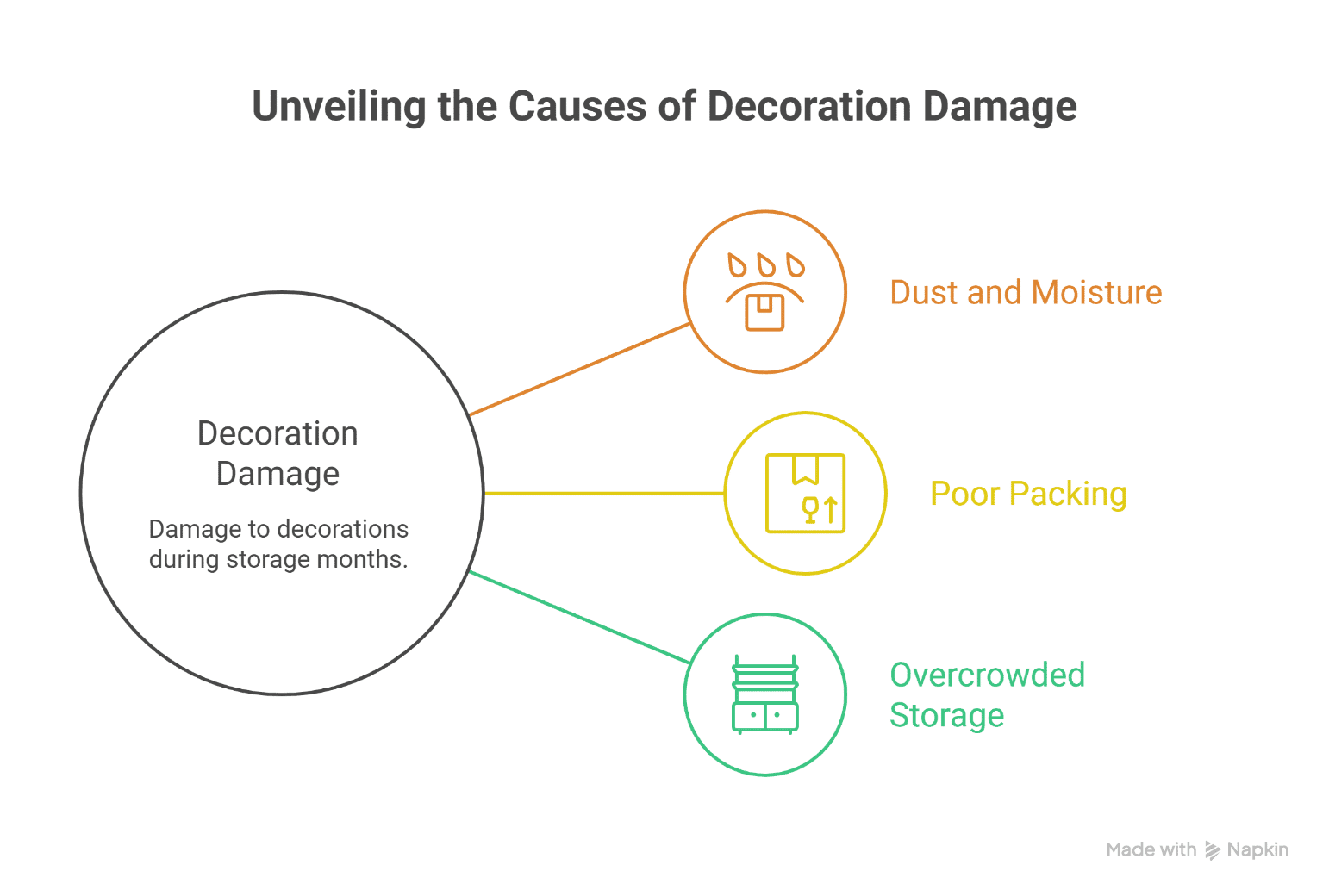
Dust and Moisture
A dusty loft or damp storage area isn’t necessarily the best place for delicate decorations. Humidity can affect certain fabrics, paper-based decorations, wood and other materials.
Poor Packing
Heavy items placed on fragile decorations can cause cracks, bends or breakage.
Overcrowded Storage
When everything is squeezed into one cupboard, retrieving one item can mean disturbing everything else. Good festive storage is about protection and accessibility.
The “Next Year” Box: How to Pack Festive Items for Future Use
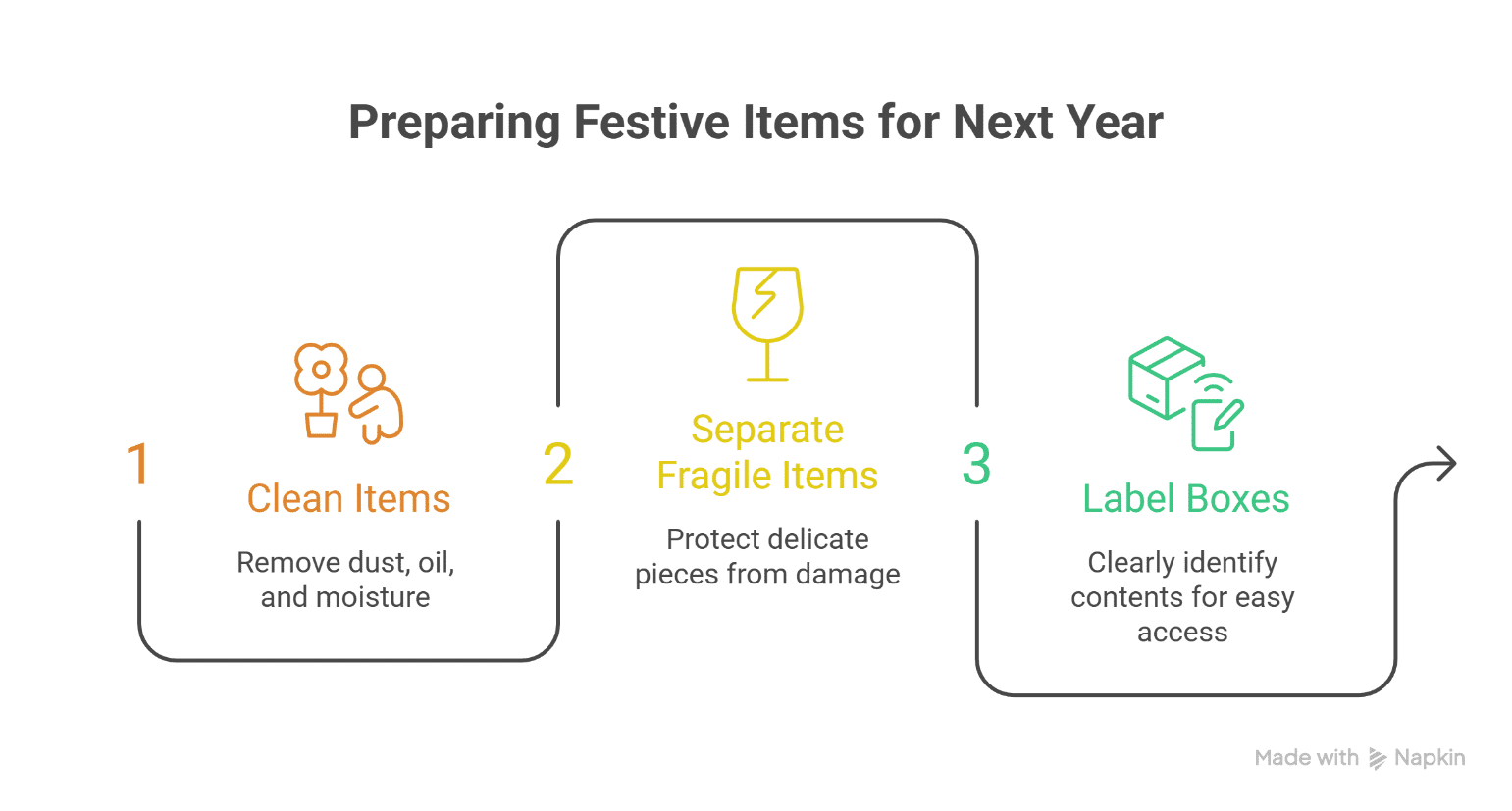
Here’s a simple idea: instead of thinking “I need to put away the festival decorations,” think “I’m preparing the festival kit for next year.” That small change makes you pack differently, you clean the items, organize them, label them, protect fragile pieces, separate electrical items, and keep similar decorations together. Then next year, you don’t start from zero; you simply open the right box.
Clean Before Packing
Dust, oil, food residue and moisture shouldn’t be left on items for months if they can be cleaned safely. Fabric items should be fully dry before being packed, and decorations should be checked for damage before storage so that you don’t discover a broken item eleven months later.
Separate Fragile Items
Glass lamps, delicate decorative pieces and breakable accessories should not be buried under heavy items. Give fragile belongings their own protection, it takes a little more time now, but it can save you from discovering a box of broken decorations next Diwali.
Label Everything
Don’t write “Diwali Stuff”, that isn’t enough. Try labels such as Diwali Lights, Diyas & Lamps, Ganpati Decorations, Festival Fabrics or Navratri Decorations instead. A good label saves time, and after eleven months, you’ll be very glad you wrote it.
What If Your Home Doesn’t Have Enough Space for Festive Storage?
This is where things become interesting. Maybe your home already has limited storage, your cupboards are full, the loft is packed, and your spare room has other uses. And now another year’s worth of festive decorations needs a home.
You don’t want to throw them away, you don’t want to buy another cupboard, and you certainly don’t want to move to a bigger house just because of a few boxes that are used for a few weeks each year. That’s when external seasonal storage can become worth considering.
When External Seasonal Storage Makes Sense
If your festive collection has grown over the years, you may not need to keep everything inside your everyday living space. This can be particularly useful for families with large quantities of reusable decorations, festive furniture, lighting equipment, backdrops or other seasonal belongings.
The idea is straightforward: your home contains the things you use regularly, and your stored space contains the things you genuinely want to keep but don’t need every day. When the festival approaches, the belongings can come back into your home; when the celebrations end, they can return to storage. This creates a cycle that works with the way you use your belongings.
The One Festival Rule That Can Save You Space Every Year
Here’s a simple rule worth following don’t buy a new decoration before checking what you already own. It sounds obvious, but festive shopping can be irresistible, something looks beautiful, there’s a sale, a new design appears, and you buy it. Then you return home and discover you already have something remarkably similar packed away.
Now you have two; next year, you buy another; five years later, you have an entire collection. There’s nothing wrong with collecting decorations but knowing what you already own helps prevent unnecessary duplication , and it makes your festival storage much easier to manage.
Frequently Asked Questions
What is festive storage?
Festive storage refers to safely organizing and storing seasonal belongings such as Ganpati decorations, Diwali lights, diyas, Dussehra decorations, festive fabrics and other celebration-related items when they aren’t being used.
How should I store Diwali decorations after the festival?
Clean and completely dry reusable decorations before packing them. Separate fragile items, organize lights and electrical decorations carefully, group similar belongings together and label the boxes clearly.
How can I store Ganpati decorations for next year?
Clean and dry reusable decorations before packing. Protect delicate pieces from pressure and keep different types of decorations organized so they can be easily located during the next Ganpati celebration.
Can festive decorations be stored outside the home?
Yes. External seasonal or personal storage can be useful when your home doesn’t have enough space for decorations and other belongings that are only used for a short period each year.
How do I prevent festival decorations from becoming damaged in storage?
Keep them clean and dry, protect fragile items, avoid overcrowding, organize materials according to type and choose a storage environment appropriate for the belongings.
Should I keep old Diwali decorations or buy new ones every year?
If decorations are still useful and meaningful to you, there is no need to replace them simply because they’re old. Reusing decorations can also make storage planning easier when you know exactly what you already own.
Can seasonal storage help free up space at home?
Yes. Moving rarely used seasonal belongings out of everyday living areas can free cupboards, lofts, spare rooms and other parts of the home for things you use more regularly.
Don’t Let the Festival Decorations Become Year-Round Clutter
The beautiful thing about festive belongings is that they don’t need to be useful every day to be valuable. A Diwali lantern may sit untouched for eleven months and still feel special when you bring it out. The Ganpati decorations may only be used once a year and still carry years of memories. The lights may spend most of their life inside a box before transforming your home again. That’s perfectly fine.
The problem begins when seasonal belongings have nowhere sensible to go after the celebrations. Instead of allowing them to occupy your everyday cupboards, spare room or living room year-round, think about festive storage as part of the celebration itself. Pack today for the festival you will celebrate next year, clean it, protect it, label it, store it properly.
Then, when the next Ganpati, Dussehra or Diwali arrives, you won’t be searching through a mountain of boxes; you’ll simply open the right one, and there it is everything you need to celebrate again.
Give Your Festive Belongings a Place to Wait for Next Year
At Your Space Doctor, we understand that festive belongings aren’t ordinary clutter. They may only be used for a few weeks a year, but they’re often worth keeping. If your home doesn’t have enough room for Ganpati decorations, Diwali lights, festive furniture, seasonal belongings or other items you want to reuse, household and personal storage can help you keep them safely organized without letting them take over your everyday space.
Instead of sacrificing an entire cupboard, or an entire room, for belongings you use only occasionally, consider giving your festive collection a dedicated place to stay until the next celebration. Because the festival may last a few days. Your decorations shouldn’t have to occupy your home for the other 350.
Need space for your festive belongings? Talk to us about a storage solution that works around your celebrations.
📞 Call Your Space Doctor: +91 8433925040
