
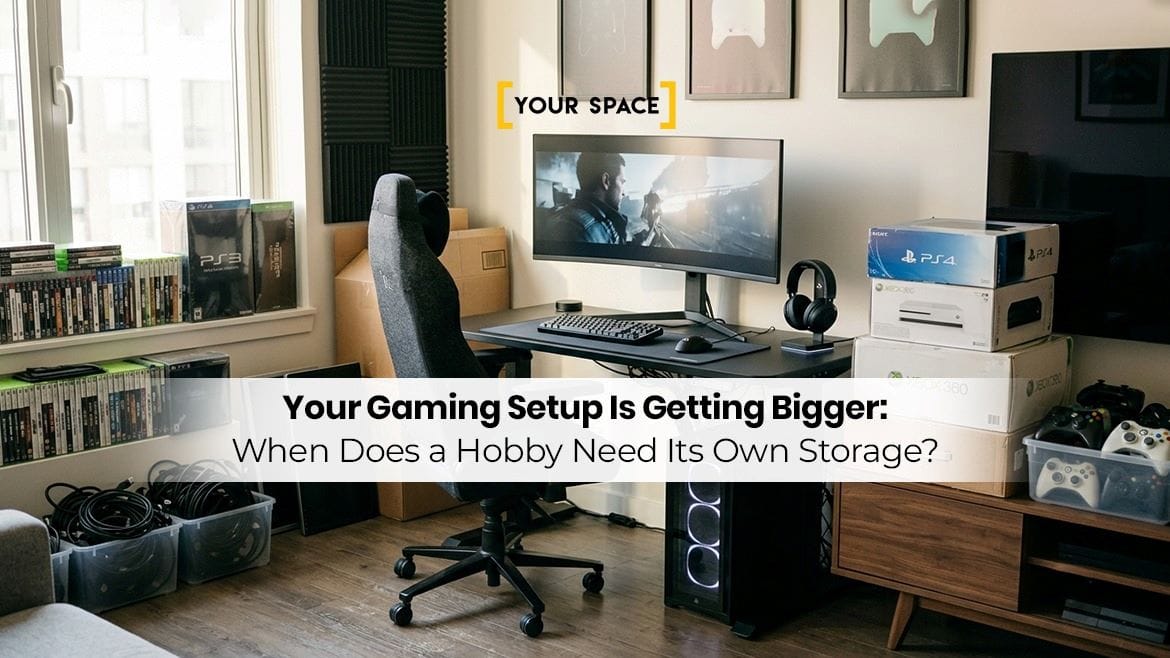
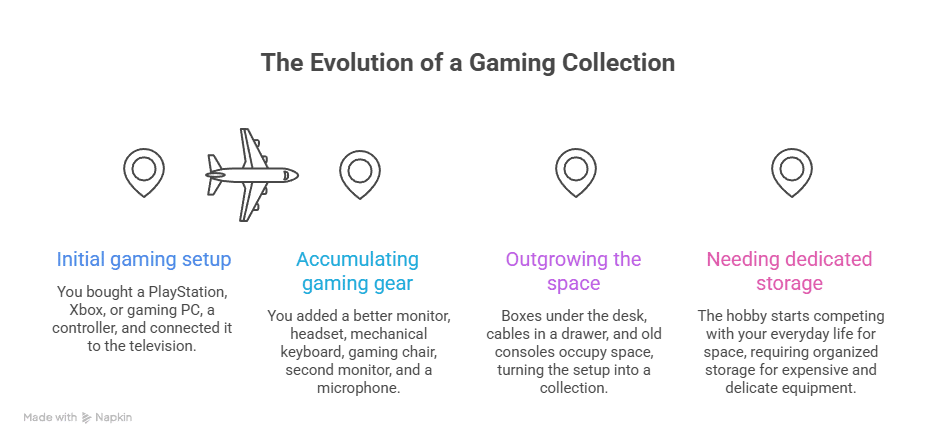
It started innocently. Maybe it was a PlayStation, an Xbox, or a gaming PC you spent months saving for. You bought a controller, connected it to the television, and thought, that’s it — I’m sorted.
Then came the better monitor. Then the headset. Then the mechanical keyboard. Then another controller, a gaming chair, a second monitor, and a microphone, because apparently everyone is streaming now. Then the old console wasn’t going anywhere because “what if I want to play it again?”
And somewhere along the way, your gaming hobby stopped fitting neatly into one corner of the room.
There are boxes under the desk, cables in a drawer, controllers on a shelf, old games in a cupboard, and a previous-generation console still sitting in its original packaging, along with a collection of accessories you haven’t touched in months but aren’t ready to sell.
Suddenly, you look around and realize something: your gaming setup isn’t just a setup anymore. It’s a collection. And collections have a habit of needing space.
This is where gaming equipment storage becomes an interesting question, not because gamers necessarily own too much, but because gaming equipment can be expensive, delicate, bulky, and surprisingly difficult to organize.
So when does a hobby need its own storage? The answer isn’t necessarily when you run out of floor space. Sometimes, it’s when your hobby starts competing with your everyday life for that space.
It Started With One Console
Most gaming collections have a beginning. For some people, it’s an old console they still remember playing as a child. For others, it’s the first gaming PC they built themselves, or a handheld console received as a gift.
At the beginning, everything is simple: one device, one controller, a few games, one shelf.
Then gaming becomes more than something you do occasionally. You start paying attention to equipment, learn the difference between displays, and become particular about keyboards, mice, controllers, and audio. You discover limited editions and start collecting physical games.
And suddenly, the number of things connected to your hobby grows faster than the size of the corner where you keep them.
Then the Setup Got Serious
The modern gaming setup can be surprisingly substantial. A serious PC gaming arrangement might include a desktop tower, one or more monitors, speakers or headphones, a keyboard, mouse, microphone, webcam, lighting, a large desk, and a dedicated chair.
Console gaming can grow just as quickly, with multiple consoles, controllers, charging docks, headsets, physical games, and accessories. If you’re also creating gaming content or streaming, the equipment list gets even longer.
The hobby that once occupied a television shelf can eventually occupy an entire room.
The Hobby Slowly Became a Collection
This is where storage becomes different. You may have equipment that you actively use every week, and equipment you haven’t used in years: the first console, an older graphics card, a previous monitor, old controllers, collector’s editions, games you don’t want to sell, original boxes, spare cables, and limited-edition merchandise.
You may not want these things in your daily gaming setup. But that doesn’t mean you want to get rid of them. And that’s precisely where hobby storage can make sense.
When Does a Gaming Setup Become a Storage Problem?
There isn’t a specific number of consoles or controllers that suddenly turns a hobby into a storage problem. It’s more about how your equipment affects the space around you.
If your gaming desk is still comfortable, your equipment is easy to access, and everything has a proper place, you probably have a setup, not a storage problem. But when you start seeing boxes stacked behind the chair, old equipment under the bed, and accessories taking over cupboards, something has changed.
The Desk Is No Longer Enough
The desk is supposed to be where you play. It shouldn’t also be the permanent home of every piece of equipment you’ve ever owned.
When old controllers, boxes, cables, and unused peripherals start competing with the things you actually use, the setup becomes harder to manage. You end up spending more time moving things around and searching for equipment than actually enjoying the hobby.
Boxes, Accessories and Old Equipment Start Piling Up
Gaming equipment often comes with packaging. Sometimes you keep the original box because you may resell the item later. Sometimes the packaging itself is collectible. Sometimes you simply can’t bring yourself to throw away a perfectly good box.
Then another box arrives, and another, until the packaging becomes its own storage category. The same thing happens with accessories: one cable becomes five, one controller becomes three, a spare mouse sits next to an older mouse, and nobody remembers which cable belongs to which device.
Gamers Don’t Just Own Consoles Anymore
The modern gaming hobby can involve a surprising range of equipment.
PCs, Monitors and Peripherals
Gaming PCs and monitors aren’t small items. A desktop tower can be heavy, monitors require careful handling, and mechanical keyboards, mice, and other peripherals can accumulate quickly.
When these items aren’t being used, simply throwing them into a cupboard isn’t a good idea. They need suitable protection from impact, dust, and unsuitable environmental conditions.
Controllers, Headsets and Cables
Small accessories create a different problem. They don’t take up much space individually, but collectively, they can become a mess.
Controllers, headsets, charging cables, adapters, power cords, and other accessories are easy to mix together. A little organization goes a long way.
Chairs, Desks and Streaming Equipment
Then there are the big pieces. Gaming chairs can be bulky, and desks can be even more difficult to store. For people who stream or create gaming content, the equipment can extend to microphones, cameras, lighting, capture devices, tripods, and backdrops.
At this point, gaming equipment storage isn’t just about finding a shelf. It becomes a genuine space-management issue.
Games and Collectibles
Physical games and gaming collectibles can have sentimental or financial value. A collection built over years may be something you don’t want to sell simply because you don’t currently have room for it. That is where careful personal storage can provide another option.
Why Gaming Equipment Needs More Thoughtful Storage
Electronics and gaming equipment deserve more care than an ordinary cardboard box thrown into a damp corner. Dust can accumulate around equipment, moisture and unsuitable environmental conditions can create problems for electronics and other materials, and physical impact can damage screens and delicate components.
This doesn’t mean every console needs a special room. It means you should think about storage conditions before putting expensive equipment away for months or years. Gaming equipment is often a significant investment, and treating it like disposable clutter doesn’t make much sense.
Dust and Environmental Conditions
Gaming PCs, consoles, and other electronics have components and ventilation openings where dust can accumulate. For equipment being stored for a long period, it is sensible to clean it appropriately and protect it from dust and physical damage.
Environmental conditions also matter. Excessive moisture is undesirable for electronics and can contribute to corrosion or other problems over time. If you’re storing expensive equipment for an extended period, the storage environment deserves consideration.
Cables and Accessories Get Lost Easily
The funny thing about gaming accessories is that the thing you need is often the thing you can’t find. You have seven cables, none of them labeled, and you remember seeing the correct one somewhere; now you’re checking every drawer in the house. A simple labeling system can save a surprising amount of frustration.
What Should Stay in Your Gaming Room?
Your everyday equipment should stay where you actually use it: your main console, your primary gaming PC, the monitor you use regularly, your everyday controller, your headset, and the accessories you reach for frequently. The goal is to make your gaming space comfortable and functional.
If you haven’t used something for six months, however, you might ask whether it needs to occupy prime space. That’s not an instruction to throw it away. It’s simply a storage question.
What Can Be Stored Elsewhere?
This is where the distinction between using something and owning something becomes useful. You may own equipment that you don’t currently need.
Old Consoles and Previous-Generation Equipment
You might still want the console from your childhood, or you may want to revisit an older system. You may simply enjoy owning it. There is no reason every previous-generation console has to sit beside your current system.
Collectibles and Special Editions
Limited editions, collector’s items, and gaming merchandise can take up considerable space. If they matter to you, storing them properly may make more sense than trying to squeeze them into your everyday gaming room.
Spare Equipment
Perhaps you have a second monitor that you use occasionally, an extra chair, or old streaming equipment that you plan to use again. These are exactly the kinds of belongings that can benefit from organized hobby storage.
Gaming Equipment Storage During a Move or Renovation
Moving house can be particularly stressful for gamers. Your gaming setup may have taken years to build, and then suddenly, everything needs to be unplugged, packed, and moved. Monitors need careful handling, PCs need protection, consoles need suitable packaging, and accessories need to remain organized.
If you’re renovating, the problem can be even bigger. You may need to clear an entire room while the work is underway. In these situations, temporary gaming equipment storage or broader personal storage can help keep valuable equipment out of the way until the room is ready again.
The key is to prepare everything properly rather than throwing expensive equipment into random boxes five minutes before the movers arrive.
When Personal Storage Makes Sense for Gamers
Not every gamer needs external storage. If everything fits comfortably in your room and you’re happy with the arrangement, there’s no reason to change it.
But external personal storage can make sense when your collection has outgrown your available space: perhaps you’re moving into a smaller home, renovating your gaming room, temporarily living somewhere else, or you’ve built a collection over ten years and simply don’t want to sell it. Or perhaps you’ve started creating gaming content and now own equipment that you only use for certain projects.
In these situations, storage isn’t about hiding your hobby. It’s about giving your hobby a proper place without allowing it to take over the rest of your home.
How to Prepare Gaming Equipment for Storage
Before putting expensive gaming equipment away, take a little time to prepare it.
Clean and Dry Equipment Before Packing
Equipment should be clean and dry before being stored. Dust can be removed appropriately, and surfaces should be checked for moisture before packing. Do not pack electronics while damp.
Keep Accessories Together
If a controller belongs to a particular console, keep the relevant cables and accessories together where possible. This makes future setup much easier.
Label Everything
A label saying “Gaming Stuff” isn’t particularly helpful six months later. Try something more specific:
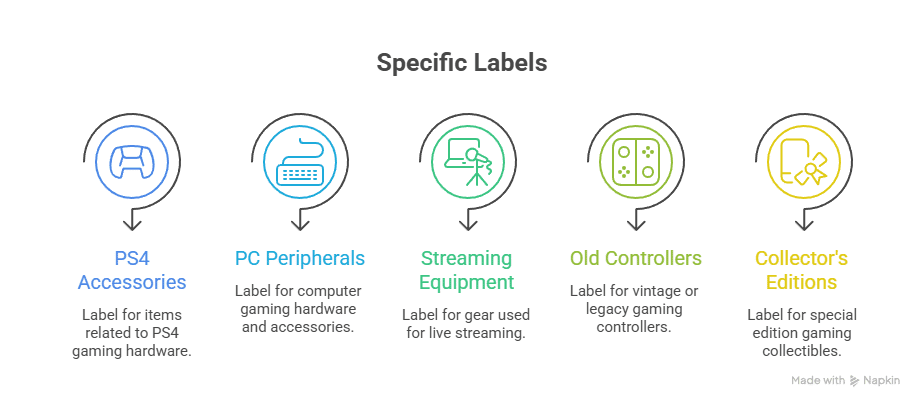
- PS4 Accessories
- PC Peripherals
- Streaming Equipment
- Old Controllers
- Collector’s Editions
Your future self will appreciate the effort.
The Best Gaming Setup Isn’t Necessarily the Biggest One
There is a temptation in gaming to keep upgrading: a better monitor, a faster PC, a newer console, a better chair, a bigger desk, another accessory. There’s nothing wrong with that. But the physical side of the hobby deserves some thought too.
Every upgrade creates another piece of equipment. Every old device needs somewhere to go. And eventually, your gaming room may become less about gaming and more about storing everything you’ve ever bought for gaming. That’s the point where stepping back can help.
You don’t have to stop collecting. You don’t have to sell your old consoles. You don’t have to throw away equipment you love. You simply need to decide what belongs in your everyday gaming space and what can be stored elsewhere.
Frequently Asked Questions
What is gaming equipment storage?
Gaming equipment storage refers to keeping consoles, PCs, monitors, controllers, accessories, collectibles, and other gaming-related belongings safely organized when they aren’t being used regularly.
Can I store gaming consoles for a long time?
Gaming consoles can be stored for extended periods when properly prepared and kept in suitable environmental conditions. They should be protected from dust, moisture, impact, and other avoidable risks.
Is electronics storage different from normal household storage?
Electronics can require additional care because moisture, dust, heat, and physical impact may affect them. Storage requirements depend on the equipment and how long it will remain unused.
What gaming equipment takes up the most space?
Gaming PCs, monitors, desks, chairs, consoles, and streaming equipment can occupy significant space. Large collections of games and accessories can also gradually take over cupboards and shelves.
Should I keep my old gaming consoles?
That’s a personal decision. If an older console has sentimental value, is collectible, or you expect to use it again, keeping it may make sense. If you don’t need it in your everyday space, suitable storage can be an option.
Can gaming equipment be kept in personal storage?
Yes, personal storage can be considered for gaming equipment that isn’t needed regularly, particularly during moves, renovations, downsizing, or when a collection has outgrown the available space at home.
How should I store gaming cables and controllers?
Keep accessories organized by device, use suitable protective packaging, and label boxes clearly. This makes it much easier to find the correct equipment when you need it again.
Your Hobby Doesn’t Have to Take Over Your Home
There’s nothing wrong with having a serious gaming setup. In fact, if gaming is something you love, your equipment should be something you’re proud of. But your hobby shouldn’t force you to sacrifice every cupboard, spare corner, and available surface in the house.
The trick is knowing the difference between equipment you’re using and equipment you’re keeping. Your main setup belongs in your gaming room; your older consoles, collectibles, spare equipment, and rarely used accessories may belong somewhere else.
That’s where thoughtful gaming equipment storage can make life easier. You get to keep the things you care about without allowing them to take over your everyday living space. Because sometimes the answer isn’t buying a bigger gaming room. It’s simply giving your collection a proper place to live.
Give Your Gaming Collection the Space It Deserves
At Your Space Doctor, we understand that not everything you own needs to be used every day. If your gaming collection has grown from one console into PCs, monitors, controllers, furniture, collectibles, and equipment, you don’t necessarily have to sell the things you care about just because you’re running out of room.
Whether you’re renovating, moving, downsizing, or simply looking for a better way to manage a growing collection, our personal storage solutions can help you create more usable space at home while keeping your belongings stored separately.
Your gaming setup can stay impressive without taking over your entire home.
Ready to create some breathing room?
📞 Call Your Space Doctor: +91 9004434725
Store what you love. Reclaim your space. Keep gaming.
