

You Stored Your White Clothes Clean. So Why Are They Yellow Now?
The Strange Moment You Take Out a White Shirt and It Isn’t White Anymore
You put it away clean.
You folded it carefully.
You were sure it was completely dry.
Then months later, you take it out.
And there it is.
A faint yellow patch near the collar.
Another mark around the underarm.
Maybe the whole garment has lost that crisp, fresh look it had when you stored it.
You start wondering:
“Wasn’t this washed before I put it away?”
Probably.
And that’s exactly what makes the problem so frustrating.
White clothes can change color while they’re sitting quietly in a wardrobe, cupboard, suitcase or storage box. The garment may not have been dirty when you stored it, but that doesn’t mean nothing was left behind.
Tiny amounts of body oils, detergent residue, deodorant, moisture and environmental exposure can become much more noticeable over time.
That’s why white clothes storage needs a little more thought than simply folding everything and closing the cupboard door.
White Clothes Don’t Always Turn Yellow Because They’re Dirty
This is one of the biggest misconceptions.
Yellowing doesn’t necessarily mean your clothes were dirty.
White fabric can change over time because of several factors, including:
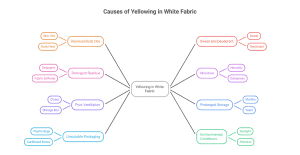
- Residual body oils
- Sweat and deodorant
- Detergent or fabric-product residue
- Moisture
- Poor ventilation
- Prolonged storage
- Contact with unsuitable packaging materials
- Environmental conditions
The tricky part is that some of these things aren’t visible when you put the clothes away.
A shirt can look perfectly clean today and show discoloration months later.
That’s why prevention starts before long-term clothes storage.
The Collar May Be Telling You More Than You Think
Take a white shirt you’ve worn several times.
Even after washing, small traces of skin oils, perspiration and personal-care products may remain around areas that receive repeated contact.
The collar.
Cuffs.
Underarms.
These areas can become more noticeable as the garment sits unused.
This is particularly important with:
- White shirts
- School uniforms
- Formalwear
- Wedding clothing
- Cotton garments
- White sarees
- White dresses
If a white garment is going into seasonal clothing storage, giving it proper attention beforehand can make a significant difference.
Moisture Is One of the Biggest Enemies of Stored Clothes
You don’t need a leaking roof for moisture to become a problem.
Humidity in the surrounding environment can affect fabrics over time.
A wardrobe with poor ventilation.
A damp cupboard.
A storage room with fluctuating humidity.
A closed suitcase kept in an unsuitable area.
These conditions can leave clothing feeling musty and, in some cases, contribute to staining or other deterioration.
This becomes particularly important during humid weather.
The clothes may look fine when stored.
The problem may only become obvious when you open the cupboard months later.
Why Plastic Isn’t Always the Answer
Plastic bags seem like an obvious way to protect white clothes.
They keep dust away.
They look neat.
They are inexpensive.
But long-term storage is different from short-term protection.
If moisture becomes trapped inside an enclosed plastic covering, the environment around the garment may become less suitable for long-term storage.
This doesn’t mean plastic is always wrong.
It means the type of packaging and storage environment should match the garment and the length of storage.
For delicate or valuable clothing, breathable garment covers and appropriate storage conditions may be more suitable.
White Wedding Clothes Need Extra Attention
There’s a special category of white clothing that deserves particular care:
Wedding garments.
A white wedding dress, saree, gown, or formal outfit may spend months—or even years—in storage between occasions.
Because these garments are often expensive and emotionally important, storing them properly matters.
The same applies to:
- Reception outfits
- Bridal accessories
- Heirloom garments
- Embroidered clothing
- Designer pieces
- Family wedding clothes
The last thing anyone wants is to open a carefully packed wedding outfit years later and discover that its color, fabric or finish has changed.
Don’t Put Clothes Away Slightly Damp
This sounds obvious.
Yet it’s easy to overlook.
A garment can feel dry on the outside while retaining moisture in thicker areas or folds.
Before placing clothing into long-term clothing storage, make sure it is completely dry.
This is especially important for:
- Towels
- Thick cotton
- Heavy sarees
- Embroidered garments
- Winter clothing
- Layered fabrics
A little moisture at the beginning can become a much bigger problem after months inside a closed space.
The Storage Location Matters Too
Two wardrobes can hold the same white shirt.
The results after six months may be very different.
Why?
Because the environment matters.
A wardrobe near a damp wall isn’t the same as a dry, well-ventilated storage area.
A packed cupboard isn’t the same as a properly organized garment-storage space.
A hot loft isn’t the same as a stable indoor environment.
When choosing garment storage, don’t just think about whether the clothes physically fit.
Think about where they’ll spend their next few months.
A Simple White Clothes Storage Routine
Before putting white garments away for an extended period, work through a simple routine.
1. Wash Them Properly
Don’t store garments with visible stains or obvious residue.
2. Dry Them Completely
Never pack clothing while it is even slightly damp.
3. Check the Problem Areas
Look at collars, cuffs, underarms and areas around fasteners.
4. Separate Delicate Garments
Don’t squash delicate white clothing under heavy items.
5. Choose Appropriate Covers
Use storage materials that suit the fabric and storage duration.
6. Keep the Storage Area Clean
Dust and poor ventilation can affect stored garments over time.
7. Check Long-Term Storage Periodically
If something is being stored for many months, don’t simply forget about it.
A quick inspection can help you spot problems early.
What About Clothes You Only Wear for a Few Months Every Year?
This is where seasonal clothing storage becomes useful.
Think about winter clothing in Mumbai.
Heavy jackets.
Sweaters.
Thermal wear.
Blankets.
These items may spend most of the year unused.
The same happens with:
- Festive clothing
- Wedding outfits
- Holiday clothing
- Special occasion dresses
- Sportswear
- Traditional garments
Instead of allowing these items to occupy your everyday wardrobe all year, you can organize them separately and store them appropriately until they’re needed again.
That’s not just about creating more cupboard space.
It’s about giving frequently used clothes and rarely used clothes different places in your home.
When Your Wardrobe Starts Becoming a Storage Room
There’s another problem that happens quietly.
Your wardrobe gets full.
Then another cupboard gets full.
Then suitcases become storage boxes.
Then boxes start appearing under the bed.
Eventually, you spend more time managing clothes than wearing them.
Good wardrobe organization isn’t necessarily about owning fewer clothes.
It’s about knowing what you use regularly and what you don’t.
Seasonal and special-occasion garments can be kept separately so your everyday wardrobe remains easier to use.
When Long-Term Clothing Storage Makes More Sense
Sometimes you simply don’t have enough space at home.
Maybe you’re renovating.
Moving.
Downsizing.
Living in a smaller apartment.
Returning from overseas.
Storing a family member’s belongings.
Or simply trying to reclaim a room that’s slowly become a pile of boxes and suitcases.
In those situations, dedicated clothes storage can help keep rarely used garments away from everyday living areas while allowing you to preserve belongings you aren’t ready to part with.
The important thing is that storage should protect the things you’re choosing to keep—not simply hide them.
White Clothes Are a Good Reminder About Storage in General
There’s a bigger lesson here.
We often think storage means:
Put it away and forget about it.
But long-term storage is really about creating the right conditions for something to remain useful.
Clothing needs appropriate care.
Books need protection from moisture.
Furniture needs suitable environmental conditions.
Documents need protection from deterioration.
Artwork needs careful handling.
The more valuable or sentimental the item, the more important its storage environment becomes.
Frequently Asked Questions
Why do white clothes turn yellow while stored?
Yellowing can result from residual body oils, perspiration, product or detergent residue, moisture, prolonged storage and environmental conditions. A garment can look clean when stored and still develop discoloration later.
How should white clothes be stored for a long time?
Make sure garments are clean and completely dry before storage. Keep them organized, avoid excessive compression, use suitable garment covers, and choose a clean, dry storage environment.
Can humidity damage white clothes?
High humidity can contribute to musty smells, fabric deterioration and conditions that may encourage mold or other problems. Stable, appropriate storage conditions are particularly important for long-term clothing storage.
Should white clothes be stored in plastic bags?
Plastic can protect clothing from dust, but for long-term storage it may trap moisture depending on the conditions. The packaging should be appropriate for the garment, storage environment and duration.
How should wedding clothes be stored?
Wedding clothes should be cleaned according to their fabric and care instructions, completely dried, protected from excessive compression and stored in suitable garment covers and conditions.
How often should stored clothes be checked?
For garments stored for many months or longer, periodic inspection is useful. Look for discoloration, moisture, musty smells, insects or other changes before they become more difficult to address.
Don’t Let the White Become a Memory
There is something satisfying about opening a cupboard and finding a favorite white shirt looking exactly as you remember it.
Crisp.
Clean.
Fresh.
That’s what good clothes storage should help preserve.
Whether you’re putting away seasonal clothing, wedding outfits, formalwear or family garments, a little care before and during storage can go a long way.
And if your wardrobes, suitcases and cupboards are already overflowing, moving rarely used clothing into an appropriate garment storage environment can give your everyday space some breathing room too.
📞 Need help with storage? Talk to our team: +91 8433925040
