
You Locked Your Car. But You Didn’t Lock Out the Monsoon.
It only takes a few seconds.
You park your car.
Lock the doors.
Walk away.
And assume everything inside is exactly as you left it.
Days turn into weeks.
Weeks turn into months.
Maybe you’re working from home.
Maybe you’re travelling.
Maybe it’s your second vehicle.
Or maybe life simply gets busy.
The car stays parked.
Safe.
Or so it seems.
Because while the car isn’t moving…
Something else is.
Humidity.
Every rainy season, thousands of parked vehicles quietly experience changes that owners don’t notice until much later.
The smell inside feels different.
The seats feel damp.
Important papers curl at the edges.
Leather begins to lose its finish.
Electronics start behaving strangely.
Most people blame the weather.
But the real culprit is what the weather leaves behind.
Moisture.
And unlike rust, humidity often damages your car from the inside out.
That’s why understanding vehicle storage during monsoon is just as important as servicing the engine.
Monsoon Doesn’t Need an Open Window to Enter Your Car
Many people believe water damage only happens when rain enters through an open window or a leaking door.
The reality is very different.
During monsoon, humidity levels remain high for days or even weeks.
Even a tightly closed vehicle isn’t completely isolated from the surrounding environment.
Tiny air vents, temperature changes, and trapped moisture create conditions where dampness slowly builds inside the cabin.
You won’t see water.
But you’ll definitely notice its effects over time.
The First Thing You’ll Notice Isn’t Rust
It’s usually the smell.
You open the door.
Instead of that familiar car interior scent…
There’s a damp, musty smell.
Many people spray an air freshener.
Some clean the seats.
Others leave the windows open for a while.
The smell disappears for a day or two.
Then it comes back.
Because the problem isn’t the smell itself.
It’s the moisture hiding underneath.
What’s Really Happening Inside Your Parked Car?
Monsoon affects far more than the exterior.
Here’s what often happens inside a parked vehicle.
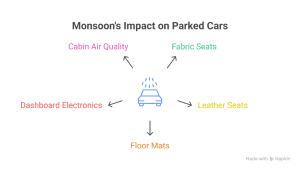
Fabric Seats Absorb Moisture
Seat fabric slowly absorbs humidity from the air.
Over time this may lead to unpleasant odors and mildew.
Leather Begins to Age Faster
Leather dislikes excessive moisture.
Prolonged exposure may cause stiffness, fading, or surface damage.
Floor Mats Stay Damp Longer
Rainwater from shoes often gets trapped inside the car.
Without proper drying, moisture remains underneath the mats for days.
Dashboard Electronics Experience Moisture
Modern vehicles contain numerous electronic systems.
Persistent humidity may affect sensors, switches, displays, and connectors over time.
Cabin Air Quality Changes
Humidity creates conditions where mold and bacteria can grow inside air-conditioning ducts and upholstery.
That’s often why a parked car smells “different” during monsoon.
The Forgotten Things Inside Your Car
Now think about everything else you keep inside.

Most people store far more than they realize.
- Insurance papers
- Vehicle registration certificate
- Service records
- Toll receipts
- Office files
- Laptop bags
- Umbrellas
- Children’s toys
- Sunglasses
- Emergency kits
These belongings quietly experience the same humidity as the car itself.
That’s why document storage isn’t only about your home or office.
Even your vehicle deserves attention.
Important Car Documents Are More Vulnerable Than You Think
Many drivers keep original documents inside the glove box.
It’s convenient.
Until monsoon arrives.
Humidity can gradually affect:
- Insurance papers
- Pollution certificates
- Vehicle manuals
- Service records
- Warranty documents
Paper absorbs moisture much faster than most people expect.
Keeping essential paperwork organized and protected is an important part of responsible vehicle storage.
The Biggest Mistake Most Car Owners Make
They assume:
“If I’m not driving the car, nothing can happen.”
Unfortunately…
A parked car still ages.
Tyre lose pressure.
Batteries discharge.
Humidity builds.
Interior materials absorb moisture.
The vehicle may remain stationary.
But the environment around it never does.
Simple Monsoon Tips to Protect Your Parked Vehicle
Protecting your vehicle doesn’t have to be complicated.
Keep the Interior Clean
Dust combined with moisture creates the perfect environment for unpleasant odours.
Remove Unnecessary Paperwork
Store only essential documents inside the vehicle.
Keep originals in a safer document storage system whenever possible.
Dry Floor Mats Regularly
Even small amounts of trapped water can create long-term moisture issues.
Check the Cabin Every Few Days
Open the doors occasionally.
Allow fresh air to circulate whenever weather permits.
Don’t Use the Car as a Storage Room
Many people keep old bags, clothes, files, cartons, and unused items inside parked vehicles.
This increases clutter and traps humidity.
Long-Term Parking Needs More Than a Car Cover
A waterproof cover protects the exterior.
It doesn’t control the environment inside the cabin.
If your vehicle is going to remain unused for an extended period perhaps because you’re travelling, relocating, or temporarily moving abroad thinking about vehicle storage becomes far more important than simply covering the car.
The right storage environment helps reduce unnecessary exposure to moisture, dust, and changing weather conditions.
One Month Becomes Six Before You Realize It
We’ve all done it.
“We’ll use the car next week.”
Then work gets busy.
Travel plans change.
Another vehicle becomes the daily driver.
Before you know it…
Months have passed.
And the monsoon has quietly left its mark.
A Five-Minute Monsoon Vehicle Check
Before the next spell of heavy rain, spend just five minutes checking your car.
Ask yourself:
- Does the cabin smell damp?
- Are important documents still inside?
- Are floor mats completely dry?
- Is anything stored unnecessarily?
- Has the vehicle been parked for weeks without inspection?
Small checks today can prevent expensive surprises later.
Protecting Your Car Means Protecting Everything Inside It
A car isn’t just a machine.
It’s where family road trips begin.
It’s where important files travel to meetings.
It’s where children leave behind toys, books, and memories.
Looking after the vehicle also means protecting everything it carries.
Because monsoon doesn’t only test your home’s ability to withstand moisture.
Sometimes…
It tests your car too.
Frequently Asked Questions About Vehicle Storage During Monsoon
Can humidity damage a parked car?
Yes. High humidity can affect the interior, upholstery, electronics, and important documents stored inside the vehicle.
Is it safe to keep important documents inside the glove box during monsoon?
It’s better to keep only essential copies in the vehicle. Original documents should be stored in a dry and secure location.
Why does my parked car smell musty during the rainy season?
Moisture trapped inside upholstery, carpets, or air-conditioning ducts often causes musty odours.
How can I protect my car during long-term parking?
Keep the vehicle clean, inspect it regularly, remove unnecessary belongings, and consider appropriate vehicle storage if it will remain unused for an extended period.
Can humidity affect my car’s electronics?
Yes. Continuous exposure to high humidity may contribute to issues with electrical connectors, switches, and electronic components over time.
A Parked Car Still Needs Protection
Whether you’re travelling, relocating, renovating, or simply not using your vehicle for a while, don’t assume it’s protected just because it’s parked.
A little planning today can help preserve your vehicle, important documents, and everything you keep inside it.
Talk to our storage specialists: +91 843392504t0
