
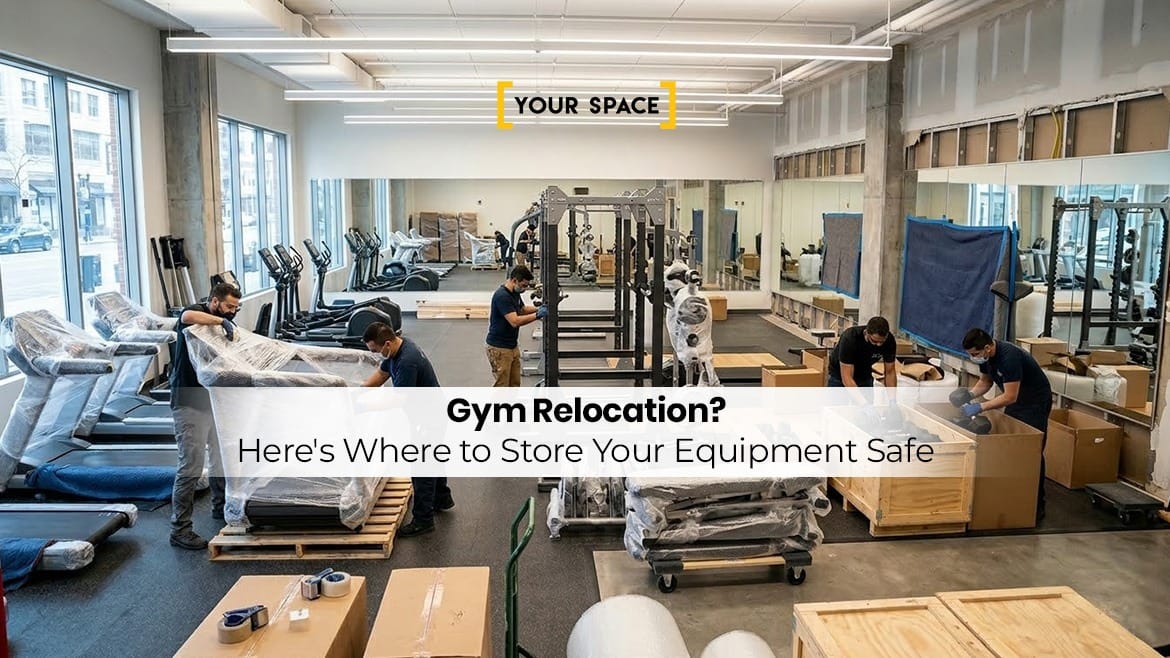
Picture this.
A gym owner stands in the middle of an empty fitness studio.
The mirrors are coming down.
The treadmill wires are unplugged.
The dumbbells that once powered hundreds of workouts are stacked in silence.
Relocation day.
Exciting? Yes.
Stressful? Absolutely.
Because behind every gym relocation lies one massive question most people never think about:

Where does all the gym equipment go during the transition?
A commercial gym is not just a room with machines.
It’s hundreds of heavy items:
Treadmills.
Squat racks.
Weight plates.
Bench presses.
Cable machines.
Resistance equipment.
And during relocation, every single one of these needs safe, organized gym equipment storage.
Because the truth is simple:
Gym equipment is expensive.
Gym equipment is heavy.
And gym equipment is very easy to damage if stored incorrectly.
So the real challenge during relocation is not moving the gym.
It’s protecting the equipment until the new space is ready.
Why Gym Equipment Storage Becomes Essential During Relocation
Gym relocation sounds straightforward at first.
Pack the machines.
Transport them.
Install them at the new location.
But reality works differently.
Most relocations involve delays.
Interior work.
Flooring installation.
Electrical setup.
Equipment calibration.
Sometimes the new gym location is not ready immediately.
This creates a gap.
And during that gap, gym equipment needs a secure place to stay.
That’s where gym equipment storage becomes critical.
Without proper storage, equipment can face serious risks:
Dust exposure
Rust formation
Electrical damage
Structural scratches
Weight plate corrosion
Professional gym equipment storage facilities protect these assets during relocation.
The Real Value of Gym Equipment
Before we talk about storage, it’s important to understand the value of gym equipment.
Most gym owners spend years building their equipment collection.
Commercial treadmills alone can cost thousands.
Functional training rigs require significant investment.
Strength equipment like squat racks, benches, and weight plates represent years of business growth.
For gym owners, equipment is not just machinery.
It’s the backbone of the business.
That’s why gym equipment storage is not just about space…it’s about protection.
The Biggest Storage Challenges Gym Owners Face
Relocating gym equipment is not like storing household furniture.
Gym equipment presents unique challenges.
Heavy Equipment
Some machines weigh hundreds of kilograms.
Squat racks, leg press machines, and cable stations require professional handling.
Improper storage can damage mechanical components.
Electrical Components
Modern treadmills and cardio machines contain electronic systems.
Improper environments can damage circuits and motors.
Secure gym equipment storage protects electronics from moisture and dust.
Space Requirements
Gym equipment requires large storage areas.
A single commercial treadmill can occupy several square feet.
Professional equipment storage facilities provide the necessary space.
Safety Concerns
Improper stacking or placement can lead to structural damage.
Heavy weights stored incorrectly can cause accidents.
Organized gym equipment storage ensures safety and accessibility.
What Gym Owners Usually Store During Relocation
During relocation, almost every piece of equipment needs temporary storage.
Typical gym equipment storage items include:
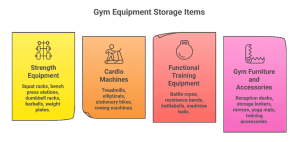
Strength Equipment
Squat racks
Bench press stations
Dumbbell racks
Barbells
Weight plates
These items require organized storage to prevent scratches and damage.
Cardio Machines
Treadmills
Ellipticals
Stationary bikes
Rowing machines
Cardio machines contain electronics and require protective environments.
Functional Training Equipment
Battle ropes
Resistance bands
Kettlebells
Medicine balls
Although smaller, these items accumulate quickly and require organized storage systems.
Gym Furniture and Accessories
Reception desks
Storage lockers
Mirrors
Yoga mats
Training accessories
All these items become part of gym equipment storage during relocation.
Why Warehouse Storage Works Best for Gym Equipment
Traditional storage methods are not ideal for gym relocation.
Basements, garages, or temporary rooms can expose equipment to dust and humidity.
Warehouse-style gym equipment storage facilities provide safer environments.
These facilities typically offer:
Large open storage space
Proper equipment handling
Organized inventory systems
Protection from environmental damage
This ensures gym equipment remains in excellent condition until relocation is complete.
The Hidden Risk of Improper Equipment Storage
One damaged treadmill can cost thousands to repair.
Rust on weight plates can destroy grip quality.
Electrical failures can render machines unusable.
Improper storage may lead to:
Motor damage
Metal corrosion
Frame distortion
Cable wear
Professional gym equipment storage protects business investments.
When Gym Owners Usually Need Equipment Storage
Relocation is not the only time gyms need storage.
Gym equipment storage is useful in many scenarios.
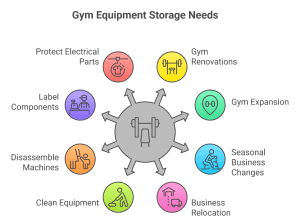
Gym Renovations
Many gyms upgrade interiors regularly.
Flooring replacements and redesign projects require temporary equipment storage.
Gym Expansion
During expansion, new equipment arrives while older machines need temporary relocation.
Storage helps manage this transition.
Seasonal Business Changes
Some gyms reduce equipment during slower seasons.
Temporary equipment storage helps optimize space.
Business Relocation
Moving to a larger or better location often requires secure storage between transitions.
Smart Tips Before Storing Gym Equipment
Before placing equipment into storage, gym owners should prepare carefully.
Clean Equipment
Dust and sweat residue can cause corrosion over time.
Cleaning equipment helps preserve materials.
Disassemble Machines When Possible
Some equipment can be disassembled to reduce storage space.
This also helps protect delicate parts.
Label Components Clearly
Proper labelling ensures machines can be reassembled easily later.
Protect Electrical Parts
Sensitive electronics should be wrapped and protected before storage.
Following these steps ensures equipment remains safe inside gym equipment storage facilities.
The Future of Fitness Businesses and Smart Storage
Fitness businesses are evolving.
More gyms are relocating to better locations.
Boutique studios are expanding.
Hybrid fitness spaces are becoming common.
As gyms grow and move, gym equipment storage is becoming part of smart business planning.
Because protecting equipment during transitions protects the future of the gym itself.
Everything Gym Owners Ask About Gym Equipment Storage
What is gym equipment storage?
Gym equipment storage refers to temporary or long-term storage solutions used to protect gym machines and fitness equipment during relocation or renovation.
Can heavy gym machines be stored safely?
Yes. Professional gym equipment storage facilities are designed to store heavy equipment safely with proper space and support systems.
How long can equipment stay in storage?
Gym equipment can remain in storage for weeks or months depending on relocation timelines.
Does gym equipment require climate protection?
Certain machines with electronics benefit from controlled environments to prevent moisture damage.
Can small fitness accessories also be stored?
Yes. Items like kettlebells, resistance bands, yoga mats, and accessories can be stored along with larger machines.
Your Gym May Be Moving…Your Equipment Should Stay Protected
Relocating a gym is exciting.
But protecting expensive machines during the transition is critical.
Using gym equipment storage ensures treadmills, weights, and training machines remain safe until the new space is ready.
Visit: Your Space
Tel: +918433925040
Click here to get an instant quote and protect your equipment.