
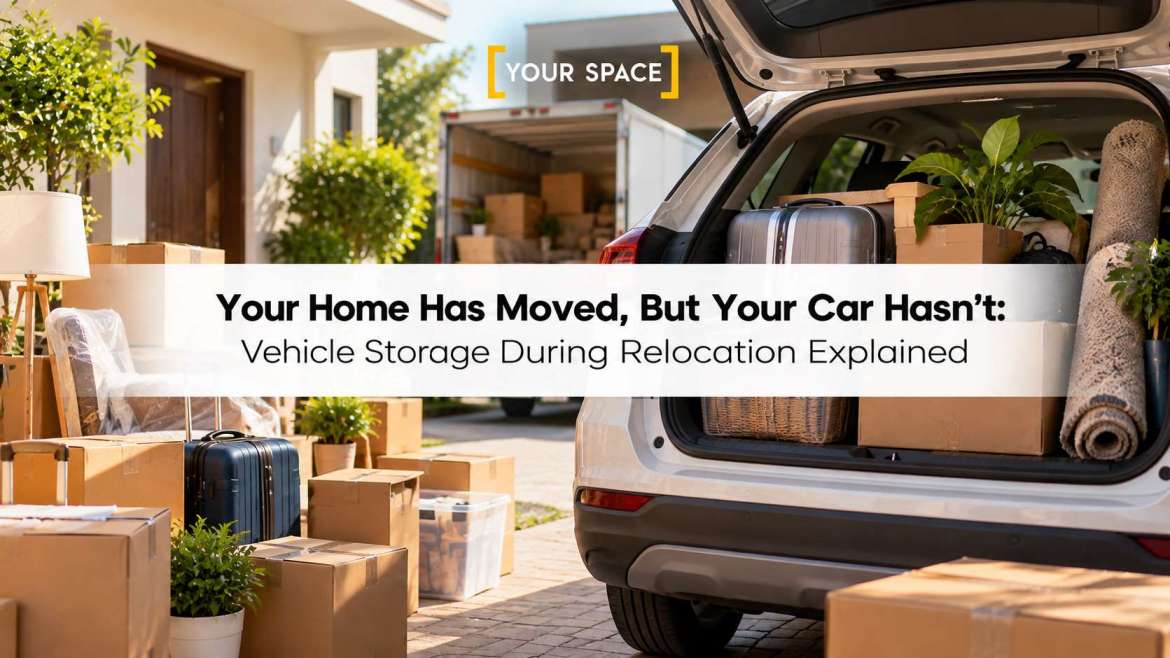
Moving house is supposed to be one big event: pack everything, load the truck, hand over the keys, drive to the new city and start again. Except real life rarely works that neatly.
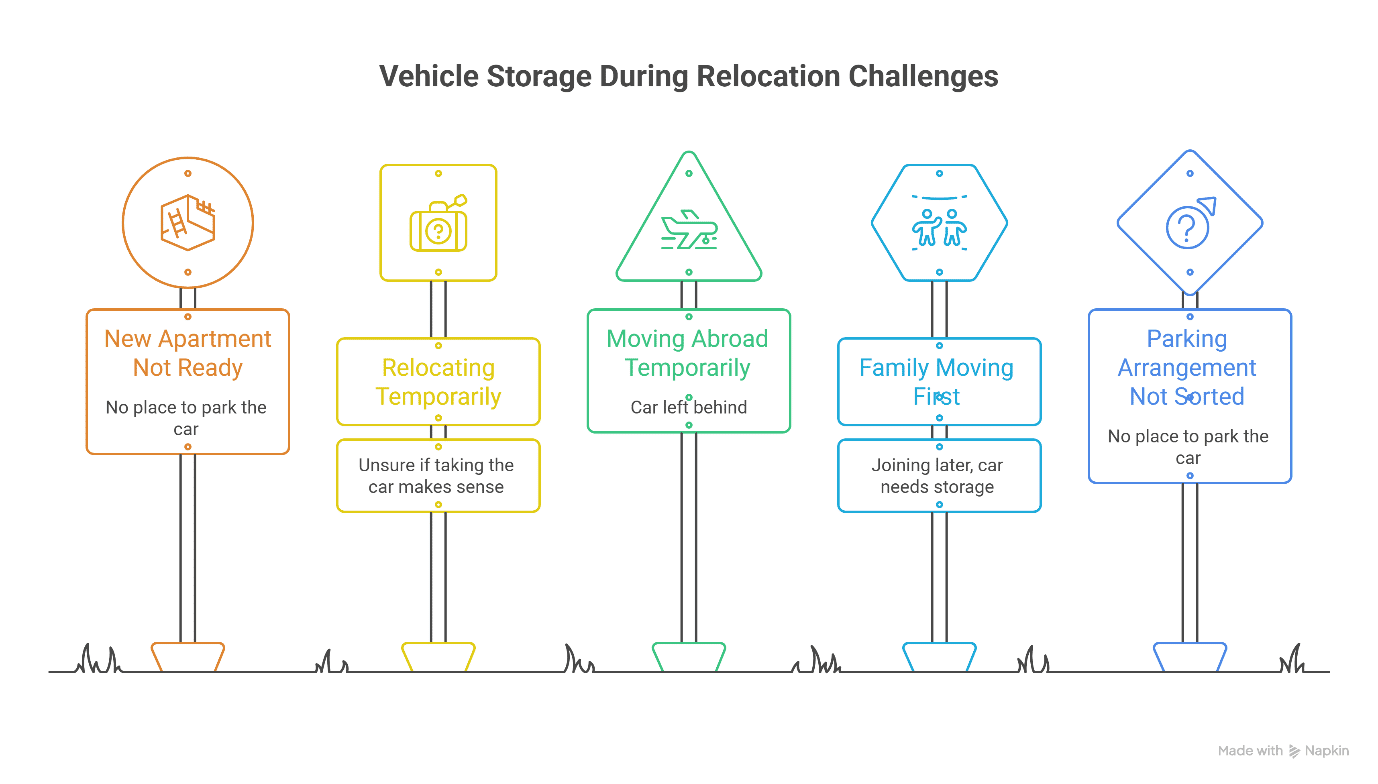
Maybe you’ve moved from Mumbai to Bengaluru, but your new apartment isn’t fully ready yet. Maybe you’re relocating to Pune for work for six months, but you don’t know whether taking your car makes sense. Maybe you’re moving abroad temporarily. Maybe your family is moving first and you’ll join later. Or perhaps you’ve sold the house, but your new parking arrangement hasn’t been sorted out.
And suddenly you have a slightly ridiculous problem:
So what do you do with it? This is where vehicle storage during relocation becomes an option worth considering.
Your Relocation Doesn’t Always Happen All at Once
We tend to imagine relocation as a straight line:
But actual relocations often look more like this:
And that’s where the complications begin. Your furniture might already be moving. Your documents might be packed. Your new office might already be waiting. Your family might already be in the destination city. But your car? Still sitting at the old address.
That doesn’t necessarily mean you need to transport it immediately. Sometimes the smartest relocation decision is simply to separate the timeline of your vehicle from the timeline of your move.
Why People Don’t Take Their Car Immediately
There are plenty of completely practical reasons. You might be moving temporarily. You may be travelling first and settling later. Your new apartment may not have parking yet. You may be moving into temporary accommodation. You might already have access to another vehicle at your destination. Or perhaps you’re still deciding whether you’ll actually need the car in the new city.
And then there’s the classic relocation problem: you don’t know how long the transition will take. One month becomes three. Three becomes six. The vehicle remains behind while everyone assumes they’ll “sort it out next week.” Next week, naturally, has other plans.
Option 1 — Leave It at the Old Home
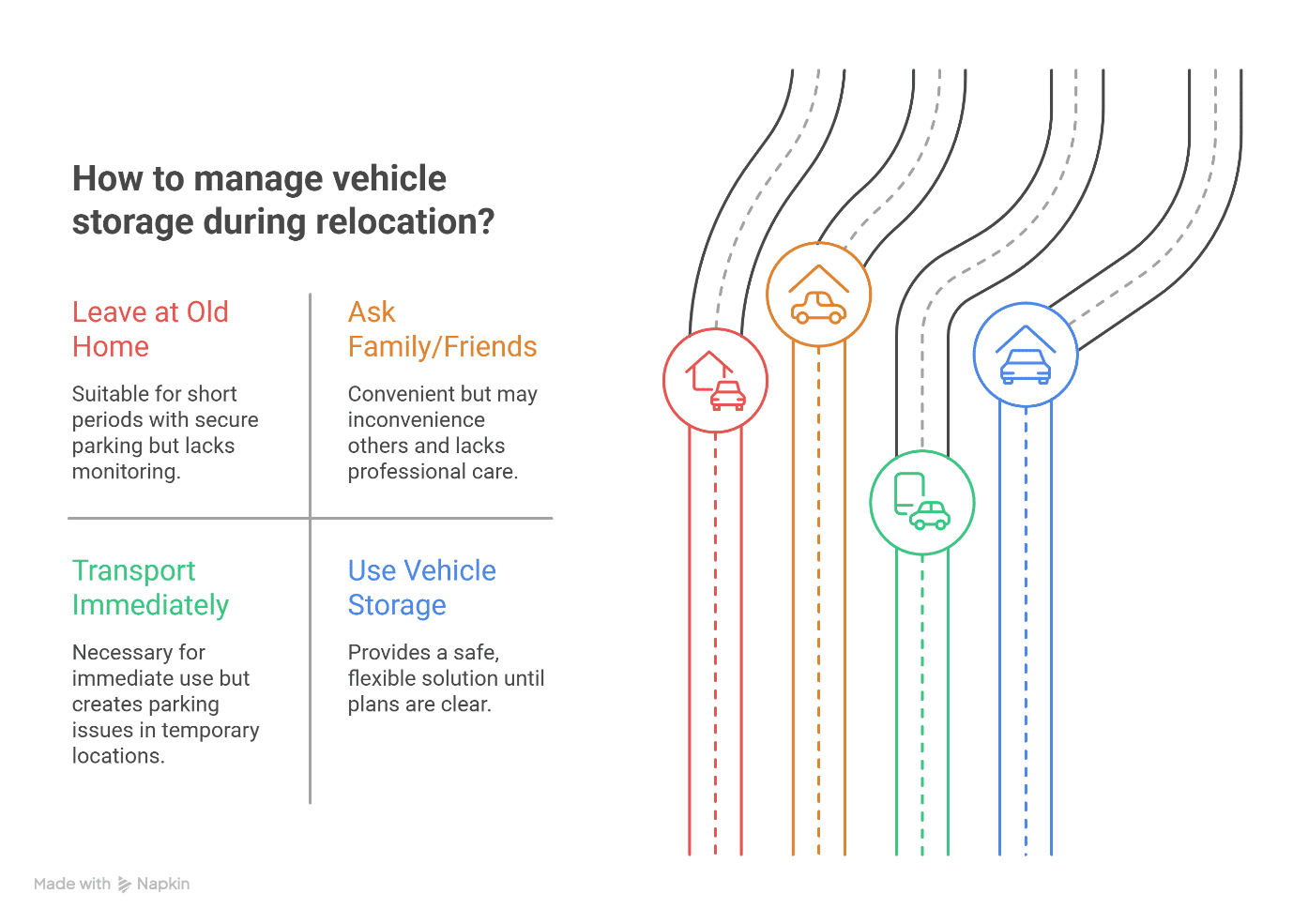
This is probably the first solution people think of. If the old property is still accessible and has secure parking, leaving the vehicle there may work for a short period.
But ask yourself a few questions. Who will check the vehicle? Who will notice if the battery goes flat? Who will check for leaks or tyre issues? What happens if the property is handed over? What happens if nobody is around for several months?
The problem isn’t necessarily the parking spot. It’s what happens when nobody is watching the vehicle. For a short transition, that may be manageable. For a longer relocation gap, it deserves more thought.
Option 2 — Ask Family or Friends to Keep It
This sounds easy. “Can I leave my car at your place for a couple of months?” Maybe. But there is a hidden cost that isn’t measured in rupees: convenience.
Someone else’s parking space is still someone else’s parking space. They may need it later. Their building may have parking restrictions. Your vehicle may need attention while you’re away. And if something goes wrong, you’re depending on someone else to notice and deal with it.
Family and friends can absolutely help in some situations. But it’s worth making sure the arrangement actually works for both sides.
Option 3 — Transport It Immediately
This is the obvious alternative: move the car with everything else. If you’re relocating permanently and know you’ll need the vehicle immediately, professional vehicle transport can make sense.
But there are situations where moving the car immediately creates a different problem. Imagine your new apartment is temporary. Or parking isn’t available yet. Or you’re travelling for several months after arriving. Or you’re still figuring out where you’ll actually live.
Now you’ve successfully transported the vehicle… to a place where you can’t use it. That’s not necessarily a relocation win. It’s just a different parking problem.
Option 4 — Use Vehicle Storage During Relocation
This is where vehicle storage during relocation becomes particularly useful. Instead of asking “How do I get my car to the new city immediately?” you ask “Where can my car safely stay until I’m ready for it?” That’s a very different approach.
Vehicle storage can act as a bridge between two stages of a relocation. Your old home can be handed over. Your belongings can move. You can settle into the new city. And your vehicle can remain stored until your plans are clearer.
You’re essentially taking one complicated move and giving yourself a little more breathing room.
Option 1 — Leave It at the Old Home
This is probably the first solution people think of. If the old property is still accessible and has secure parking, leaving the vehicle there may work for a short period.
But ask yourself a few questions. Who will check the vehicle? Who will notice if the battery goes flat? Who will check for leaks or tyre issues? What happens if the property is handed over? What happens if nobody is around for several months?
The problem isn’t necessarily the parking spot. It’s what happens when nobody is watching the vehicle. For a short transition, that may be manageable. For a longer relocation gap, it deserves more thought.
Option 2 — Ask Family or Friends to Keep It
This sounds easy. “Can I leave my car at your place for a couple of months?” Maybe. But there is a hidden cost that isn’t measured in rupees: convenience.
Someone else’s parking space is still someone else’s parking space. They may need it later. Their building may have parking restrictions. Your vehicle may need attention while you’re away. And if something goes wrong, you’re depending on someone else to notice and deal with it.
Family and friends can absolutely help in some situations. But it’s worth making sure the arrangement actually works for both sides.
Option 3 — Transport It Immediately
This is the obvious alternative: move the car with everything else. If you’re relocating permanently and know you’ll need the vehicle immediately, professional vehicle transport can make sense.
But there are situations where moving the car immediately creates a different problem. Imagine your new apartment is temporary. Or parking isn’t available yet. Or you’re travelling for several months after arriving. Or you’re still figuring out where you’ll actually live.
Now you’ve successfully transported the vehicle… to a place where you can’t use it. That’s not necessarily a relocation win. It’s just a different parking problem.
Option 4 — Use Vehicle Storage During Relocation
This is where vehicle storage during relocation becomes particularly useful. Instead of asking “How do I get my car to the new city immediately?” you ask “Where can my car safely stay until I’m ready for it?” That’s a very different approach.
Vehicle storage can act as a bridge between two stages of a relocation. Your old home can be handed over. Your belongings can move. You can settle into the new city. And your vehicle can remain stored until your plans are clearer.
You’re essentially taking one complicated move and giving yourself a little more breathing room.
The Real Question: Transport or Store?
This is where people can overcomplicate things. Start with one question:
Do I actually need the vehicle at my destination right now?
If the answer is yes, transporting it may be the practical choice. If the answer is no, then ask: where can it stay safely until I need it? That’s where temporary or longer-term car storage can enter the picture.
Here’s a simple way to think about it:
- Permanent move and immediate vehicle use → Transport
- Temporary relocation → Consider storage
- New home isn’t ready → Temporary vehicle storage
- Parking unavailable at destination → Storage until resolved
- Moving abroad temporarily → Vehicle storage
- Between two homes → Vehicle storage
- Second vehicle not currently needed → Storage
- Business/fleet relocation → Commercial vehicle storage
The important word here is potentially. There isn’t one answer that fits every relocation. The timing of your move, vehicle usage, parking situation and storage arrangements all matter.
When Vehicle Storage Makes More Sense
There are a few relocation situations where storage becomes particularly interesting.
You’re Moving Temporarily
If you’re relocating for a six-month project or assignment, transporting your vehicle twice may be unnecessary. You may prefer to keep it stored until you know what happens next.
You’re Moving Abroad
International relocation creates an entirely different set of decisions. You may not want to sell the vehicle. You may not want to export it. You may not want it sitting unattended at your old home. A secure storage arrangement can give you time to decide what to do next.
Your New Home Isn’t Ready
This happens more often than people admit. Your lease starts next month. Your furniture is arriving next week. Your parking situation? “Still being discussed.” The car doesn’t need to arrive before you’ve figured out where it’s going to live.
You’re Between Homes
Perhaps you’ve sold your old property and haven’t moved into the new one yet. This creates a temporary storage problem for everything from furniture to vehicles. Instead of squeezing the car into someone’s driveway, dedicated vehicle storage can become part of the broader relocation plan.
You Have More Than One Vehicle
A family may have two cars but only need one immediately after relocation. Why move both at the same time? If one vehicle isn’t needed for several months, storing it separately can simplify the move.
What Happens to the Rest of Your Household During This Gap?
This is where vehicle storage connects naturally with the bigger relocation story, because your car is rarely the only thing caught between two homes. You may also have furniture you don’t need immediately, boxes you can’t unpack yet, seasonal belongings, documents, appliances, business inventory, personal items or renovation materials.
Sometimes the smartest relocation strategy isn’t moving everything immediately. It’s deciding what needs to move now and what can safely wait. That’s the basic logic behind relocation storage. And the same thinking applies to your vehicle.
What About Bikes and Two-Wheelers?
The same situation applies to motorcycles and scooters. Perhaps you’re relocating temporarily and don’t need your bike immediately. Perhaps your family has two two-wheelers but only one person is currently using the destination city. Or perhaps your new accommodation doesn’t have enough parking.
Bike storage can provide another way to separate your transportation needs from your relocation timeline. Again, the question is not simply “Can I move it?” It’s “Do I need to move it right now?”
What Businesses Can Do With Vehicles During Relocation
The problem becomes even more interesting for businesses. Imagine a company relocating an office, warehouse or branch. The physical move may happen over several weeks. Some vehicles may be operational. Others may be temporarily unused.
There could be company cars, delivery vehicles, fleet vehicles or operational vehicles that aren’t immediately required at the destination. Moving everything simultaneously can create congestion and unnecessary coordination.
Commercial vehicle storage or fleet storage can provide a temporary holding option while the business completes its relocation. The same principle applies:
Move what you need. Store what you don’t need yet.
A Simple Relocation Decision Checklist
Before deciding what to do with your vehicle, ask yourself:
- Am I relocating permanently or temporarily?
A six-month assignment is a very different situation from a permanent move.
- Will I actually need the vehicle immediately?
If not, there’s no automatic reason it has to arrive on day one.
- Do I have confirmed parking at the destination?
Not “probably.” Not “the society said they’ll see.” Confirmed.
- Who will look after the vehicle if I leave it behind?
If the answer is nobody, that’s important.
- How long might the vehicle remain unused?
A few days and several months are completely different storage situations.
- Will my relocation happen in stages?
If yes, your vehicle may need its own timeline.
- Would storing the vehicle simplify the rest of the move?
Sometimes the answer is surprisingly obvious once you ask the question.
Your Vehicle Doesn’t Have to Move on the Same Day You Do
This may be the most useful idea in the entire article. Relocation doesn’t have to be one giant event. Your furniture can move first. Your family can move first. You can settle into your new home first. And your car can come later. Or it can stay stored until you’ve figured out what you actually need.
That’s not failing to complete the move. That’s simply giving each part of the move its own timeline. And when you’re dealing with something as expensive and important as a vehicle, that extra flexibility can make a complicated relocation considerably easier to manage.
Frequently Asked Questions
What is vehicle storage during relocation?
Vehicle storage during relocation means keeping a car, bike or other vehicle in a designated storage arrangement while you transition between homes, cities or countries instead of moving the vehicle immediately.
Should I transport my car or store it during relocation?
It depends on whether you need the vehicle immediately, whether you have suitable parking at your destination, how long the relocation will take and whether the move is temporary or permanent.
Where can I keep my car when moving to another city?
Options can include secure private parking, family or friends’ property, or a dedicated vehicle storage facility. The right option depends on the expected duration and the level of protection and monitoring required.
Can I store my car while moving abroad?
Yes. Vehicle storage can be considered when you’re moving abroad temporarily and don’t want to sell, export or leave the vehicle unattended.
Is vehicle storage useful between two homes?
It can be. If you’ve left one property but your new home isn’t ready, vehicle storage can provide a temporary place for the car while the rest of the relocation is completed.
Can I store a bike during relocation?
Yes. Bikes and scooters can also be kept in storage when they aren’t required immediately at the destination.
Is vehicle storage only for long-term use?
Not necessarily. Storage requirements can vary from short transitional periods to longer arrangements, depending on the relocation timeline and vehicle owner’s needs.
Can businesses use vehicle storage during relocation?
Businesses can consider commercial or fleet vehicle storage when relocating offices, warehouses, branches or operations and some vehicles aren’t immediately required at the destination.
Conclusion
Moving cities is already complicated enough. You don’t necessarily need your furniture, documents, family, household belongings and vehicle to all arrive on the same day. Sometimes the smarter approach is to split the move into stages.
If your car isn’t needed immediately, vehicle storage during relocation can give you that breathing room. It can be particularly useful when you’re moving temporarily, travelling abroad, between homes, waiting for parking or simply trying to avoid transporting a vehicle before you actually need it.
Because sometimes the best relocation decision isn’t “How quickly can I move everything?” It’s “What actually needs to move right now?”
Your Move Can Continue Even When Your Car Doesn’t
If you’re relocating and need a temporary or longer-term place for your car or bike, Your Space Doctor can help you explore vehicle storage options in Mumbai, Pune and Bengaluru.
📞 Call +91 8433925040 to discuss your storage requirement.
Your home may have a new address. Your vehicle doesn’t necessarily need one immediately. Sometimes it just needs a safe place to wait.
